
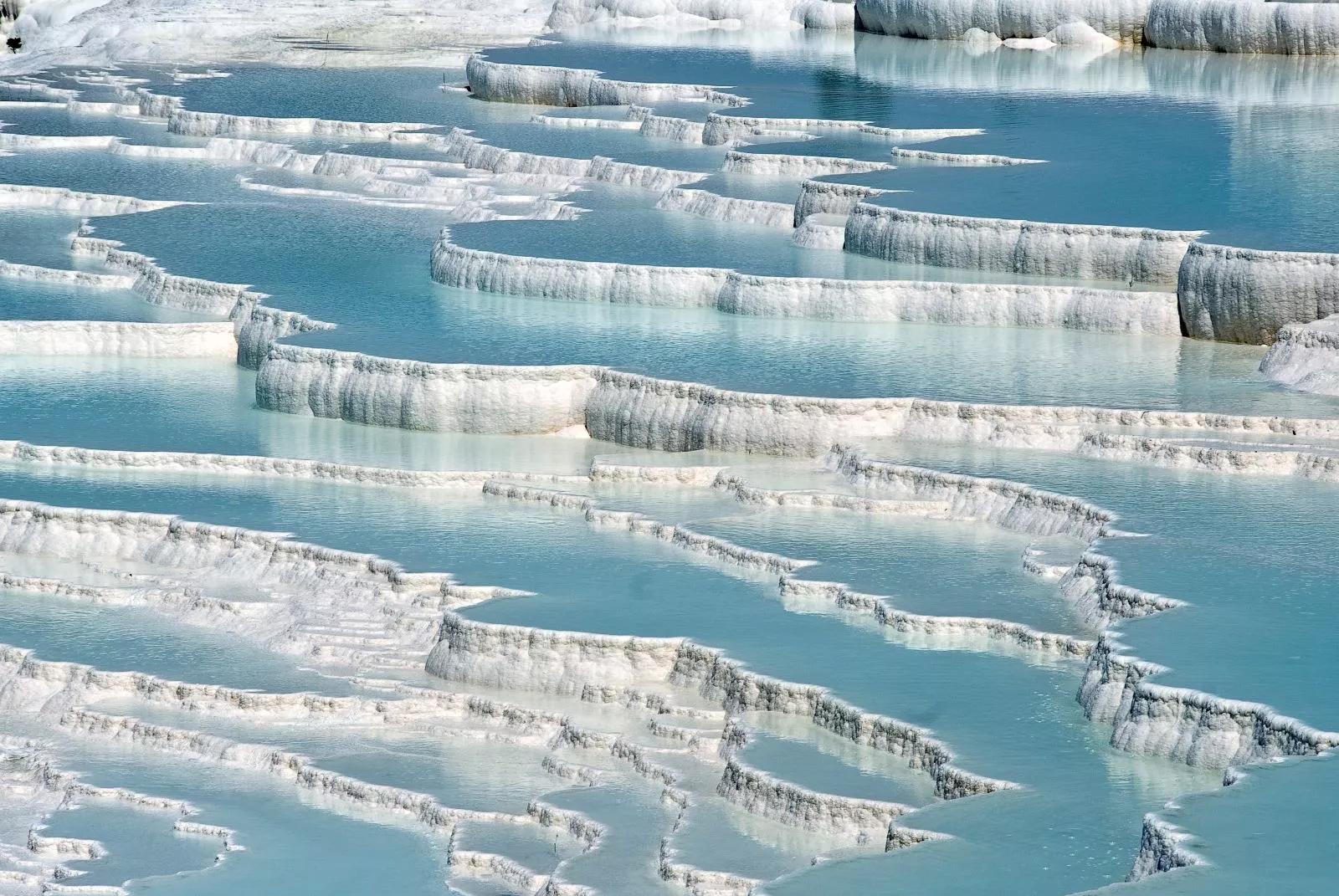
Turkey offers its visitors diverse vacation opportunities throughout all seasons. Some of the country's most enduring attractions are the famous Turkish baths and the spa tradition that has been an integral part of these regions since ancient times. Enjoying this bathing culture in Pamukkale, one of the world's most beautiful landscapes, is an unforgettable experience that can only be found in this exceptional destination.
This complex of unique mineral springs, resembling frozen waterfalls, is located in western Turkey, about 20 kilometers from Denizli. Part of the UNESCO World Heritage, the beautiful snow-white cascading pools look like fields of clouds interspersed with warm, aquamarine-colored pools. Immerse yourself in these healing thermal waters and discover the stunning beauty of Pamukkale up close.
Enchanting Natural Wonder
For many, Pamukkale is known for its beautiful snow-white cascading pools, formed by the interaction of oxygen and thermal water, which are a perfect blend of history and nature. Believing that the thermal waters have healing properties, people from all over the world flock to this enchanting destination every year, captivated by the breathtaking landscapes and the potential for rejuvenation. It is important to note that, due to their delicate structure,
most of the pools are protected. However, visitors are free to walk in some areas that contain small, terraced pools. To preserve them, guests must remove their shoes and socks before entering.
Ancient Healing Waters
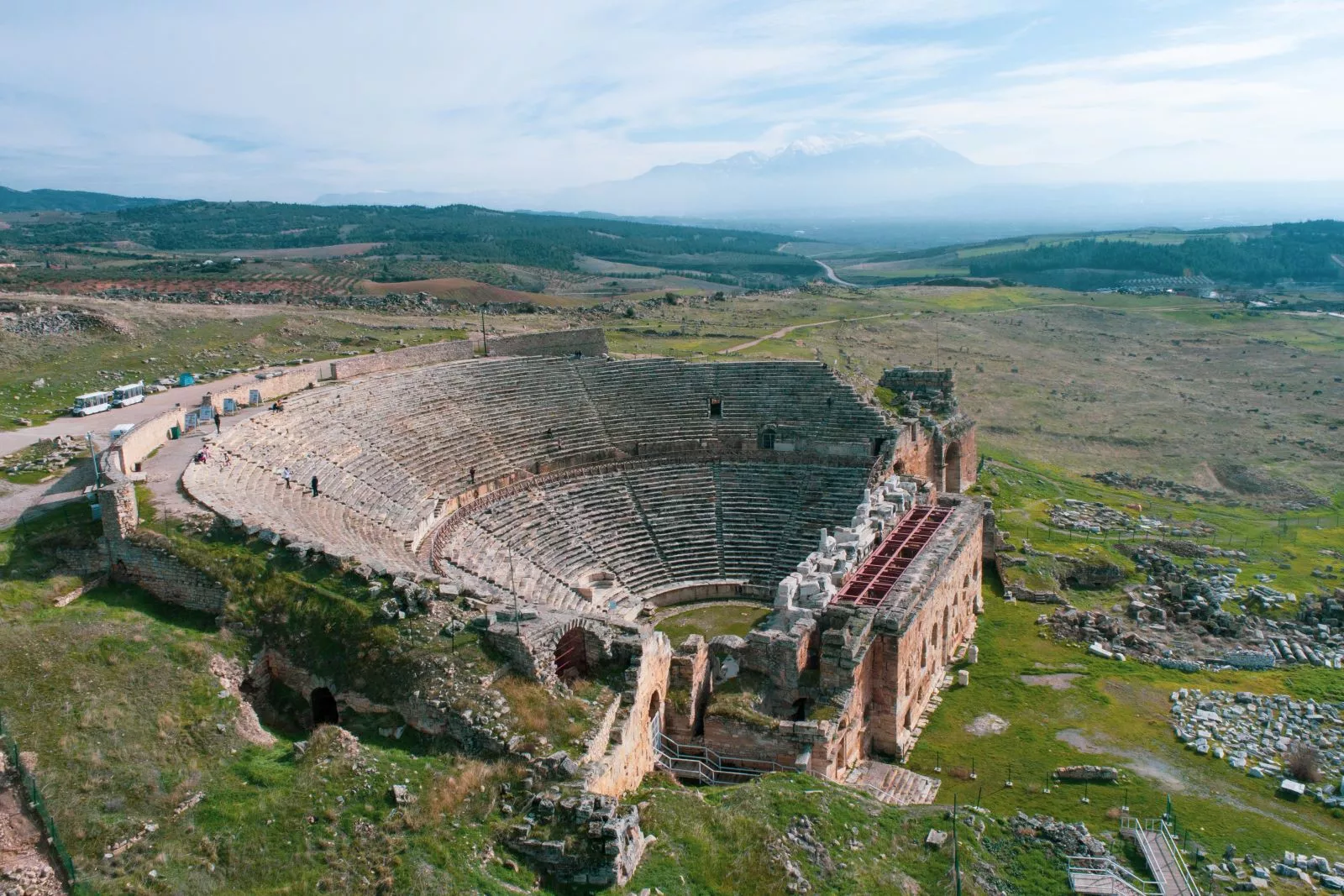
Near Pamukkale lies the magnificent ancient city of Hierapolis, also a UNESCO World Heritage site. About 2,500 years ago, King Eumenes II of Pergamon, enchanted by the brilliance of the travertine, built the city near this site. In honor of Hiera, the wife of Telephus, the legendary founder of Pergamon, the region was named Hierapolis. In literature, Hierapolis is referred to as the Holy City, and the enchanting atmosphere of this incredibly well-preserved ancient city attests to its name. As you explore the ancient theater, temples, monumental fountains, tombs, agora, and gymnasium, you will travel through time, walking on stone streets that existed two thousand years ago. The stories surrounding the Plutonium, believed to be the entrance to hell during the Roman period, are also quite fascinating.
Cleopatra's Pool in Ancient Hierapolis
Hierapolis, with its magnificent position around the cascading pools, has long been considered a spa and wellness center thanks to the rejuvenating thermal waters abundant in the area. Throughout its history, Hierapolis has been known for its healing thermal waters, and centuries later, the ancient city continues to attract visitors seeking the therapeutic properties of these waters. Immersing yourself in the ancient pool, surrounded by ancient columns and marble, is a unique experience. With a temperature of 36 degrees Celsius year-round, the Ancient Pool is also known as Cleopatra's Pool – legend has it that the famous Cleopatra, Queen of Egypt, once bathed in its waters. Indulge in the revitalizing thermal water of the pool, swim amidst ancient ruins, and enjoy the authentic surroundings.
From Pools to Museums
Other important structures in Hierapolis include the Ancient Theater and the Hierapolis Museum. The theater stands out among Roman-era theaters in the Mediterranean region for its distinctive reliefs depicting mythological stories and its impressive stage building and seating tiers. Sitting at the top of this breathtaking theater and observing the entire landscape in complete silence for hours is an unforgettable experience. The Roman bath, once a famous thermal center, has now been converted into an archaeological museum. At the Hierapolis Museum, you will find a fascinating collection of artifacts discovered during excavations of nearby ruins, such as Laodicea and Tripolis. These treasures are displayed in the impressive setting of a vaulted Roman bath built from travertine stone blocks.
- How to Get There: If you are planning a trip to Pamukkale, it is convenient to fly to Denizli Çardak Airport.
Daily flights from Istanbul Airport take about 1 hour and 10 minutes. Upon arrival, you can easily reach Pamukkale within an hour by renting a car, taking a taxi, or using a hotel transfer service.
- Must Experience: To enrich your relaxing experience in Pamukkale, consider exciting activities such as paragliding or hot air ballooning. These adventurous activities offer stunning views of the ancient city of Hierapolis and the impressive cascading pools.
- Must See: Laodicea, one of the seven churches mentioned in the Bible, is only 15 km away from Pamukkale and Denizli. It is a significant place to visit in the region.
- Must Buy: Pamukkale is known for its buldan weaving and fabric, which is traditionally made from cotton fabric. Thanks to its unique weaving technique and carefully selected colors, buldan fabric is known for its exceptional health benefits, long-lasting durability, and hypoallergenic properties.
- Must Eat: The most popular dish in the city is Denizli kebab, made from tender lamb meat and baked in a traditional stone oven. You can also savor the wonderful flavors of fire-baked gözleme.
- And Don't Forget! To make the most of your time in Pamukkale, consider staying at nearby thermal spas. There, you can indulge in soothing massages, enjoy the thermal waters, and even treat yourself to rejuvenating mud baths. Another popular attraction in Denizli is the Karahayıt thermal springs, where you can relax and rejuvenate.
Komentari (0)
Prijavite se za komentiranje
PrijavaJos nema komentara. Budite prvi!
Minuta
Sve →Iz drugih kategorija

High Representative Not Elected: Germans, French and British Against Americans, New Attempt at End of June

ČOVIĆ WITHOUT MERCY: How Those Who Brought Ademović to Office Created a Political Hell for Him



Sunny Saturday, quite warm



Tragedy in Albanian resort: Two minors drown












