
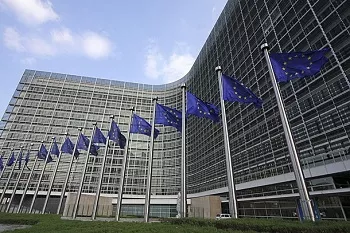
SARAJEVO, (Patria) - Our position is clear. There is no place in Europe for genocide denial, revisionism, and glorification of war criminals – which run counter to the most basic European values, according to the European Commission's response to Voice of America's inquiry regarding the order with which the Serbian Orthodox Church decorated Vojislav Šešelj.
"Attempts to rewrite history are unacceptable," stated European Commission spokesperson Ana Pisonero Hernandez in her response.
"Religious leaders and communities have a responsibility to show leadership in overcoming the difficult legacy of the past and constructively foster mutual trust, dialogue, and tolerance – which are essential for stability, a peaceful future, and progress," the response stated.
Incidentally, the order awarded to Šešelj by the New Gračanica–Midwestern American Diocese of the Serbian Orthodox Church is not the only one the leader of the Serbian Radical Party (SRS) – a party that played a prominent role in the wars in the former Yugoslavia under his leadership – has received from this church organization.
It was preceded by the Order of the White Angel First Class, which he received in 2015 from Bishop Filaret – a church dignitary who openly supported Slobodan Milošević. Also, according to Istinomjer, Filaret was banned from entering several European countries on suspicion of aiding Hague fugitives Ratko Mladić and Radovan Karadžić.
In 2015, Šešelj was also decorated by the Metropolitan of the Serbian Orthodox Church, Amfilohije Radović.
Throughout his political career, Vojislav Šešelj distinguished himself with extremist and chauvinistic statements towards the non-Serb population.
According to Istinomjer, he organized volunteer detachments that committed numerous crimes in Croatia and Bosnia and Herzegovina. The same source states that one of the United Nations reports shows that the "Chetniks" unit, which played a role in the ethnic cleansing campaign in BiH, is linked to Vojislav Šešelj.
In 2003, he was extradited to the Hague Tribunal on charges of inciting crimes against humanity, violations of the laws or customs of war in Croatia, Bosnia and Herzegovina, and Serbia. The indictment stated that his speeches and statements contributed to the perpetrators' decision to commit crimes.
In 2018, the Appeals Chamber of the Mechanism for International Criminal Tribunals, the successor to the Hague Tribunal, sentenced Šešelj to ten years in prison for inciting persecution, deportation, and forcible displacement, and the forced relocation of Croats in the Vojvodinian village of Hrtkovci in 1992.
He did not serve the sentence, as he spent the period from 2003 to 2014 in the custody of the Hague Tribunal – from where he was released due to poor health.
Vojislav Šešelj was convicted three times for contempt of court, as he published the identities of protected witnesses from the main trial in which he was accused of war crimes on his website and in books.
Komentari (0)
Prijavite se za komentiranje
PrijavaJos nema komentara. Budite prvi!
Minuta
Sve →Iz drugih kategorija

High Representative Not Elected: Germans, French and British Sabotaged Americans, New Attempt at End of June

ČOVIĆ WITHOUT MERCY: How Those Who Brought Ademović to Office Created a Political Hell for Him



Sunny Saturday, quite warm



Tragedy in Albanian resort: Two minors drown












