
By Ernad Metaj
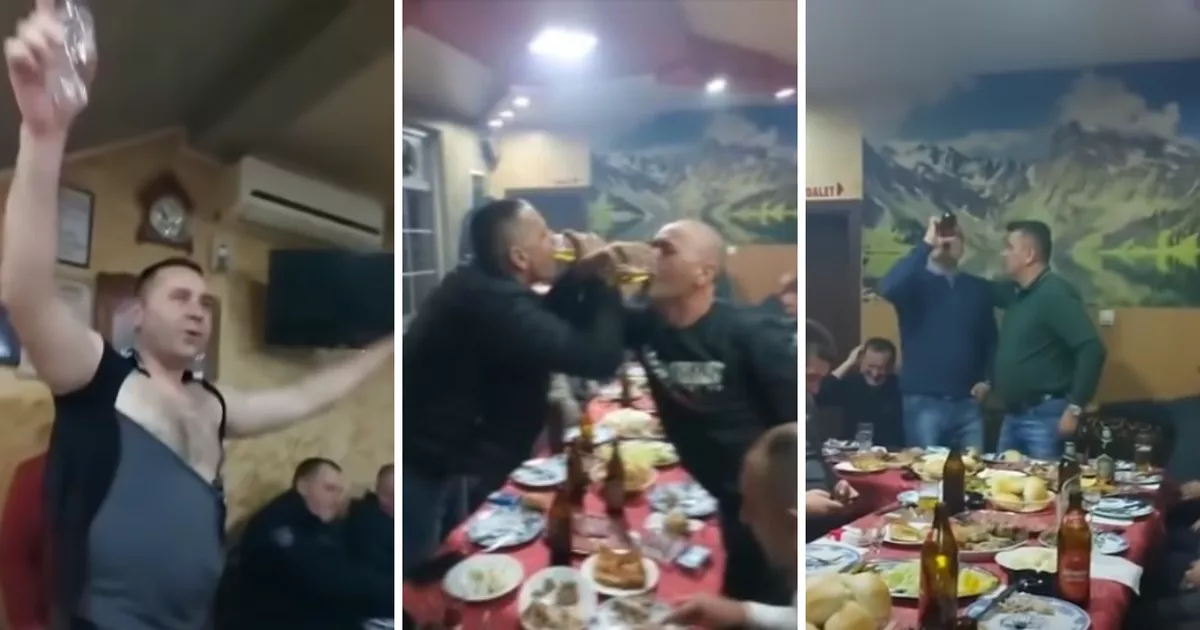
A police officer from Priboj, Dragan Zeković, apologized to Bosniaks for an offensive song glorifying the genocide in Srebrenica, which was sung at a celebration for the birth of his son. Serbian President Aleksandar Vučić also commented with a message to Bosniaks that Serbia is their country and that they will be protected. Repentance and messages of peace are needed after such videos that disturb not only people of other nationalities but every normal human being. The problem is that there is a justified doubt about the sincerity of such messages, because whoever celebrates the birth of their own child with a song about slaughtering other children has a big problem with themselves, but also with others.
The situation on the ground refutes Vučić; the more he talks about peace and stability, the more Serbia under his leadership slides into radicalism. The police in Serbia have long stopped reacting to fascist folklore from sports venues, they defend murals of war criminals on the streets, so it was only a matter of time before it was revealed that for people in uniform, crimes against "others" are also justified and desirable.
Interior Minister Aleksandar Vulin has not yet commented on the incident in Priboj, and how could he when just a day earlier he questioned in the media what Serbia needs the EU for if it has to accept the genocide in Srebrenica. With such a dilemma and with the message that the formation of a "Serbian world" is key to the survival of the Serbian people, Vulin has (un)consciously encouraged police officers to prove themselves in nationalism.
That Vučić says one thing and his government does another was shown before New Year's by the Ministry of Defense. The regime in Serbia decorated a participant in the genocide, a convicted war criminal Vinko Pandurević. No one can be angry at Bosniaks in Serbia and BiH if they interpret such a message as the neighboring country's readiness to once again support, or commit, a new genocide.
The reaction of the former head of Srebrenica, Ćamil Duraković, who believes that the singing of the police officer in Priboj was more convincing than his apology, is also understandable. The police officer is particularly sorry "that a bad atmosphere is being created, that something that should not have been heard at this celebration, nor anywhere else, is being exaggerated and an attempt is being made to make it much worse." Along with a New Year's greeting to "friends Bosniaks," he said that in the future he will do what he should have done as a police officer that same evening, which is to stop the controversial song "Srebrenica, you are so dear to me, may you repeat three times... Oh Novi Pazar, new Vukovar, Oh Sjenica, new Srebrenica...,"Oj Fatima, where are your veils, among the Chetniks around Ledenik..."
No one can blame Bosniaks for "exaggerating" a tavern gathering where, according to police officer Zeković, not everyone sang the controversial song. Not all Serbs, in fact, the vast majority of them did not approve of the crimes, but they happened. For the Bosniaks in Priboj, the abduction of their compatriots from Sjeverin in 1992, who were killed and thrown into the Drina River after several days, is certainly most memorable. Although Serbia, according to its authorities, was not officially at war, its police structures did not protect the Bosniaks from Sjeverin.
We believe that Zeković's celebration was spoiled due to the birth of his child, but the dilemma remains whether it was due to the distress of the Bosniaks, or fear of sanctions that could be imposed on him and his colleagues by the police after the sharp reactions. From the comments that followed Zeković's apology, it is clear that a large number of Bosniaks do not believe him, because in the Balkans, the saying "what a sober person thinks, a drunk person says" still holds true.
This case has only further exposed the consequences of the policy pursued by the current authorities in Serbia. Therefore, not only non-Serbs should be afraid, because this government has already shown that it is ready to deal with its dissidents. Sometimes hooligans with masks, bats, and hammers serve this purpose, and increasingly, police who are incapable of understanding that not everyone who is against Vučić is against Serbia. For now, those who dislike the glorification of war criminals are arrested and brought in by the authorities, but it remains a warning that Serbs who did not want to kill others were also killed in the war. Beautiful words are not enough for true reconciliation and trust, but deeds are. No one in the Balkans has been sleeping peacefully for a long time just because someone told them they could.
Komentari (0)
Prijavite se za komentiranje
PrijavaJos nema komentara. Budite prvi!
Minuta
Sve →Iz drugih kategorija

High Representative Not Elected: Germans, French and British Sabotaged Americans, New Attempt at End of June

ČOVIĆ WITHOUT MERCY: How Those Who Brought Ademović to Office Created a Political Hell for Him



Sunny Saturday, quite warm



Tragedy in Albanian resort: Two minors drown












