
Written by: Armin Sijamić
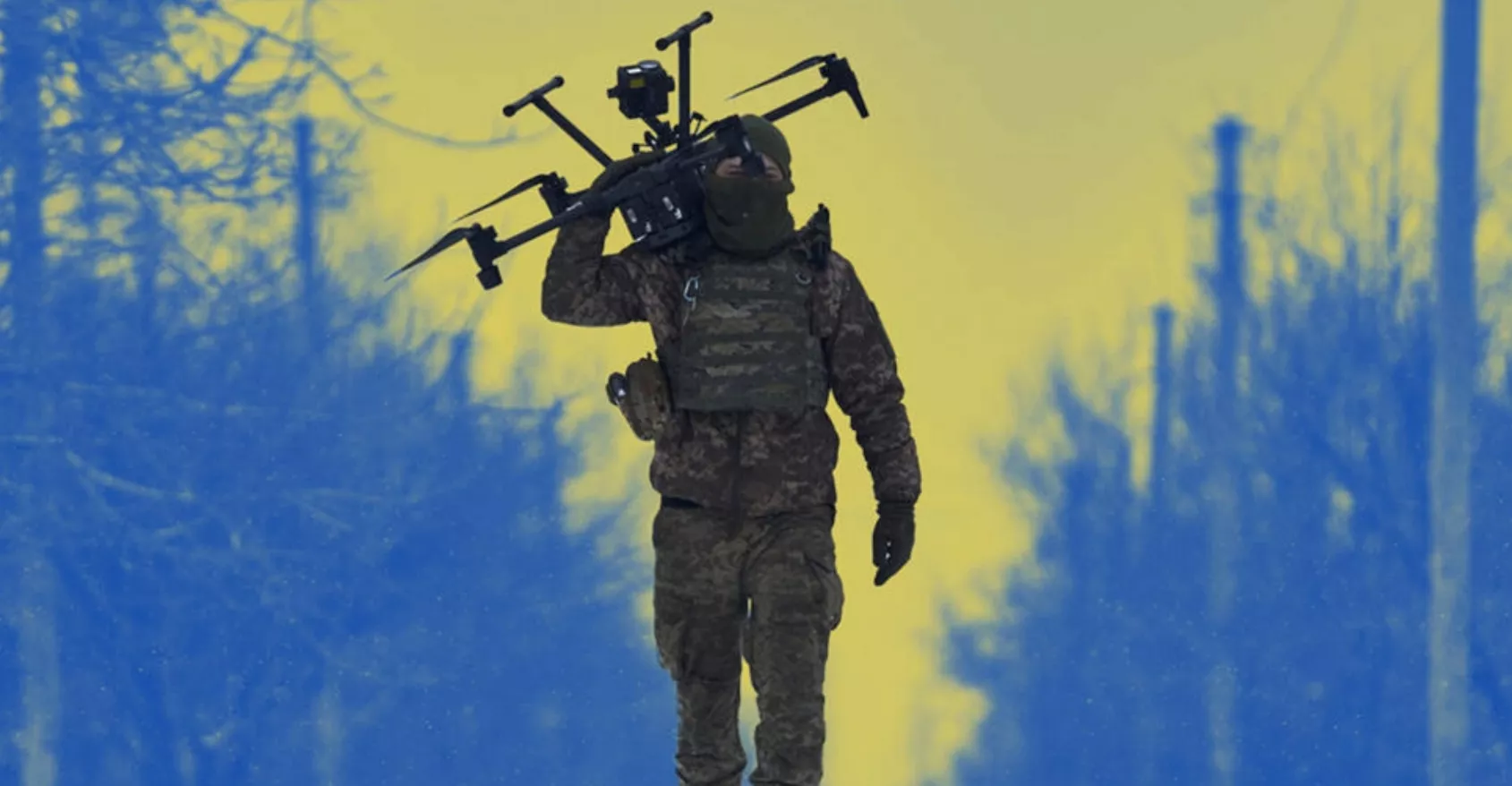
The Ukrainian offensive launched in June is nearing its end due to weather conditions in Eastern Europe. Although Kyiv failed to break through Russian defensive lines and force the enemy to retreat, Ukraine can be satisfied with what it has achieved. Besides transitioning from defense to offense, Ukraine can also be pleased with successes off the battlefield.
When Russia launched its aggression against Ukraine on February 24 last year, few believed that Ukraine would hold out for twenty months, and that for nearly half that time it would be conducting an offensive against the Russian army.
There were also few who believed in the unity of the West to defend Ukraine by all means, even with weapons from their own stockpiles, after lucrative economic contracts with Moscow were severed and after most of Europe decided to pay for energy at record-high prices.
Nevertheless, Western unity was maintained thanks to the administration of Joseph Biden, which, together with allies, stood by Ukraine, turning it into a military power.
The transformation of Ukraine into a military power was noticed long ago by Wagner leader Yevgeny Prigozhin, who said that the Russians came to Ukraine to "demilitarize" it, but in essence "militarized" it.
This "success" of Russian strategists was aided by Washington, which seems to have achieved what suits it at this moment – Ukraine as a force that Russia cannot militarily break in the foreseeable future.
Successes of the Counteroffensive
Entrenched Russian forces repelled Ukrainian attacks in recent months, so Kyiv had to "settle" for a few villages and approaching the strategically important city of Tokmak. The Ukrainians could not break through Russian lines, but they inflicted losses on Russia.
Thanks to weapons from the West, and likely the ingenuity of their own military experts, of which Ukraine has tens of thousands since the time of the USSR, Kyiv targeted Crimea and the Russian fleet there, drones reached Moscow, and precise strikes killed numerous Russian officers, hit command centers, important road communications, warehouses, airfields...
Thus, Russia, which before the start of the war in Ukraine had an incomparably larger and stronger army than Ukraine, found itself in a situation where its effect was similar to that of its enemy – using missiles and drones for attacks far behind front lines in an attempt to destroy Ukrainian infrastructure.
This practically means that Russia and Ukraine could wage war in this manner for years, which is certainly not news that pleases Moscow, pressured by sanctions and diplomatic isolation. And this is exactly what NATO strategists planned.
In May, the chairman of NATO's Military Committee, Admiral Rob Bauer, said that the war in Ukraine would be fought between Russian quantity and Ukrainian quality, i.e., between numerous outdated Russian equipment and modern Western equipment that Kyiv would receive. "There is no doubt that NATO will support Ukraine for as long as it takes," said the Dutch officer Bauer.
Satisfaction in the West
Although there are increasingly more critics in the West of Ukraine's successes in the war, i.e., the billions of dollars spent on aid to Ukraine, the Biden administration is resisting pressure from some Republicans.
Allocations for Ukraine while the U.S. economy faces problems could become one of the main arguments of Biden's rivals in next year's elections. That is why Biden's strategy was to involve as many allies as possible to help Ukraine, which will allow him to possibly reduce allocations for Kyiv in the coming period.
After the United States and the United Kingdom took on the greatest burden at the start of the Russian invasion, in the following months contributions were made by Germany, Poland, France, the Baltic and Scandinavian states, Bulgaria, the Netherlands..., and aid from Japan, Canada, South Korea is increasing... In parallel, these countries are purchasing weapons from the United States, strengthening their forces and further connecting with Washington, whose companies are securing lucrative contracts.
Many countries have decided to help Ukraine, although some face economic problems. Due to political processes at home, some countries have paused funding. For example, Poland now says it will not send weapons to Kyiv. This announcement should be taken conditionally, as Poland faces elections. Washington expects Warsaw to stand behind Ukraine, while simultaneously turning Poland into an important European military, economic, and political power.
Yesterday's visit to Kyiv by NATO Secretary General Jens Stoltenberg shows the commitment of the world's largest military alliance to help Ukraine, and the assessments of this official are at odds with criticisms that the offensive is not progressing.
"Today your forces are advancing. They are facing fierce fighting, but little by little they are advancing. Ukrainians are fighting for their family and their freedom," said Stoltenberg, adding that "Moscow is fighting for its imperialist illusions."
Preparation for a Long War
From the meeting with Stoltenberg, Ukrainian President Volodymyr Zelenskyy conveyed that he is asking NATO for more air defense systems to prepare the country for winter.
"The Secretary General agreed to make efforts to help us mobilize NATO members. We must get through the winter together, protect our energy infrastructure and the lives of our citizens," said Zelenskyy, drawing on earlier experience when Russia destroyed Ukrainian power plants, substations, heating systems, water supply, sewage in Kyiv...
More modern air defense systems are exactly what Admiral Bauer predicted and what the West wants. This would make Russian entrenchment a short-term gain, but not a long-term one, since it will not break Kyiv in that way and the Ukrainian army will have the ability to protect itself from Russian missiles and drones, while simultaneously inflicting heavy losses on Russia far from the front. For example, experts claim that amid such strikes, Russia could lose its Black Sea fleet, which it cannot reinforce because Turkey would not allow new ships to pass through the Dardanelles.
This scenario causes the most damage, besides to devastated Ukraine, to Russia, which wanted to break its neighbor in a few days or weeks with its "special military operation."
Thus, Vladimir Putin has become entangled in a multi-year conflict that costs Moscow and creates problems for Russia at home and on its borders. Recent events in Nagorno-Karabakh show Russia's diminishing power, and voices have even emerged from Central Asia wanting to distance themselves from their decades-long ally and regional hegemon.
An exit from this situation could be negotiations, but few would recognize Russia's territorial gains in Ukraine, while Moscow says it has no intention of giving them up.
The calming on the front, which also came last year due to weather conditions in Ukraine that do not allow large troop movements, is an opportunity for negotiations. And as an additional threat to Moscow stands yesterday's Stoltenberg message from Kyiv that "Ukraine is closer to NATO than ever before." Twenty months ago, Moscow launched an invasion to demilitarize Ukraine and prevent it from becoming a NATO member.
Komentari (0)
Prijavite se za komentiranje
PrijavaJos nema komentara. Budite prvi!
Minuta
Sve →Iz drugih kategorija

High Representative Not Elected: Germans, French and British Sabotaged Americans, New Attempt at End of June

ČOVIĆ WITHOUT MERCY: How Those Who Brought Ademović to Office Created a Political Hell for Him



Sunny Saturday, quite warm



Tragedy in Albanian resort: Two minors drown












