
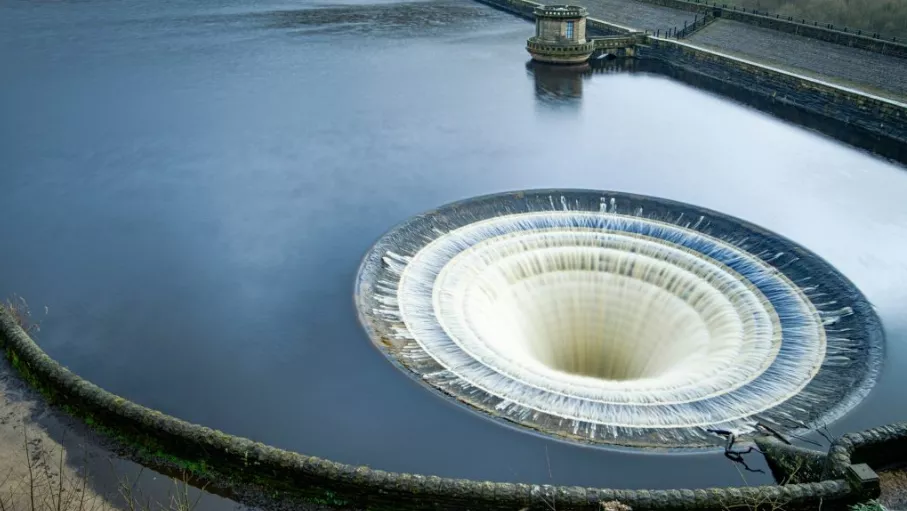
(Patria) - The Upper Derwent Valley in central England, on the border of Derbyshire and Yorkshire, is a popular destination for nature lovers and recreationists who spend their free time at its three well-known reservoirs.
All three reservoirs - Derwent Reservoir, Howden Reservoir, and Ladybower Reservoir - together cover almost 200 square kilometers and form a Y-shape, with Ladybower, the largest and newest, likely being the most visited.
Ladybower Reservoir has as many as two funnel-shaped drains, which create a very impressive sight on the surface, drawing tourists to its shores, writes Punkufer.
Each drain has a diameter of almost 25 meters, and besides creating a visually attractive whirlpool, their role is, of course, crucial for the reservoir's functioning.
Each drain releases excess water into its own outlet, and on its way to the outlet, the water passes through two hydro-turbines that produce electricity.
All three reservoirs are truly impressive engineering achievements.
Howden and Derwent were created when huge dams were built across the River Derwent, which took 14 years to build, between 1902 and 1916. For over 1,000 workers who worked on them, and their families, an entire town was built, which they called Birchinlee or 'Tin Town'.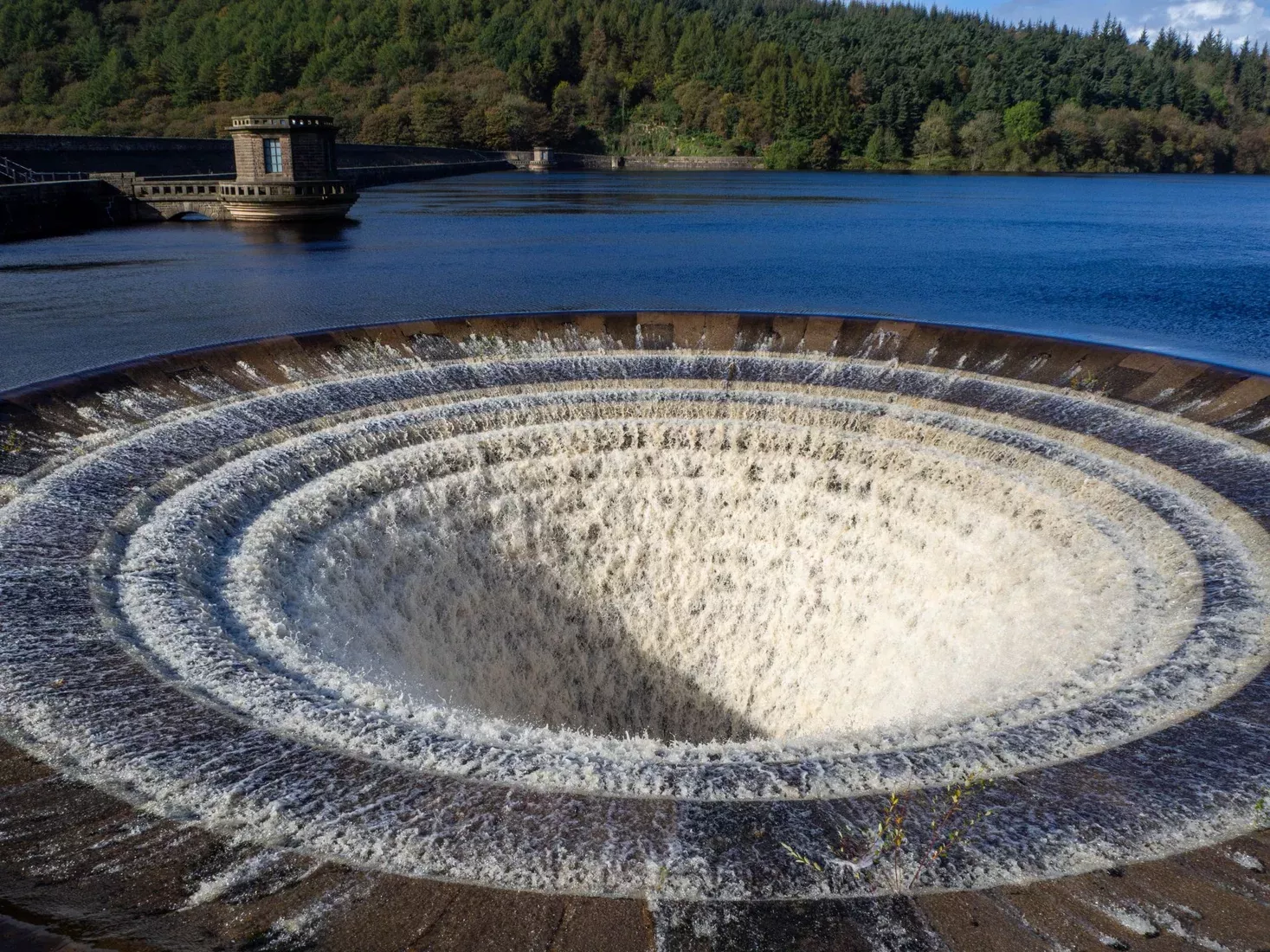
It had a school, hospital, shops, a pub, and a police station, and a railway line was built to bring construction materials to the town.
Ladybower Reservoir was built between 1935 and 1943, and it took another two years to fill with water.
For this purpose, two villages were submerged - Derwent and Ashopton. Derwent was a small village with a few houses and a parish church that gathered around 140 inhabitants, while Ashopton was larger and busier as it was located on the main road. The Ashopton Inn is still remembered with nostalgia by travelers today.
Before the construction of the reservoir began, all houses in the villages were bought, and the residents, despite strong opposition, were relocated. Both the living and the dead.
Both villages disappeared under the waters of Ladybower in 1945. The bell tower of St. John and James Church in Derwent, for some time, protruded from the calm lake water until it was also demolished in 1947.
An old stone bridge for horse-drawn carriages, which connected the banks of the River Derwent, was moved stone by stone to the Howden Reservoir and has the status of a protected monument.
Between Ladybower and Derwent reservoirs today is the Visitor Information Centre with a souvenir shop and restaurants. Walking and cycling trails have been arranged around the lakes, and the entire area is managed by the Peak District National Park.
Komentari (0)
Prijavite se za komentiranje
PrijavaJos nema komentara. Budite prvi!
Minuta
Sve →Iz drugih kategorija

High Representative Not Elected: Germans, French and British Against Americans, New Attempt at End of June

ČOVIĆ WITHOUT MERCY: How Those Who Brought Ademović to Office Created a Political Hell for Him



Sunny Saturday, quite warm



Tragedy in Albanian resort: Two minors drown












