

By Armin Sijamić
Croatia celebrated another success of its athletes in Zagreb on Monday, sounding the alarm for anti-fascists, while Serbia has not had major student protests or opposition for some time.
This week, the dormant political public in Croatia was shaken after a long time, which was expected. Winning third place at the European Handball Championship meant organizing a welcome in Zagreb for the national team players and, accordingly, at the request of the medal winners, the performance of singer Marko Perković Thompson.
The fascination of many Croatian athletes with Thompson is a story in itself, but the influence of that singer on political life in Croatia is a phenomenon that many do not want to shed light on. Croatian intellectuals have not answered two important questions: What drives hundreds of thousands of young people to concerts of a man accused by some of his fellow citizens of Nazism and fascism, and whose performances are banned by some countries, and how is it that the voices of these young people are not heard when elections come around.
This question can also be posed to the Croatian Democratic Union (HDZ) and the current Prime Minister of Croatia, Andrej Plenković, who is seen by many on the Croatian right as a "commissar" from Brussels and someone who is "killing" Croatian identity. For a part of the Croatian right, Plenković is simply a leftist.
Technocracy at All Costs
The Croatian government will, of course, not give an honest answer to this question, but the way it approaches it shows that it is aware of the issue. Not missing an opportunity to "conduct" national politics in sports stadiums and concerts speaks of the intention to continue this and to keep everything away from political debate in parliaments and sterile political campaigns.
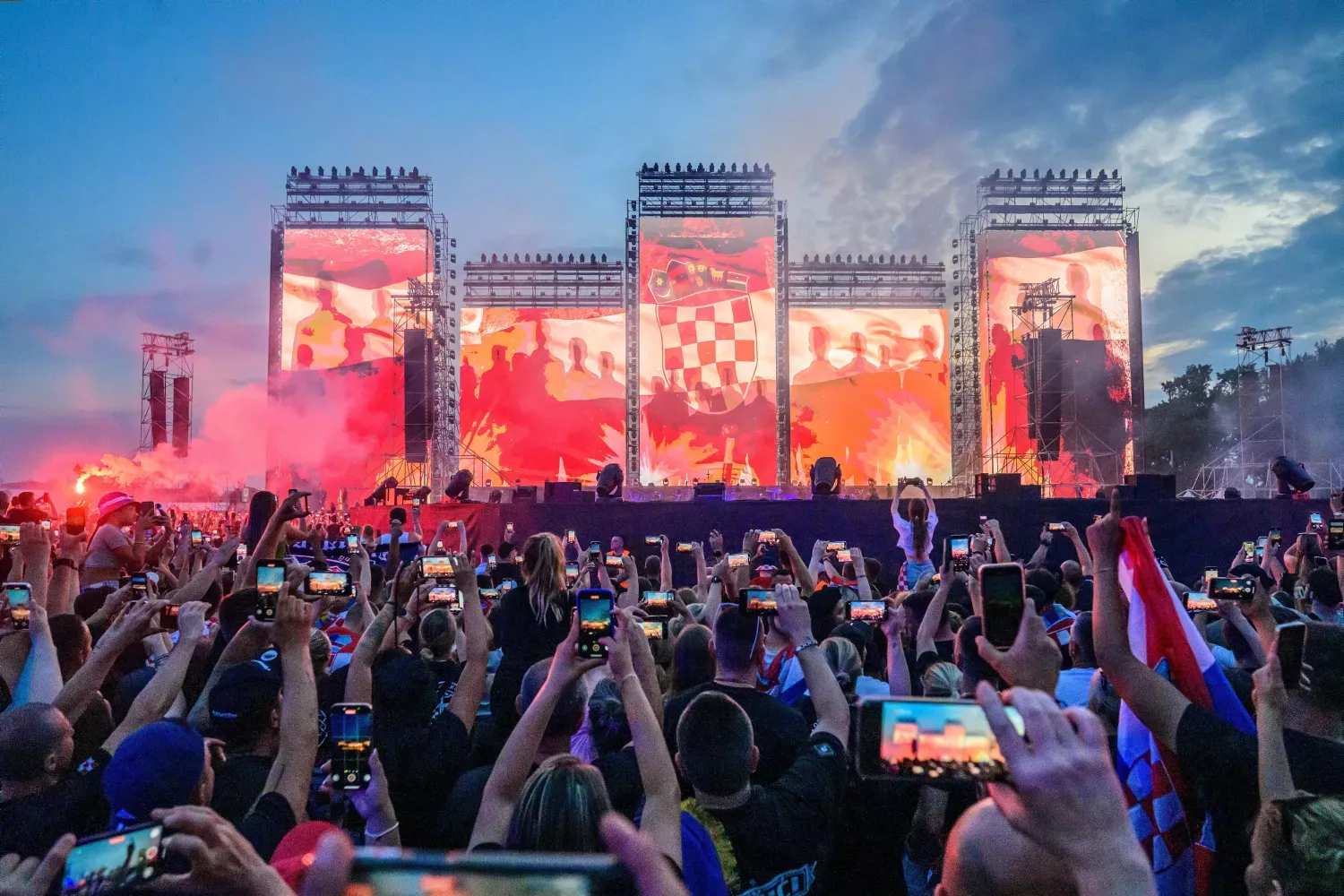
The government and the opposition are always ready to fulfill this "national duty," as was evident in the middle of last year, at another Thompson performance in front of half a million people.
The concert showed the full paradox of political life in Croatia, namely the fact that politics and ideology have been expelled from it and that technocrats have been managing processes in Zagreb for a long time, regardless of the wishes of Croats. Thus, technocrats hold power and the power that comes with it, while the "patriotic right" gets sports, music, and commemorations for a few days a year. The rest of the year, the public space is flooded, to the dissatisfaction of the right, with culture and content from, as they call it, "failed Yugoslavia".
Therefore, that concert, as well as this week's welcome in Zagreb, can be seen as building sentiment on the right under the government's management, as recruitment into HDZ's politics, while simultaneously working on reintroducing mandatory military service and when the Ministry of Defense issues, as reported by Croatian media, a "guide for worried mothers" of boys being called up to barracks.
The welcome in Zagreb, managed by Tomislav Tomašević and whose left-wing party has little support outside the Croatian capital, was held after it was canceled due to Thompson's performance. The city did not allow Thompson to perform, and the handball players did not want a welcome without that singer. Then Prime Minister Plenković stepped in, and the Government took over the organization of the welcome where Thompson performed, without the permission of the city authorities.
The President of Croatia, Zoran Milanović, from the Social Democratic Party (SDP), which has long been almost indistinguishable from HDZ, opposed this. "The conclusion of the Government of the Republic of Croatia - based on which it usurped the organization of the welcome of the Croatian national handball team in Ban Jelačić Square in Zagreb - is an unconstitutional, illegal, and piratical act for which there is no legal basis whatsoever," Milanović said. "The Government of the Republic of Croatia carried out a conscious destruction of the constitutional order..." and "...it is actually an appropriation of the state and a unscrupulous provocation of divisions among Croatian people."
Defense Against Enemies or Who Will Be on the Election Lists
Plenković thus enabled tens of thousands of people to sing with the handball players and Thompson. The handball players celebrated with their favorite singer in Zagreb, when the tournament organizer did not allow them to do so in Sweden, Norway, and Germany. The tournament hosts, like many people in Croatia, are dissatisfied with Thompson's image and work, because in some songs and performances he celebrates the defeated Independent State of Croatia - a creation supported by Nazi Germany and Fascist Italy.
The events from Zagreb will be a topic in Croatia's political life for a long time. The government can celebrate that it protected the right, the people, and the handball players, while the opposition can celebrate that it tried to defend Zagreb from fascism. This will be a more important fact in the coming period than whether Plenković, as Milanović claims, violated the constitutional order.
The division of roles in a country that is disappearing according to demographic indicators, just like several neighboring countries, is similar to that in Serbia, where Aleksandar Vučić has been ruling for many years with the alleged intention of leading the country into the European Union and NATO.
An even greater master of staying in power, who has been in politics for over thirty years, faced the rebellion of students and millions of citizens for over a year. He has reduced his popularity to a level that does not guarantee him a convincing election victory at this moment, but he has retained Western support.
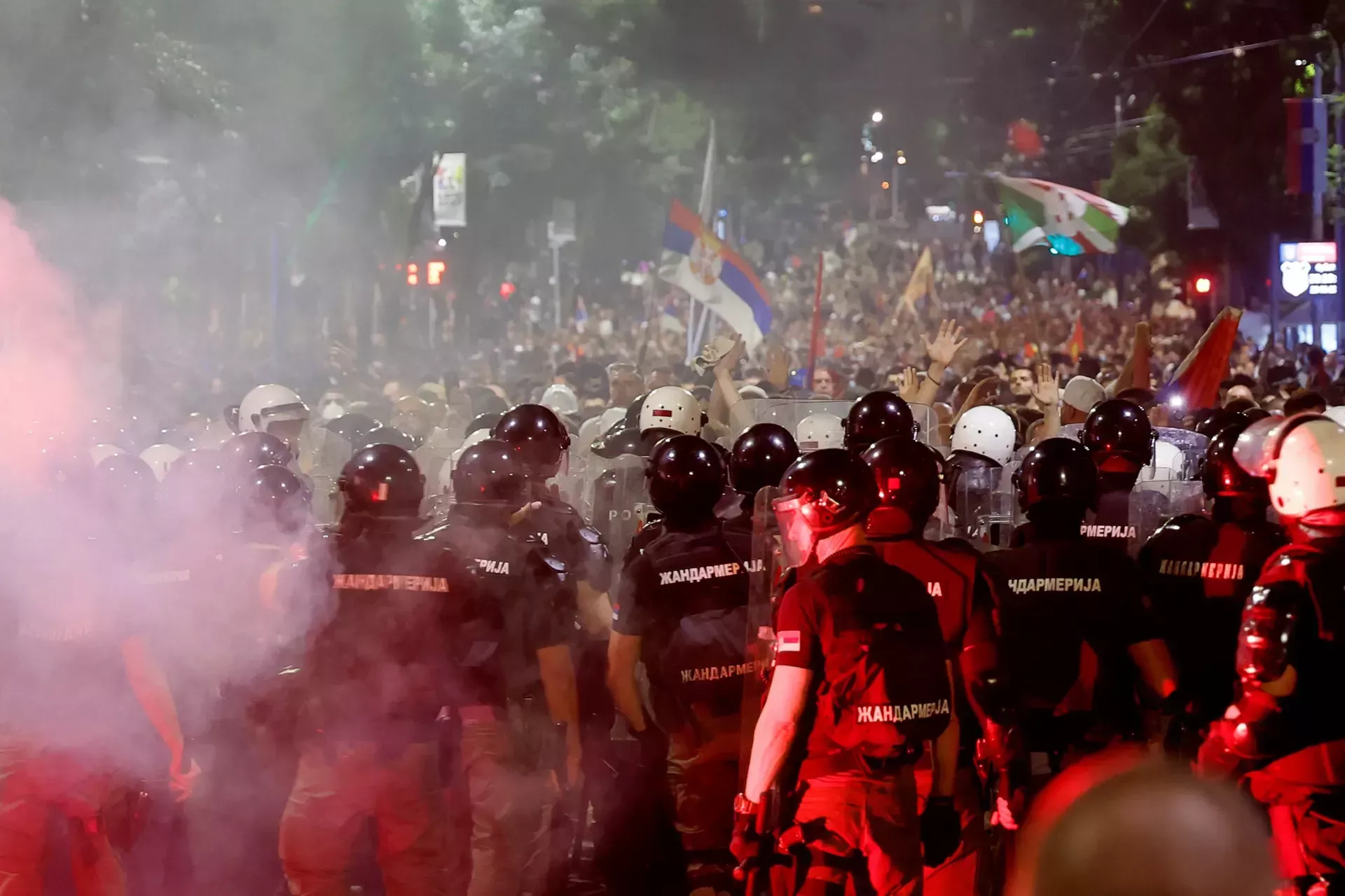
However, this does not mean that Vučić has given up. Student protests have begun to subside, and this is the opportunity he has been waiting for. No more major protests are expected, as the students have moved into the arena prepared by the government – creating lists for elections that will be called when Vučić wishes.
Students have fallen into quicksand, so every potential candidate on the election list is met with disappointment from some of their supporters. Almost every prominent name that has become public has been met with a blow to the united front needed to defeat Vučić. The main disqualifications are "Russophile" or "Natophile," depending on who needs to be disgusted.
Thus, the situation has come about where students are deciding the future of the opposition, or rather, what will remain of it after the next elections. Namely, the alignment into a unified student movement will erase many small parties in Serbia from the political scene, and those who refuse to submit will come under attack from those who stand behind the students. The fact that the West is meddling also benefits Vučić, and he will be able to play, as before, on the cards of "reconciliation" or the threat of the "Serbian world" as needed.
Against Themselves and Others
These two examples from Croatia and Serbia show how difficult it is to change governments in the Balkans. In the case of Zagreb and Belgrade, it is about the government and the system established in the 1990s, at a time when Bosnia and Herzegovina was subjected to double aggression and genocide and crimes against humanity were committed.
The government uses the same tricks to keep the public in a state of constant tension. Bosnia and Herzegovina has been a victim of this policy for more than three decades, as Belgrade and Zagreb prevent it from removing the "straitjacket" that was placed on it in Dayton.
A new phase of attacks on Bosnia and Herzegovina, and consequently on regional stability, began thirteen years ago when Croatia became a member of the European Union and when Vučić became the head of government in Belgrade. Therefore, almost every excess of official Zagreb and Belgrade can also be addressed to the West, which enabled Plenković and Vučić to pursue such policies.
That year, 2013, thus, in a way, became a reference point for what we have today in the former Yugoslavia. Since then, Zagreb and Belgrade have shown many times that they can disturb the public in several countries even when celebrating sports successes, holding concerts, or demanding free and fair elections.
Directing neighboring peoples against each other suggests that they have no other political program and that they will continue to use all available instruments against their own people and others. This includes encouraging young people to celebrate the sports successes of others as their own and as being of crucial importance for the entire nation, and to cheer for defeated fascist movements in sports stadiums and streets, while the smartest among them are declared foreign mercenaries and driven out of their own country if they do not wish to end up in the trenches that the government has been digging for decades.
Komentari (0)
Prijavite se za komentiranje
PrijavaJos nema komentara. Budite prvi!
Minuta
Sve →Iz drugih kategorija

High Representative Not Elected: Germans, French and British Against Americans, New Attempt at End of June

ČOVIĆ WITHOUT MERCY: How Those Who Brought Ademović to Office Created a Political Hell for Him



Sunny Saturday, quite warm



Tragedy in Albanian resort: Two minors drown












