
Brussels has faced several difficult challenges in recent years, which turn more than 700 parliamentarians in the European Parliament towards solving internal problems, and less and less towards those happening outside the European Union's borders.
Just four years after the economic crisis of 2011 almost devastated the European market of about 500 million consumers, a wave of migrants, fleeing war conflicts, swept through the member states, which is now further complicated by the double game of Russia and its president Vladimir Putin on the battlefields in Syria in the fight against the infamous ISIL.

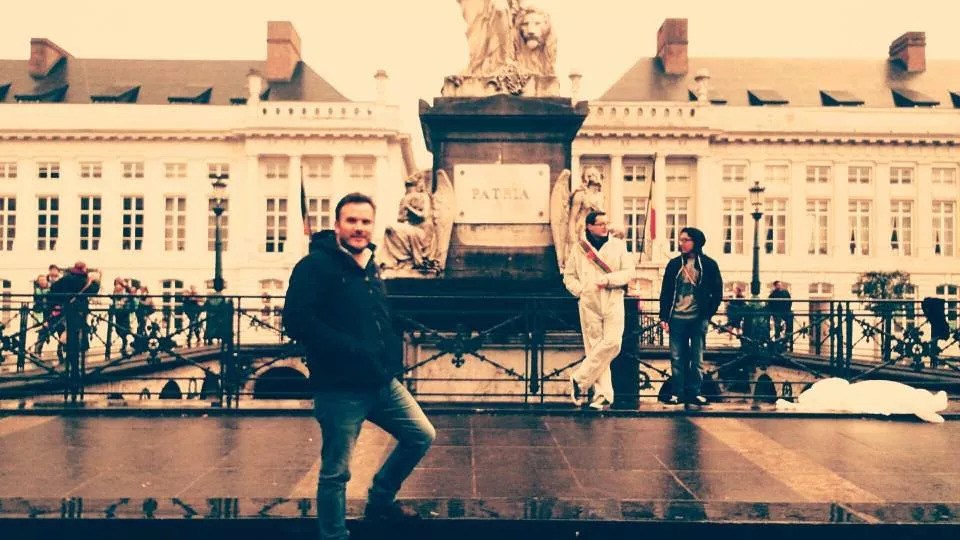
A journalist from the BiH news agency Patria spent several days in the very center of Brussels, in the European Parliament and European Commission buildings, at the invitation of the European Journalism Centre and the European Commission, along with other leading media from Serbia, Albania, Macedonia, Kosovo, Montenegro, and Turkey, where among dozens of interlocutors, they tried to find out whether current global problems are the main reason why the EU is increasingly less interested in resolving the economic and political crisis in Bosnia and Herzegovina, or if there are other causes that the citizens of BiH are unaware of.
They sought answers from leading European political analysts, security experts, media experts, Western Balkans experts, as well as from members of the European Parliament and the European Commission themselves.
None of the interlocutors denied that the conflicts in Syria and the large refugee wave that hit Europe this summer are a priority above all priorities, but at the same time, they want to convey that this in no way could be the main reason why BiH has not been in the EU's focus for several years. For example, they explain, during the same period, Serbia has been cooperating more and more intensely with Brussels.
- The global crisis has certainly diverted Brussels' attention from BiH to elsewhere, but you cannot consider that crisis the main reason why BiH has fallen by the wayside – said one of Patria's interlocutors.
- The people who lead the country's politics are to blame for the poor standard of living of citizens in BiH, for their insecurity. No matter how many more serious problems the EU has, such as wars and economic crises, the authorities in BiH could have imposed the country as an EU priority. Let's start from the beginning: reforms in BiH should be implemented by local politicians, and Brussels would only serve as a coordinator. If the authorities in BiH had understood this, and if they had implemented what the EU asked of them, with the help of the international community that was offered to them all along, they would have progress and strong support from Brussels today, just as some other countries have support.

Unfortunately, the authorities in BiH do not think that way, they wait for someone else to do the work for them, that someone else has too many of their own obligations, and then of course you will have a standstill in BiH's progress – says an analyst from Brussels, who adds that he increasingly notices that the state of apathy into which the country has fallen even suits the politicians in BiH.
There is no other explanation for the inertia towards their own people and country.
- Try to look at it this way. If some new forces came to BiH now – that would offer reforms and progress – then there would be no place for the current government. Now it is clear to you why those who are currently in power fear change. Many of them would not only lose power but would also end up in prison, because they are involved in crime. That is why it suits them not to be too much in Brussels' crosshairs, in whatever sense you mean – says the analyst, who has been monitoring the situation in BiH from the heart of the EU for 15 years.
Although the new progress report on BiH in Brussels, which will be submitted in November this year, will be somewhat better than the previous one, Brussels warns that it is not enough for the citizens of the country to rejoice.
BiH still lacks strong economic programs, no one is working on new ideas, there are no radical savings, reduction of administration, everyone talks about strengthening the economy but there are no new programs or they are pale... Even the announcements that BiH will submit an application for EU membership around the New Year may seem more like buying social peace, and less like a sign of real progress in BiH, because submitting an application does not mean that it will be accepted by the EU.
- Reforms are proceeding quite slowly. Official Brussels believes that politicians in BiH promise a lot, but fulfill little of it – explains one of the analysts.
Some Western Balkans experts with whom Patria's journalist spoke believe that the international community itself made BiH dysfunctional in Dayton and now does not want it in its backyard. However, they immediately explain further, even if such an attitude exists among certain policies in Brussels towards BiH, a strong political force in BiH could change that. Unfortunately, the citizens of Bosnia and Herzegovina have been waiting too long for that force.
Komentari (0)
Prijavite se za komentiranje
PrijavaJos nema komentara. Budite prvi!
Minuta
Sve →Iz drugih kategorija

High Representative Not Elected: Germans, French and British Sabotaged Americans, New Attempt at End of June

ČOVIĆ WITHOUT MERCY: How Those Who Brought Ademović to Office Created a Political Hell for Him



Sunny Saturday, quite warm



Tragedy in Albanian resort: Two minors drown












