
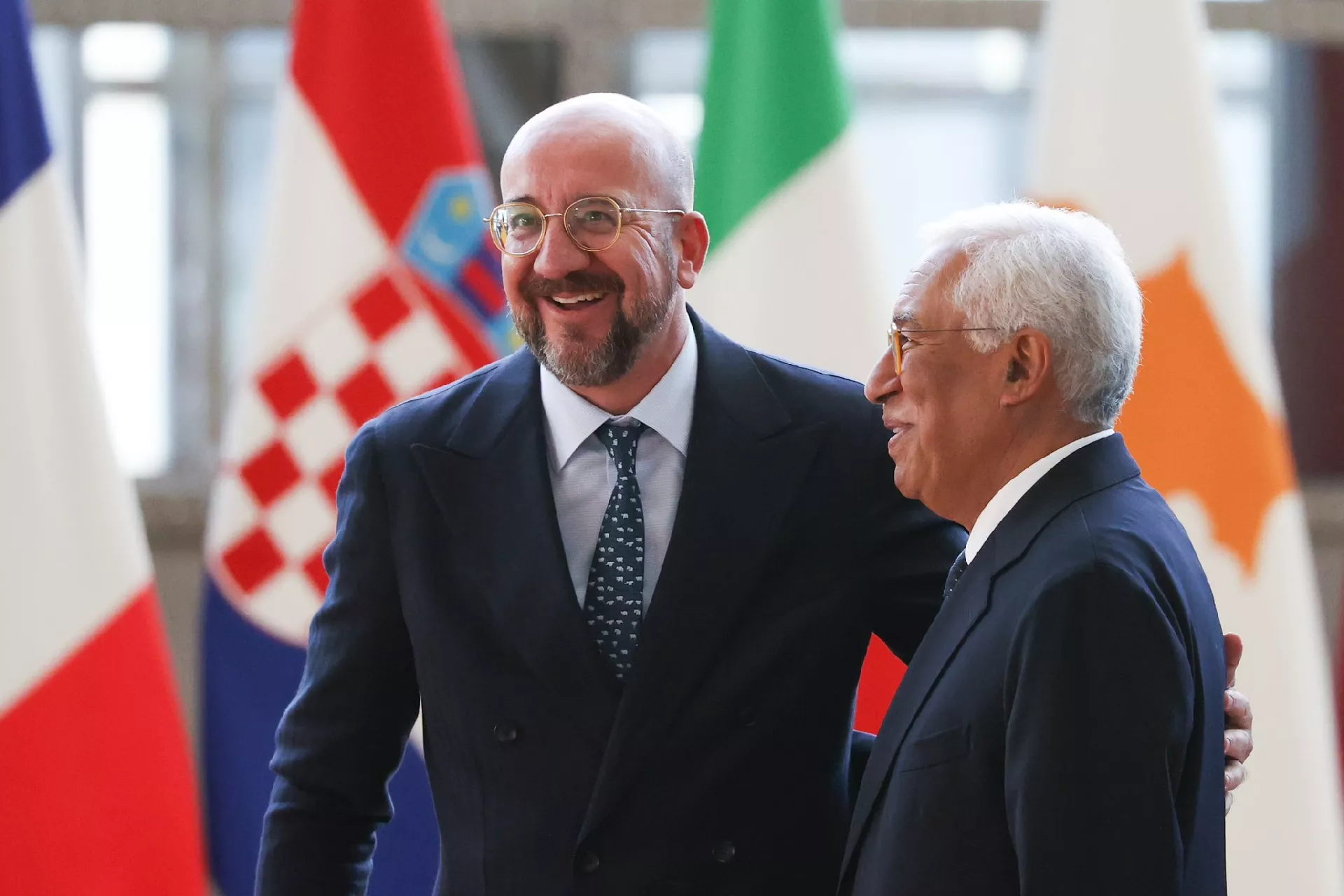
(Patria) - The new President of the European Council, Antonio Costa, strongly advocated for EU unity while preserving its diversity.
- Only together can we ensure stability, security, and peace on our continent - Costa said yesterday at a handover ceremony.
The outgoing head of the European Council, Belgian liberal Charles Michel, handed over his duties to Portuguese socialist Antonio Costa, who officially takes office on Sunday, December 1st.
- Only together can we ensure that Europe's voice is heard on the international stage, because unity is the lifeblood of the EU, but we must not ignore our differences of opinion or treat them as a problem.
This diversity is perfectly natural, it enriches us and represents Europe's strength - said Costa, who has proven to be a skilled politician, maintaining a delicate balance among coalition partners and having a reputation as a successful consensus builder, qualities essential for the role of President of the European Council.
The European Council is the most important political body of the EU, bringing together heads of state or government, defining the EU's strategic direction and policies, and making decisions by consensus.
The position of President of the European Council was introduced by the Lisbon Treaty, which entered into force on December 1, 2009.
The term of office for the President of the European Council is two and a half years and can be renewed once, as has been the case with all European Council presidents so far – all have served two terms, a total of five years, coinciding with the mandates of the Commission and the European Parliament.
Costa, a 63-year-old socialist, served as Prime Minister of Portugal from 2015 to 2024, was a minister in several governments, mayor of Lisbon, and a Member of the European Parliament.
Costa was elected President of the European Council in June this year, and before taking office, he visited all the capitals, except Bucharest and Sofia, and spoke with the leaders of the member states. He has not yet visited Bulgaria and Romania due to elections in those countries.
- I feel confident after speaking with European leaders in recent weeks who have a sense of urgency and are focused on collective action inspired by creativity and pragmatism - Costa said.
In his speech, Costa emphasized that the EU is based on values – human dignity, freedom, the rule of law, democracy, and equality – and that its purpose is to ensure peace and prosperity.
Speaking about the war that has been ongoing on European soil for over a thousand days – Russia's aggression against Ukraine, Costa said that "we all long for peace".
- But peace cannot mean the peace of a cemetery, it cannot mean capitulation, peace must not reward aggression. Peace in Ukraine must be just and lasting and based on international law, which includes the right of peoples to self-determination, the right of peoples to choose their own future, and respect for territorial integrity and state borders - Costa stated.
He added that the EU must be stronger, more effective, more resilient, with greater autonomy in security and defense, while continuously working on the transatlantic partnership.
He also stressed that enlargement to the Western Balkans and Eastern neighbors is a "powerful tool for peace, security, and prosperity and a geopolitical imperative," adding that both the EU and candidate countries must work harder and faster "without artificial deadlines but also without unnecessary obstacles".
Costa thanked the outgoing president Michel, saying that "Europe owes him a lot".
Michel's five years at the helm of the European Council were marked by tense relations with the President of the European Commission, Ursula von der Leyen, and competition with her.
Michel is leaving his position with far weaker ratings than his predecessors Herman Van Rompuy and Donald Tusk.
Costa is the first head of a European institution who does not have European origins. His paternal grandfather is from the Indian state of Goa, which was once a Portuguese colony, and his paternal grandmother has French-Mozambican origins.
Mozambique was also a Portuguese colony. Costa holds so-called "overseas citizenship of India," which is a form of permanent residency and work permit in India based on Indian origin.
Komentari (0)
Prijavite se za komentiranje
PrijavaJos nema komentara. Budite prvi!
Minuta
Sve →Iz drugih kategorija

High Representative Not Elected: Germans, French and British Against Americans, New Attempt at End of June

ČOVIĆ WITHOUT MERCY: How Those Who Brought Ademović to Office Created a Political Hell for Him



Sunny Saturday, quite warm



Tragedy in Albanian resort: Two minors drown












