
By Armin Sijamić
February brought optimism to the residents of Lebanon, as a government was finally formed and a president was previously elected. On the other side of the world, Israeli Prime Minister Benjamin Netanyahu presented a gift to US President Donald Trump that The Independent newspaper called "morbid".
The formation of the Lebanese government took months. The story became particularly topical after the ceasefire between Hezbollah and Israel, and Nawaf Salam was appointed Prime Minister with the task of forming a government.
Some believed that now was the right time to create a new political landscape for Lebanon, as Hezbollah had lost its leader Hassan Nasrallah and a number of officials. The goal is to eliminate Hezbollah as an important factor in Lebanese political life, and in return, Beirut was promised aid.
Such an offer implies that Lebanon is in the focus of larger states, and no one is hiding it. The United States and France have promised financial and military aid, Saudi Arabia investments in Lebanon, and neighboring Israel peace if Hezbollah, supported by Iran, is removed from power.
American and Israeli Interests
The US has stood behind Israel for decades, regardless of Tel Aviv's actions. But just last year, Washington tried to maintain a semblance of neutrality in mediating between Lebanon and Israel. With Trump's return to power, Washington has shed formalities – Israeli interests are American.
On Friday, Lebanese President Joseph Aoun, who is from the Christian ranks, was visited by the US Deputy Special Envoy for the Middle East, Morgan Ortagus. Unlike her boss, Special Envoy Steve Witkoff, who, like his predecessor Amos Hochstein, tried to adhere to diplomatic protocol, Ortagus has no brakes.
Lebanese media, especially those close to Hezbollah, reacted angrily after Ortagus stated that for the United States, the entry of the Shiite party into the new government was a "red line". In addition, she wore a ring shaped like a six-pointed star, also known as the Star of David, a clear reference to Judaism, which she adopted during her mission in Baghdad.
In other words, she publicly pressured the Lebanese that Hezbollah must not be part of the new government, just as Netanyahu demanded. France, for example, issued a much milder statement, calling for all parties to focus on reconstruction and reforms in Lebanon while respecting its diversity.
However, the Lebanese had different plans than Ortagus, considering the balance of power and the fact that, according to unwritten rules, Shiites hold a significant portion of power in one of the most complex political systems in the world, and that Shiites constitute about a third of Lebanon's population. Following the aforementioned statement, Hezbollah supporters blocked the road where the guest was supposed to travel.
New Government
Nawaf Salam had an extremely difficult task of reconciling the interests of domestic and foreign actors in Lebanon. Specifically, this meant that he had to secure the support of the Lebanese parliament, headed by Shiite politician Nabih Berri, leader of the Amal party, an ally of Hezbollah. Berri had been the contact person between the Hezbollah leadership and Western envoys since the beginning of the war with Israel.
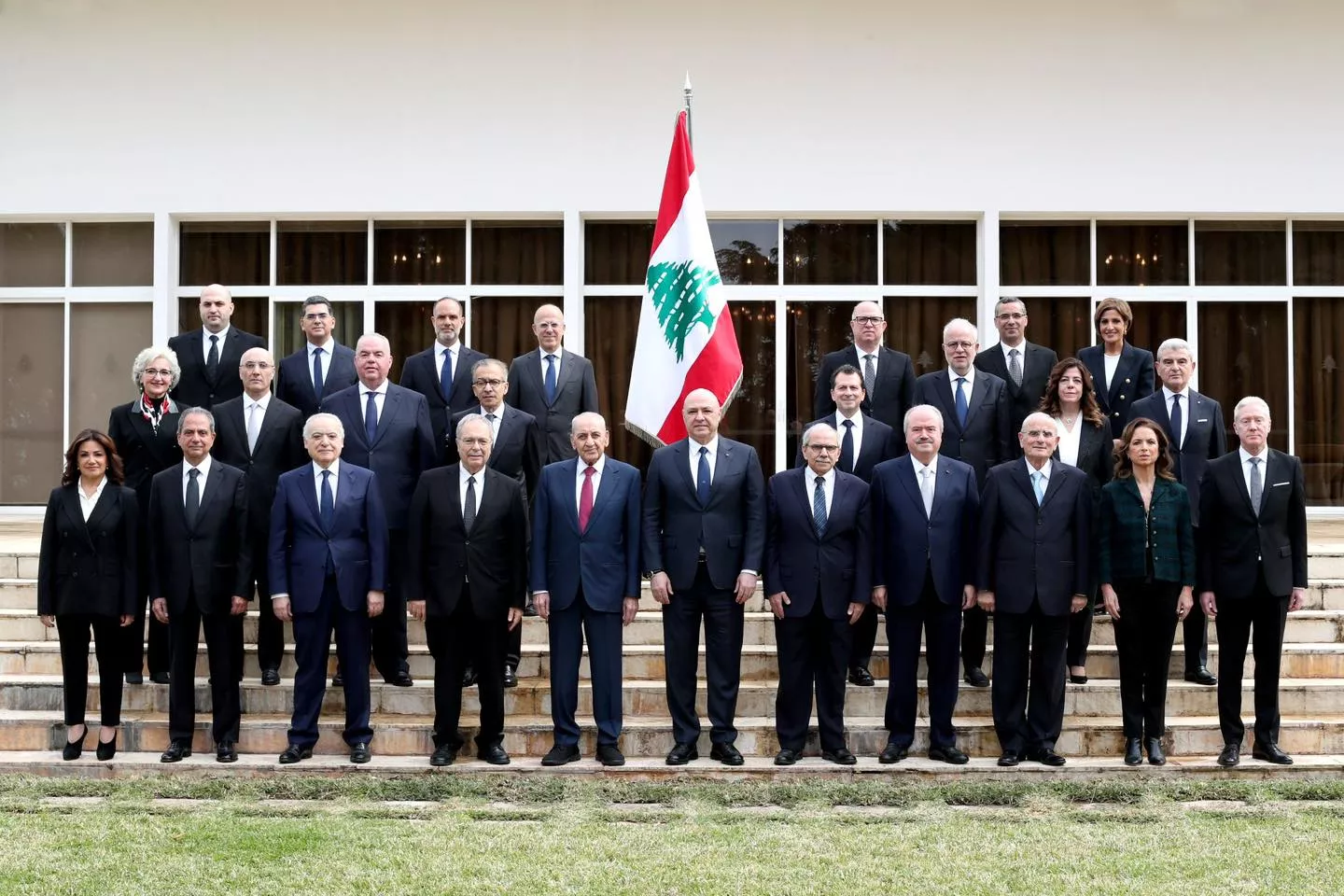
Thus, Sunni Prime Minister Salam, with the consent of others, formed his cabinet with 24 ministers, of which five positions were allocated to Shiites. Hezbollah and Amal appointed four, including a very important Minister of Finance, and Salam appointed the fifth.
This development was interpreted differently by many in Lebanon, with some claiming Hezbollah suffered a defeat, while others argued it achieved the maximum under the circumstances.
Some say that Shiites and Hezbollah have lost a third of their government seats and the ability to block for the first time, and that some Shiite ministers are aligned with Western preferences, concluding that this is a consequence of the weakening of the Shiite movement and official Tehran after the war with Israel.
Others argue that Hezbollah got what it wanted – a respite for reorganization. Namely, after the fall of Bashar al-Assad's regime, Hezbollah must undergo a transformation, become a local force, and seek new supply channels from Iran, as the new government in Damascus does not allow this to continue through Syria. In addition, Hezbollah seeks the reconstruction of the homes of the Shiite community, as the Israeli army targeted these areas, even while its withdrawal from southern Lebanon is expected.
Ceasefire Expires, and Netanyahu Sends a Message to Trump
The ceasefire agreed upon by Hezbollah and Israel expired at the end of January, and was then unilaterally extended by Israel, under Western pressure, until February 18. Israel has violated the ceasefire multiple times. They killed dozens of civilians who tried to return to their homes in southern Lebanon, bombed Shiite residential areas, and prevented the Lebanese army from reaching the border. Hezbollah, however, did not fall into the trap and respond to the attacks.
But Netanyahu wants war, and he doesn't hide it, believing he is on the path to creating a "new Middle East." During his visit to Trump last week, he presented him with a golden pager. The British The Independent called this act morbid. The golden pager, inscribed with "press with both hands," is an allusion to the operation against Hezbollah, during which dozens, including children, were killed and hundreds wounded.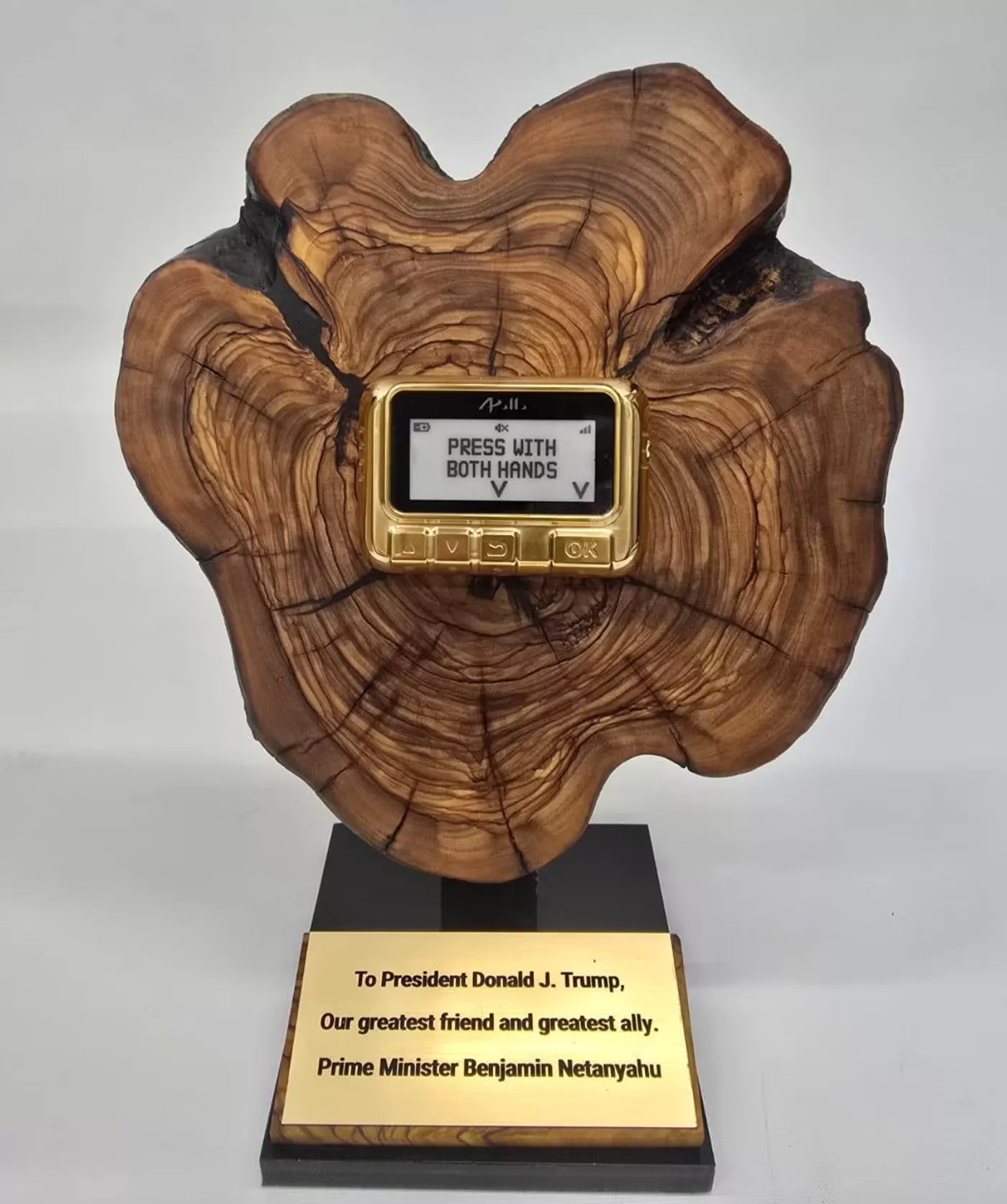
In Lebanon, some were particularly angered because the pager was placed on a cut tree, which they believe to be an olive tree. Olive branches are a symbol of peace, and the olive tree is often a symbol of a people's presence in a certain territory, as some trees grow for hundreds of years. Palestinians and residents of southern Lebanon take the olive tree as a metaphor for their presence and survival, and the Israeli army has sometimes destroyed these trees for various reasons.
"To President Donald J. Trump, our greatest friend and greatest ally. Prime Minister Benjamin Netanyahu," reads the gift brought to Washington. A source told The Telegraph that Trump responded upon receiving it: "It was a great operation."
Lebanese Rebus
What will happen in the region can be glimpsed if the ceasefires in Lebanon and the Gaza Strip fail and if Netanyahu does not get what he wants. Israel has already been approved for a new arms sale worth over seven billion dollars by Trump, and some media report that the new administration, after decades of refusal, is ready to supply eleven tons of heavy bombs known as MOAB (Mother of All Bombs), intended for breaking fortifications, which would be a message to Iran and Hezbollah, whose leader was killed when eighty tons of explosives were allegedly dropped on his bunker.
While waiting for Netanyahu and Trump's next moves, Salam must reform Lebanon, initiate reconstruction, and prepare the country for elections next year. The main focus for Trump and Netanyahu will be the status of Hezbollah, i.e., whether and to what extent the group will be disarmed. All parties refer to UN Security Council Resolution 1701 from 2006 and interpret it differently, especially the part concerning who has the right to carry weapons in southern Lebanon.
At yesterday's Lebanese government meeting, this was one of the topics. The text, which is intended to become the government's stance, states that the state has a "monopoly on weapons," meaning that the Lebanese army, trained and supported by the US, is responsible for the country's security. The text does not include the word "resistance," which is a reference to Shiite militias. However, according to the Al-Akhbar newspaper, Amal and Hezbollah persuaded Prime Minister Salam to include Article 51 of the UN Charter in the text, which emphasizes the "inherent right to individual or collective self-defense if an armed attack occurs against a Member of the United Nations, as long as the Security Council has not taken the measures necessary to maintain international peace and security."
This is a continuation of the dispute over what Hezbollah will look like in the future, as they prepare, as announced, for the historic moment of Hassan Nasrallah's funeral with participants from 79 countries on February 23 in Beirut. Tens of thousands of people are expected on the streets of Beirut that day, confirming that Hezbollah leads the Lebanese Shiites, who, many warn, are now in fear and more reliant on each other after the assassination of Nasrallah and the fall of Assad in Syria.
Media close to Hezbollah are highlighting these days that Nabih Berri told Morgan Ortagus on Friday at a meeting that "Israel is absolute evil" and that everyone must adhere to Resolution 1701, especially the part that requires Israel to withdraw from Lebanon. At the same time, Lebanese rivals of Hezbollah express hope that the party's dominance in Lebanon has ended and that a period of stability is coming.
But both sides are aware that a small country like Lebanon, situated amidst regional upheavals on the Iran-Israel-Saudi Arabia-West axis, will not decide its own fate. Clashes between allegedly local groups and smugglers have been recorded on the Lebanon-Syria border this week, Trump is developing a plan to displace Palestinians from the devastated Gaza Strip and develop tourism there, and Netanyahu is pushing him into a confrontation with Iran. Therefore, Lebanon is simultaneously very close to a new war and a period of stability.
Komentari (0)
Prijavite se za komentiranje
PrijavaJos nema komentara. Budite prvi!
Minuta
Sve →Iz drugih kategorija

High Representative Not Elected: Germans, French and British Sabotaged Americans, New Attempt at End of June

ČOVIĆ WITHOUT MERCY: How Those Who Brought Ademović to Office Created a Political Hell for Him



Sunny Saturday, quite warm



Tragedy in Albanian resort: Two minors drown












