
By Armin Sijamić
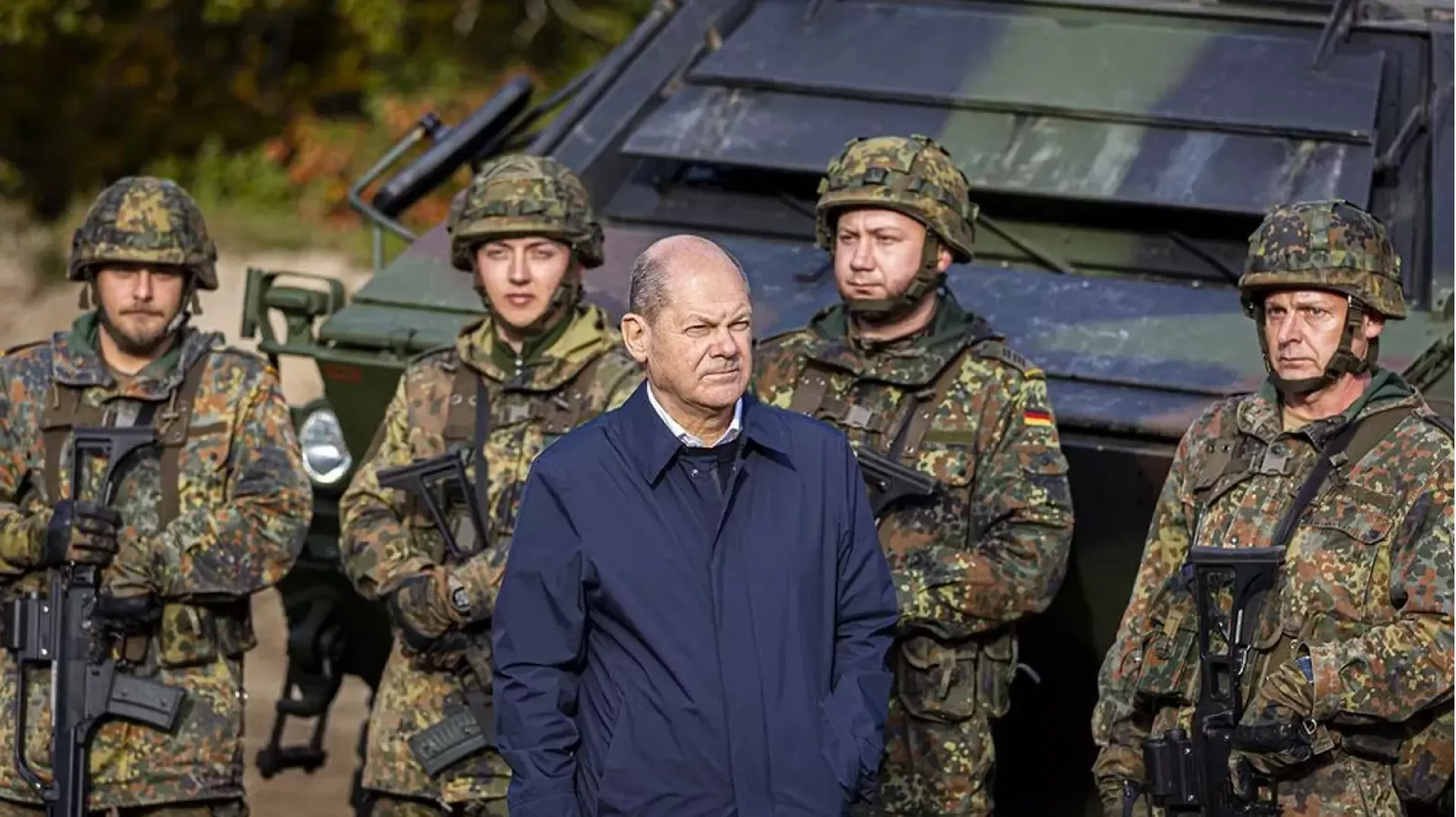
Halfway through last month, the commander of the German army, General Alfons Mais, said that his country would have the best-equipped division on the European continent by 2025, and after that, it would modernize the rest of its forces. Earlier, Chancellor Olaf Scholz announced a "historic turning point" for the army, and Annalena Baerbock is increasingly prioritizing power.
The war in Ukraine has permanently changed Germany. From close ties with Moscow and planning strategic energy projects, through hesitation at the beginning of the aggression against Ukraine last February to send weapons to Kyiv, it has reached a stage where Berlin has completely changed its policy and, as rarely before, has begun to follow the course of official Washington, even when it harms it.
Some of these changes were necessary years ago. General Mais stated that by 2025, Germany will have the best-equipped division within the European NATO members, which means a military formation of more than twenty thousand soldiers, and then another by 2027. The speed in their formation is a necessity. Berlin currently does not have a single combat-ready division, which practically means that the country's defense is based on NATO membership, or more precisely, on American power.
Let's recall the call of former US President Donald Trump to European countries to modernize their armies in accordance with NATO standards, or to pay his country for protecting them. Russia's invasion of Ukraine shows that Trump was right. Without the American army in Europe, Russia would have decided where its troops would stop at the beginning of the aggression against Ukraine.
The appeals of Republican Trump, according to conservative Chancellor Angela Merkel, were unsuccessful. But the appeals of Democrat Joseph Biden, according to the German Social Democrats, Liberals (FDP), and Greens, were successful. The Social Democrats thus ended the story of Nord Stream, which they themselves started, and more importantly, they abandoned the principle of "change through trade" which they had advocated for about fifty years.
New Reality
If we go back to February last year, we will remember the European confusion with what was happening in Ukraine. Germany and other European governments did not believe the American and British warnings that Russia was preparing an invasion. When the war began, they realized that their army did not have weapons they could send to Kyiv. After that, they realized that their arms production factories had small capacities, and that dependence on Russian energy affected the policies of some European countries. It then became clear how important it is for NATO members to allocate two percent of their budget to defense, in accordance with their obligations. Almost all members, including Germany, allocated less.
On February 27, Scholz announced a "historic turning point" and the establishment of a fund for army modernization amounting to 100 billion euros, and the allocation of two percent of the annual budget for defense needs. Since then, Berlin has been making plans to strengthen the army and the military industry. Scholz said that "Russia's aggression is pushing us into a new era. We must invest much more in the security of our country to protect our freedom and democracy."
The change in Berlin is primarily the result of the policy of the Greens, who look up to Biden and are determined to oppose Russia and China. This is also shown by the recent strategy on China. The third coalition partner of the current government is the Liberals, who think similarly on these issues.
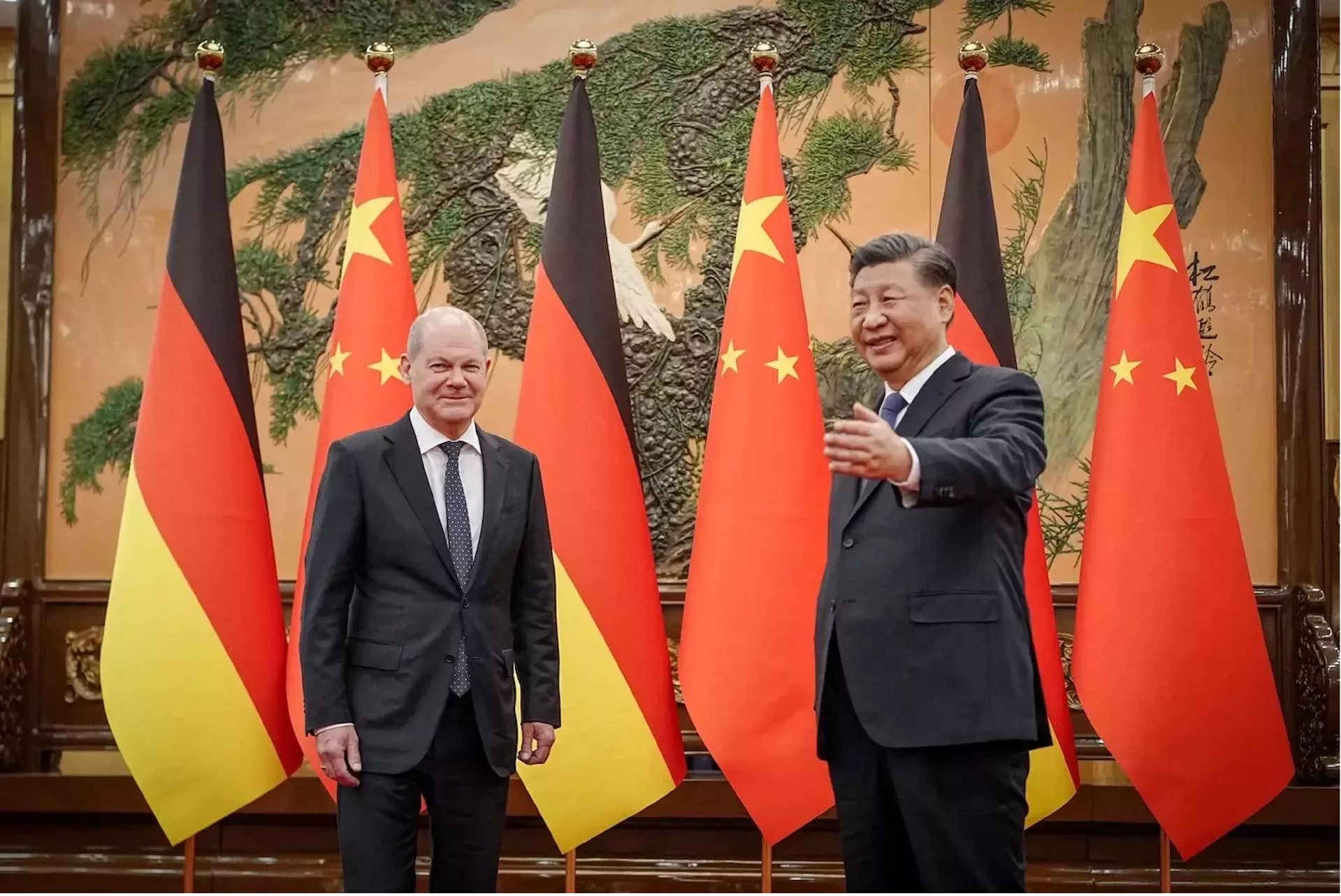
"After almost 80 years of moderation, Germany now has a new role in the international coordinate system. It must assert itself as a leading power," said Lars Klingbeil of Scholz's Social Democratic Party.
For a country to be a leading power, it must have a strong army. The aforementioned 100 billion euros for the army will be spent on the procurement of F-35 aircraft and the American-Israeli missile shield, and Berlin will permanently station four thousand soldiers in Lithuania. Already next year, the Bundeswehr will have a budget of 70 billion euros, thus meeting the aforementioned NATO requirements.
New Policy
This turn was painful for the Social Democrats. They had to abandon their policies on army strength, cooperation with Russia, and reliance on American military power. The Liberals and Greens had a much easier task – they still need to confirm their political identity. "If our world is different, our policy must also be," says Foreign Minister Annalena Baerbock, who comes from the Greens.
And the world has changed with Russia's aggression against Ukraine. Columns of Russian tanks heading towards Ukrainian cities could only be stopped by force, not by trade, sanctions, and diplomacy. Germany, as the most important member of the European Union, was expected to acknowledge this reality. A number of European countries asked Berlin and Brussels to change their long-standing policies and to position themselves in accordance with the reality in Eastern Europe.
The Social Democrats tried to shift Germany aside again and let others take the lead. The opposition Christian Democratic Union (CDU) pressured Scholz to make changes in policy towards Russia, describing him as a poor friend of Ukraine, saying that he might be following a "hidden agenda," alluding to the good ties of their former chancellor Gerhard Schröder with the Kremlin.
German President Frank-Walter Steinmeier, a Social Democrat and former foreign minister in Angela Merkel's government, is the best example of a change in attitude. From an advocate against sending weapons to Ukraine and someone who defended the Nord Stream project, he became a person who defends the delivery of cluster bombs to Kyiv, even though his country has banned their use.
In a short period, Scholz has faced criticism at home and on the international stage, including from Ukraine, which is demanding weapons from Berlin and a stance that the Kremlin must be stopped. At the same time, the Liberals and Greens have a clear policy. Scholz knows that without them, he will not be able to form a new government, and the current popularity of his Social Democrats does not give him hope. The economic crisis caused by the aggression against Ukraine and sanctions against Russia has affected the standard of living of German voters. In addition, the far-right party Alternative for Germany (AfD) is the second most popular according to polls, so a closing of ranks on the left is expected.
Scholz understands that Germany must pursue a different policy, or the party will lose support. The Liberals and Greens have imposed themselves as policy makers. The former are demanding cuts in social budgets, promoting private initiative, and changes in the economy, while the Greens advocate for a green agenda, confrontation with autocrats, feminism, and human rights. The Greens have shaken up Berlin's established policies and will not stop there. Former advocates of military restraint and not sending German weapons to other countries have become the most warlike part of the government.
Then-deputy of the Greens in the Bundestag, Anton Hofreiter, stated in mid-December that Ukraine can only protect itself from Russia by "joining NATO or with 3,200 Leopard tanks," practically the same number that Hitler mobilized in the attack on the USSR in 1941. "In geopolitics, it is often necessary to negotiate with a Colt (revolver) on the table," he said. As early as 2017, the Greens were against a German army budget exceeding 36 billion euros.
Tectonic shifts in German politics are the result of the strengthening of the Greens and the FDP, who, according to the latest polls, have a combined support of over 20 percent. This practically means that the SPD and CDU/CSU cannot form a government without them after the 2025 elections, if they do not want to form a coalition, or a coalition with the far-right AfD or the far-left Die Linke.
Germany is yet another in a series of European countries that have faced the rise in popularity of new social movements and parties that are pushing aside traditional political forces. Their popularity coincides with the changes brought about by Russian aggression, which is a new impetus for Germany to begin playing a more active role on the European and world political stage.
Komentari (0)
Prijavite se za komentiranje
PrijavaJos nema komentara. Budite prvi!
Minuta
Sve →Iz drugih kategorija

High Representative Not Elected: Germans, French and British Against Americans, New Attempt at End of June

ČOVIĆ WITHOUT MERCY: How Those Who Brought Ademović to Office Created a Political Hell for Him



Sunny Saturday, quite warm



Tragedy in Albanian resort: Two minors drown












