
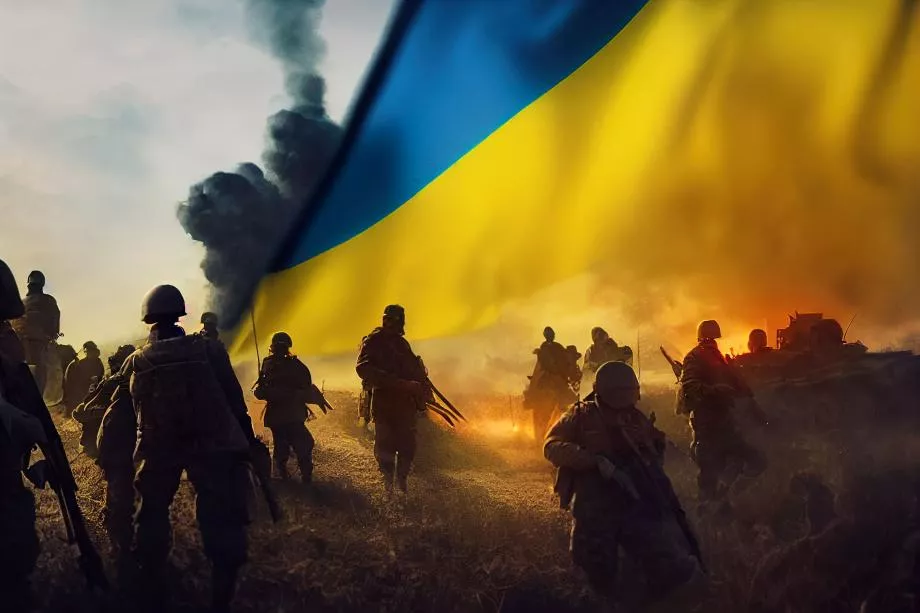
(Patria) - Regardless of the outcome of the US presidential election, the war in Ukraine is very likely to end next year. Both Ukraine and Russia face a shortage of soldiers and difficulties in mobilizing young men for the front lines. This reality indicates that 2025 will be a year of negotiations, writes The New York Times.
Donald Trump's victory would accelerate the start of these peace negotiations. During the campaign, Trump promised to end the war in Ukraine even before his inauguration. This may have been an overstatement, but it is clear that he wants negotiations to begin as soon as possible.
This is not good news for Ukraine. Russian forces are advancing in the east. They have also recaptured some territory that Ukraine gained last summer. Ukraine still possesses weapons, but its troops are scattered and exhausted. Intelligence agencies predict that it could soon run out of soldiers.
Ukrainian officials claim they are ready to continue fighting. However, Republicans in the US Congress are reluctant to approve additional aid to Ukraine, and Kyiv is aware that without significantly more aid, the fighting will end soon.
Is Europe capable of replacing the US in providing military and economic assistance? At a recent NATO summit, allies developed a plan for logistical support to Ukraine that would be "Trump-proof." However, officials from Joe Biden's administration doubt that Europe can take on this role.
Europe cannot replicate the economic power of the dollar, which allows Washington to run large budget deficits to finance defense. When American support disappears, it will be difficult for Europe to secure enough ammunition and funding for Ukraine to continue fighting.
Without additional weapons and soldiers, Ukraine may not be able to regain the territory it has lost. President Volodymyr Zelensky knows this. He recently admitted that diplomacy, not the current "hot war," will be the key to regaining territory.
During the presidential campaign, J.D. Vance proposed freezing the conflict, allowing Russia to keep territory seized by force. Russian President Vladimir Putin currently shows no intention of conquering additional territory, but he also gives no signs of being willing to withdraw from Ukrainian territory he controls. Ukraine's only bargaining chip is Kursk, a Russian region partially occupied by Ukrainian forces in August.
The Biden administration is trying to secure the best negotiating position for Ukraine. The White House is sending as much weaponry as possible to Ukraine. It recently gave Kyiv permission to use American long-range missiles inside Russia to hold Kursk. If this succeeds, Russia may agree to an exchange of some Ukrainian territory for Kursk. However, Kyiv will likely not regain most of the lost territory.
For Ukraine, victory or defeat does not depend solely on territory. Key are the agreements it can reach with Europe and the US for long-term security and economic integration with the West. NATO membership, the strongest possible guarantee, is not an option. Trump would not offer it, and a Republican-led Senate would not approve it.
J.D. Vance proposed Ukraine's neutrality, which is a key Putin demand. Trump has not taken a clear stance on this issue. It is unlikely he would support Ukraine's military defense in case of a future attack, but he might want to reach a compromise with Putin.
One possible concession could include allowing Ukraine to achieve economic integration with Europe, which would be more acceptable to Putin than Ukraine joining NATO.
Here, Zelensky's and Trump's fears may overlap. Ukrainians have long argued that if they reach an agreement now, Putin will only consolidate his forces and attack Kyiv again later.
Trump has repeatedly criticized President Biden's withdrawal from Afghanistan and likely does not want a similar legacy: a Russian takeover of Kyiv that would give Democrats an opportunity to accuse him of losing Ukraine.
Remaining Republicans who support Ukraine argue that Trump does not like to appear weak and will not agree to a deal that leaves Putin with free rein.
However, it is difficult to imagine Putin giving a non-aggression promise that Kyiv could consider credible (Russia's previous promises to respect Ukrainian sovereignty have proven worthless). Protecting Kyiv will be the most difficult and important part of Trump's negotiations, writes The New York Times.
Komentari (0)
Prijavite se za komentiranje
PrijavaJos nema komentara. Budite prvi!
Minuta
Sve →Iz drugih kategorija

High Representative Not Elected: Germans, French and British Sabotaged Americans, New Attempt at End of June

ČOVIĆ WITHOUT MERCY: How Those Who Brought Ademović to Office Created a Political Hell for Him



Sunny Saturday, quite warm



Tragedy in Albanian resort: Two minors drown












