
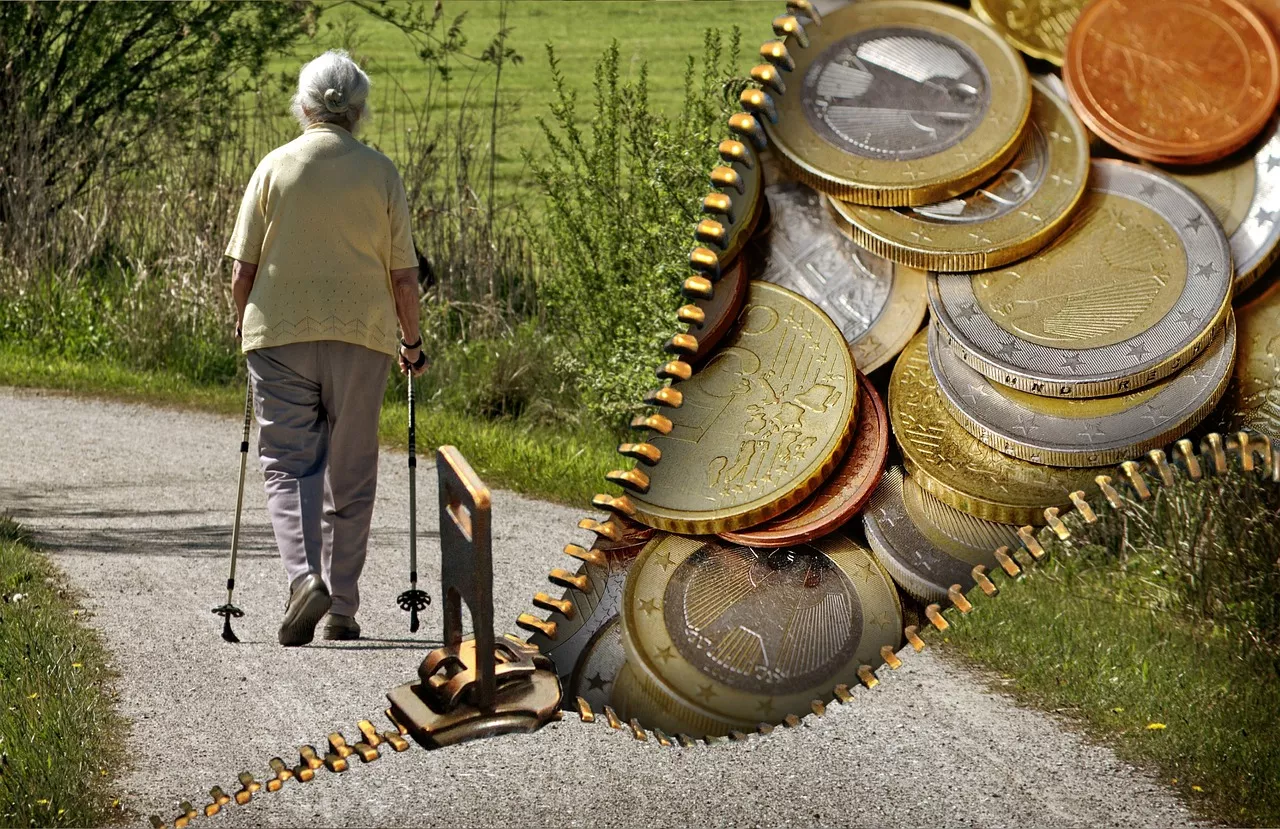
The Center for Civil Initiatives warns that the pension system in both BiH entities is permanently destabilized and unsustainable without budget subsidies. In the report 'State of the Nation', CCI experts state that over the past five years, the ratio of pensioners to employed persons has largely stagnated. Since the beginning of the Reform Agenda implementation (from July 2015), in the BiH entity of Republika Srpska, the ratio has stagnated at 1.10:1 (more pensioners than employed, author's note), and in FBiH, although more favorable, the ratio has worsened by 0.01 index points and stands at 0.88:1 (only slightly more employed than pensioners, author's note).
Close to two average salaries or four average pensions are needed for one consumer basket.
- Tax debt, primarily of public companies, endangers the pension and health systems and creates deficits. The total debt for unpaid taxes and contributions in FBiH alone amounts to 2.2 billion KM! The share of the top 20 largest debtors is over one billion KM or 48 percent of the total debt, of which public companies and institutions account for 903 million or 86 percent. Data for RS are not available, as the RS Tax Administration has repeatedly avoided providing them – state CCI in the report 'State of the Nation'.
The same report suggests that authorities should place pension systems on stable financial grounds if the problem of accumulated workers' rights is to be resolved in the medium term.
Željko Šain, a professor at the Faculty of Economics in Sarajevo, agrees with the recommendations from CCI.
- According to all regulations based on contract (binding) law, and other rights, all public companies should settle their obligations to the pension fund. How public companies will resolve this, and by what means they will find financial resources, is their problem. However, for the sake of the overall financial and social system in BiH, specifically in FBiH, public companies must find ways to settle their obligations to the Pension and Disability Insurance Fund (PIO) – says Professor Šain in a comment for the Patria news agency. However, he adds, this does not mean that governments should not seek new ways of financing the pension fund.
- The existing form of intergenerational solidarity does not bring improvement in solving the problem of the pension fund's functioning. Debtors to PIO should pay, however they can, and at the same time, the Government should seek a new model for supplementing the pension fund – Šain believes.

Professor Željko Šain: Public companies should find a way to settle their obligations
Analysts in BiH often warn that public companies in the country have long become enterprises where ruling parties employ their own cadres. This matrix is applied from hiring workers to appointing management. Parties actually employ their own voters.
Unqualified personnel are most often appointed to the helm of public companies, who cannot ensure the company's quality survival in the market. Losses in the operations of public companies are covered from the public budget, which later affects the entire fiscal and social system in the country, writes Patria.
Komentari (0)
Prijavite se za komentiranje
PrijavaJos nema komentara. Budite prvi!
Minuta
Sve →Iz drugih kategorija

High Representative Not Elected: Germans, French and British Sabotaged Americans, New Attempt at End of June

ČOVIĆ WITHOUT MERCY: How Those Who Brought Ademović to Office Created a Political Hell for Him



Sunny Saturday, quite warm



Tragedy in Albanian resort: Two minors drown












