
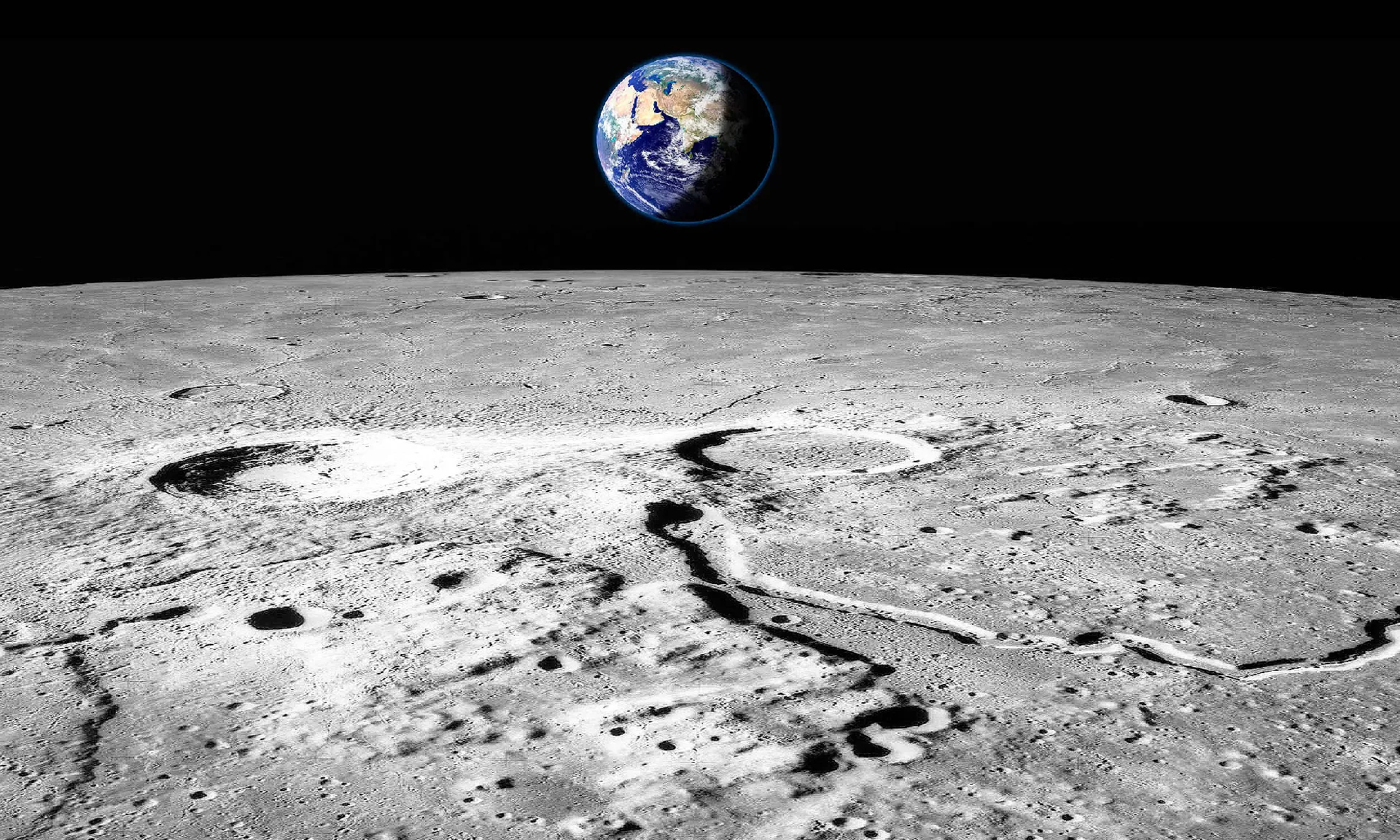
(Patria) - Scientists have discovered water on the entire surface of the Moon, including the equator, which could impact future astronaut missions to Earth's satellite, reports VOA.
New research has found that water can be found on the Moon at all latitudes and terrains, even in places where the Sun shines brightest.
This discovery has an important impact on our understanding of the Moon's geological history and future human missions.
Scientist Roger Clark from the Planetary Science Institute in Arizona explains that future astronauts could find water even near the Moon's equator, which was previously considered unlikely.
- It was previously thought that water was abundant only in the polar regions, especially in craters at the poles that are permanently in shadow - says Clark.
Previous studies showed that large amounts of water are found deep in craters, especially at high latitudes, where sunlight does not reach.
In these cold and dark areas, ice can survive, protected from heat and radiation. However, new research now suggests that water is not limited only to these regions.
Scientists used data from the Moon Mineral Mapper (M3) from India's Chandrayaan-1 mission, which orbited the Moon in 2008 and 2009.
The instrument collected spectroscopic images of the Moon and analyzed the infrared light reflected from its surface, searching for traces of water.
Data analysis showed that water exists throughout the Moon, including in places that are exposed to sunlight daily.
However, water on the Moon does not remain permanently. Researchers have found that it is gradually destroyed by solar wind radiation over millions of years.
Despite this, water can be present long enough to be useful for future missions.
This discovery can help future astronauts in their search for water sources on the Moon.
By processing water-rich minerals, astronauts could obtain the necessary water for drinking or fuel production, which would significantly reduce the costs and logistical challenges of future missions.
The discovery of water in non-polar regions of the Moon can also help scientists better understand how the Moon was formed and what processes have shaped its surface over billions of years.
This research shows that the Moon, although it appears dry and lifeless, has more water than previously thought, opening new chapters in the exploration of our closest celestial neighbor.
The findings could be key to planning long-term missions and eventual settlement of the Moon.
Komentari (0)
Prijavite se za komentiranje
PrijavaJos nema komentara. Budite prvi!
Minuta
Sve →Iz drugih kategorija

High Representative Not Elected: Germans, French and British Sabotaged Americans, New Attempt at End of June

ČOVIĆ WITHOUT MERCY: How Those Who Brought Ademović to Office Created a Political Hell for Him



Sunny Saturday, quite warm



Tragedy in Albanian resort: Two minors drown












