
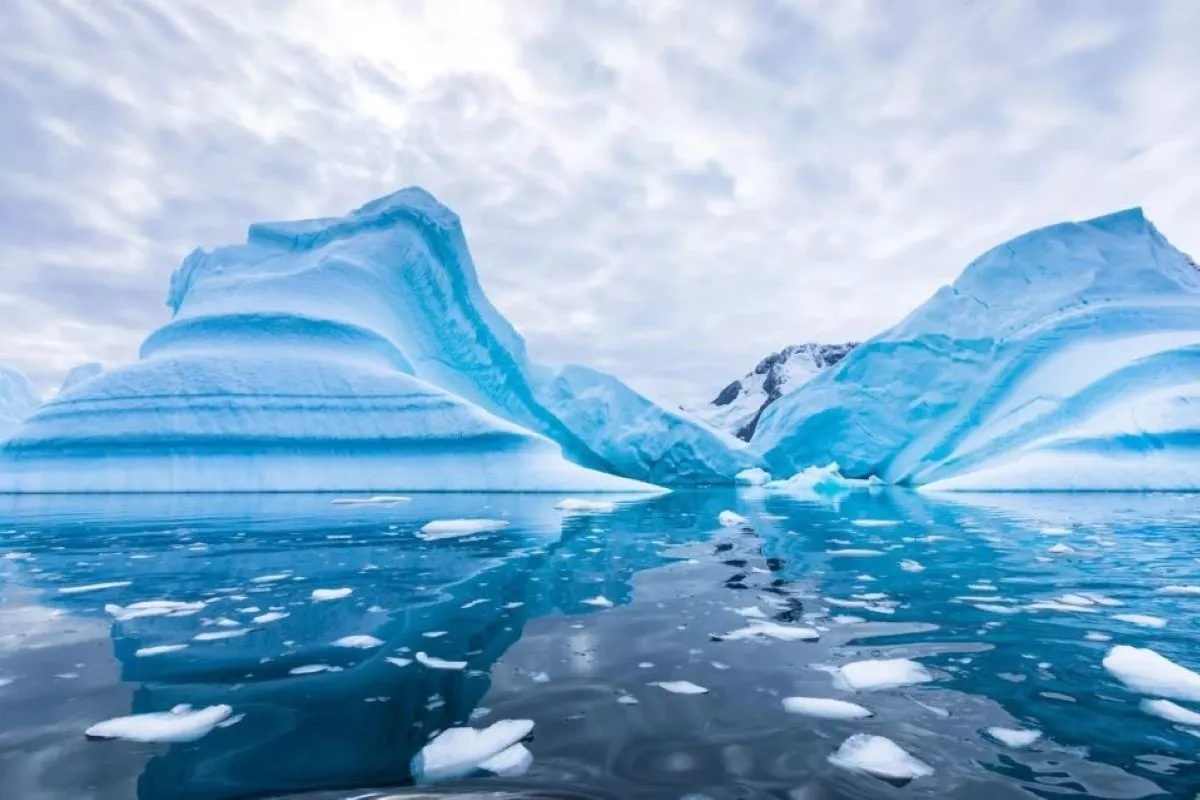
(Patria) - Scientists have solved the mystery of a large hole that appeared in Antarctic sea ice eight years ago.
The hole is nearly twice the size of New Jersey, reports b92.
The rare ice-free water opening, called a polynya, was first discovered in 1974 and remained for the next two years until the void eventually closed. Scientists were again puzzled in 2016 and 2017 when the polynya reappeared due to its enormous size and distance from the coast. This prompted them to discover the cause of its appearance.
Researchers at the University of Southampton discovered that the cause was actually a combination of ocean currents, wind, and increasing levels of salt in the water that melted the sea ice, writes the Daily Mail.
What are polynyas?
In the 1970s, scientists named this opening the Maud Rise Polynya after the underwater mountain located beneath it in the Weddell Sea. Polynyas usually occur in sea ice located in coastal areas of Antarctica every year, but it is unusual for them to form hundreds of miles away in the open ocean where the sea is thousands of feet deep.
"The Maud Rise Polynya was discovered in the 1970s when the first remote sensing satellites capable of seeing sea ice over the Southern Ocean were launched," said Aditya Narayanan, a postdoctoral researcher at the University of Southampton and lead author of the study. "It lasted through consecutive winters from 1974 to 1976, and oceanographers at the time assumed it would be an annual occurrence. But since the 1970s, it has only happened sporadically and for short intervals," Narayanan continued.
Researchers tried to discover how the polynya formed so far from the coast using remote sensing maps of sea ice, data from tagged marine animals, and a computer-generated ocean model.
The results showed that a current moving around the underwater Maud Rise mountain in the Weddell Sea created turbulent eddies - a reverse current - that pushed salt to the sea surface.
When the salt reached the surface, a process called Ekman transport occurred, which moved the water at a 90-degree angle to the wind direction, facilitating the mixing of salt with heat at the surface and melting the ice.
"Ekman transport was the essential missing ingredient that was necessary to increase the salt balance and sustain the mixing of salt and heat toward the surface water," said Alberto Naveira Garabato, co-author of the study and a professor at the University of Southampton.
Researchers speculated that polar cyclones passing through the region could have triggered stronger Ekman transport, bringing excess salt to the surface, but clarified that their study could not confirm the theory.
Researchers now warn that the polynya could have a negative impact on the oceans and contribute to rising sea levels.
"The footprint of polynyas can remain in the water for years after they form," said study team member Sarah Gille, co-author of the study and a professor at the University of California, San Diego.
"They can change the way water moves and how currents transport heat toward the continent. The dense waters that form here can spread across the global ocean," she said.
Komentari (0)
Prijavite se za komentiranje
PrijavaJos nema komentara. Budite prvi!
Minuta
Sve →Iz drugih kategorija

High Representative Not Elected: Germans, French and British Against Americans, New Attempt at End of June

ČOVIĆ WITHOUT MERCY: How Those Who Brought Ademović to Office Created a Political Hell for Him



Sunny Saturday, quite warm



Tragedy in Albanian resort: Two minors drown












