
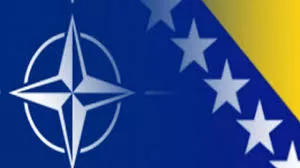
By Sead Omeragić
Is it not time for peace in the Western Balkans? Will we give politicians a chance to finish this job of NATO membership. Isn't it time to finally, after the horrors of war, uncover the reasons for the tragedy of these regions and live in peace. For decades, the Western Balkans have looked as if the war never ended, but continued by other means. Leaders maintain power through fear and hatred. People are leaving their homelands out of fear of conflict, least of all for economic reasons. There is no doubt: Bosnia and Herzegovina's slow path towards NATO has been the culprit for the lack of peace in these regions.
Bosnia and Herzegovina's admission to NATO will show that the long-standing parrot-like statements that peace in the Balkans depends on good relations between Serbia and Croatia were a complete fraud. Tuđman and Milošević repeated this, and generations of their successors have persistently echoed it. Today, it is time to reveal this dangerous cliché in its true light: Good relations between Serbia and Croatia were only valid if they were linked to the division of Bosnia and Herzegovina and the creation of their large states. They were based on state terrorism against Bosnia and Herzegovina, on crimes and ethnic cleansing, which were judged by the Tribunal in The Hague. People are leaving the Western Balkans out of fear. Let's look at the other side of the coin.
Nebojša Radmanović, as the then Chairman of the Presidency of Bosnia and Herzegovina, signed BiH's request for the Membership Action Plan (MAP) for NATO in Sarajevo in June 2009. Radmanović only acted according to what was written in the Law on Defense: "The BiH Parliament, the Council of Ministers, the Presidency of BiH, and all defense entities, within their constitutional and legal jurisdiction, will implement the necessary activities for BiH's admission to NATO membership." Radmanović, who was elected to the Presidency of BiH for two terms, signed the Agreement on BiH's accession to the "Partnership for Peace" program at NATO headquarters in Brussels in December 2006.
His party colleague Nikola Špirić approved an important agreement on the exchange of security information between BiH and NATO in March 2007, and then the following year signed a document on intensifying dialogue between BiH and NATO. The final goal was then announced: BiH's entry into NATO membership as soon as possible. The following year, Špirić and Dodik signed the approval for the disposal of movable military assets.
In Sarajevo, they pushed to sign any NATO document, but they were properly accompanied by Dodik and his team. Why did they rush to NATO for so long, and then start moving closer to Russia? We have never received an answer as to why a large number of young people have left and are leaving Eastern Slavonia, Šumadija, and then BiH, especially the Banja Luka region. The reason is simple.
The agreement between Milošević and Tuđman not only divided Bosnia and Herzegovina but also Croatia in the long run. And that was the plan for the final stage of demarcation between these criminal Greater-state projects. No one ever asked why Eastern Slavonia is massively and tragically depopulating? Croatian youth know this, having found refuge in Germany, Ireland, Sweden... Namely, the final agreement between Milošević and Tuđman would have affected far more than the whole of Bosnia and Herzegovina. That border between the so-called Greater Serbia and the so-called Greater Croatia was agreed upon along the rivers Bosna and Neretva, and then it would have extended north, towards Hungary, completely separating Eastern Slavonia and handing it over to the so-called Greater Serbia.
This has been talked about for a long time among Croatian, and even Serbian expatriates around the world. No young person is foolish enough anymore to listen to peacetime threats and wait for final war solutions.
This will seem impossible to many in Bosnia and Herzegovina, but it has all been seen before in a more drastic form. For example, back in October 1991, the HDZ showed that it was ready for anything when a team of Serbian cartographers, academics from the Serbian Academy of Sciences and Arts (SANU), visited Zagreb. This was later confirmed in dozens of testimonies and in the books of the actors themselves. Their goal was to agree on maps for the division of Bosnia and Herzegovina. Let us remember on the anniversary of Vukovar: This happened during the worst destruction of the city. According to the final division plans, after leaving Eastern Slavonia, a series of beautiful Croatian cities, including Vukovar, would have remained in the so-called Greater Serbia.
Dodik and his team must have known that any final division of Bosnia and Herzegovina by Tuđman and Milošević would also mean cutting off Krajina with Banja Luka and its annexation to the so-called Greater Croatia. All these plans, unfortunately, remained alive, and they were dreamed of in Zagreb and Belgrade until yesterday. Russian policy, which was a key player in connecting Milošević and Tuđman for the purpose of dividing Bosnia and Herzegovina, knew and knows them very well. However, Bosnia and Herzegovina survived in the nineties and spoiled the plans of its butchers. Thus, it would survive today, and some bullying leaders would be driven from the scene.
Of course, in all of this, the HDZ is only interested in those few municipalities in West Herzegovina and Central Bosnia, while it does not even recognize the remaining Bosnian Croats. Did Dodik move towards NATO after Tadić declared Serbia's military neutrality in 2007, realizing that the Karađorđevo agreement was dead? Did he change his mind when Vučić turned to the Russians and started stockpiling their weapons? And is this behind-the-scenes game with figures around NATO a sign that Dodik and his people must not leave Krajina and Banja Luka in some imagined "Greater Croatia" under any circumstances? Even if it is in the long term.
In the last few days, Vučić has launched two things: a "spy affair with the Russians" and pushed Dodik into the NATO fire. He had alleged spy recordings for a long time, he just needed Dodik to take some initial blows.
Therefore, BiH in NATO means peace and means that the peoples of the Western Balkans can finally breathe a sigh of relief. A terrible exodus would finally stop.
Komentari (0)
Prijavite se za komentiranje
PrijavaJos nema komentara. Budite prvi!
Minuta
Sve →Iz drugih kategorija

High Representative Not Elected: Germans, French and British Sabotaged Americans, New Attempt at End of June

ČOVIĆ WITHOUT MERCY: How Those Who Brought Ademović to Office Created a Political Hell for Him



Sunny Saturday, quite warm



Tragedy in Albanian resort: Two minors drown












