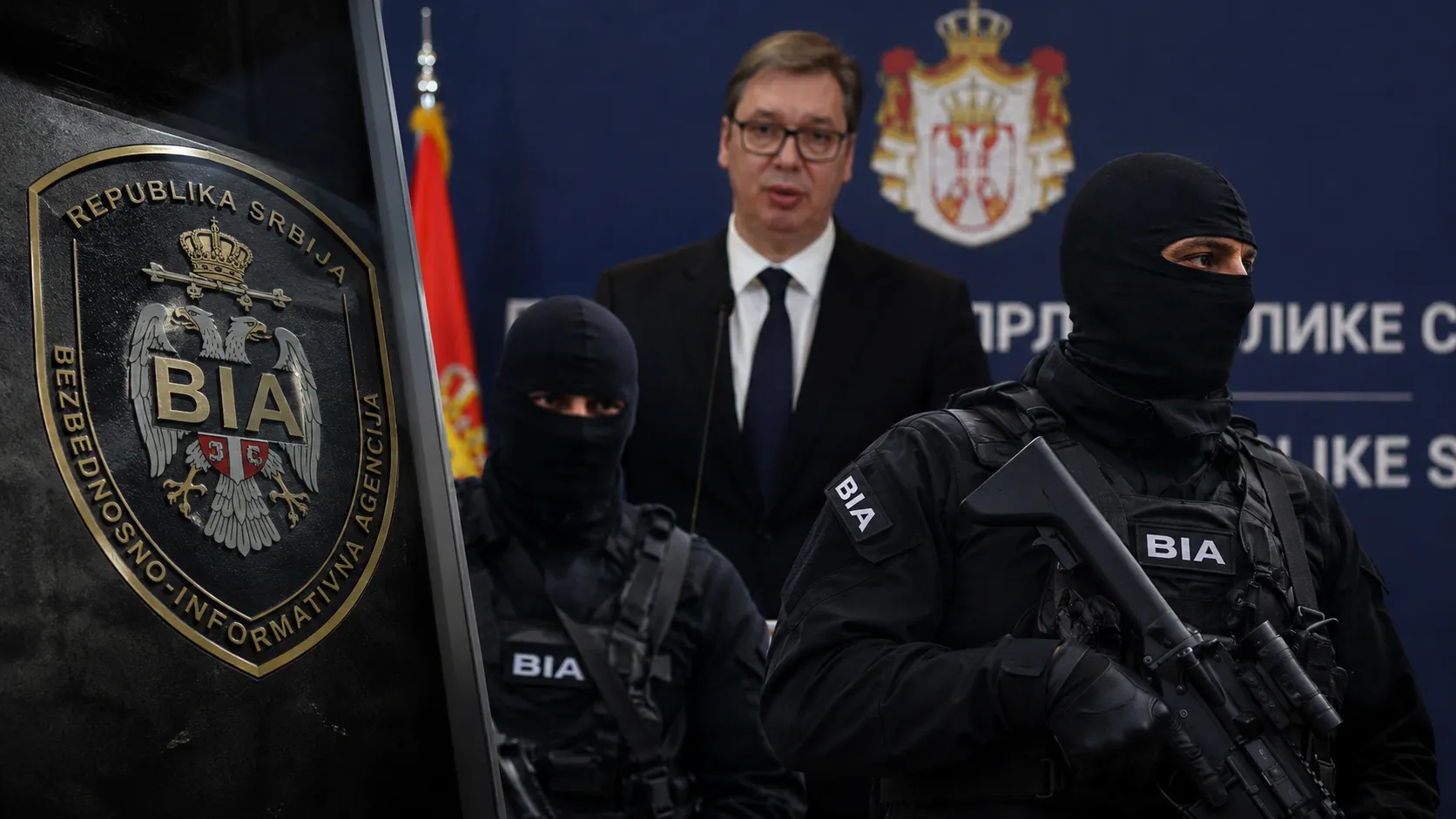
Aleksandar Vučić is not giving up on the plans for a "Serbian world", although he is fully aware that the space for realizing such ambitions in the Balkans has significantly narrowed and continues to shrink. However, the fact that after the terrorist attack on Kosovo, which is under US protection, he now attempted to destabilize NATO member Montenegro shows that the Greater Serbian ideology has not relented – it is merely changing its techniques, methods and modes of operation.
In recent days, Vučić attempted to strike at the security foundations of a NATO member, but also at the most advanced Balkan country on its path to the European Union. Through special operations at a high-risk event of interest to the world public, he wanted to cast doubt on the institutions of the state of Montenegro, question its ability to guarantee security, and produce political damage that would be felt for a long time.
However, this time Vučić and his strategists miscalculated and forgot one important fact – Angela Merkel and the European political forces that, for the sake of overthrowing Milo Đukanović, were ready to undermine Montenegro itself and push it into the concept of the "Serbian world" are no longer there. Even those political forces that were against Đukanović and now form the government do not want to allow any rocking of the boat that would close the wide-open European doors for Montenegro. Podgorica's European path has become a state interest around which there is a much broader consensus than is often portrayed.
On the other hand, the swift reaction, removal from the plane and deportation of Vučić's operatives also demonstrated the concrete benefits of NATO membership. There is no doubt that membership in the Alliance has strengthened Montenegro's security system, improved intelligence sharing and made institutions more prepared for this type of operation. It was precisely the speed of the reaction that showed that security challenges today are recognized much earlier than was the case ten or fifteen years ago.
A manipulator as he is, Vučić tried to blame Montenegro for everything, but this is a long-seen matrix of political action. It was because of questions about this matrix that Vučić was nervous, twisting the story in an informer-like manner about how he was met with hospitality and how Montenegrins are welcome in Serbia even when, allegedly, they help overthrow the constitutional order during protests.
And a journalist from Montenegro asked Vučić whether the operation in Tivat could be compared to the one in Srebrenica, i.e. in Potočari. "I caused a scandal in Potočari? They wanted to lynch me," Vučić replied to the question, after which he continued to combine thanks and accusations, trying to relativize the circumstances of both events.
And in fact, there were many similarities. Because, let us recall, two members of Serbia's security agencies were finally acquitted of charges of leaking information about an illegal trip to Bosnia and Herzegovina without any identification or prior notice. So, even that fact is a serious indicator that Vučić's arrival in Potočari was accompanied by activities that had to attract the attention of security structures. Aware that it was a high-risk event with enormous coverage in world media, Vučić at that time also counted on the political effect that a possible incident would produce.
In both cases, in Potočari and in Tivat, Vučić suffered defeat. The only difference is that in Potočari he was defeated by the religious leader of Muslims, Reis-ul-Ulema Husein ef. Kavazović, with his call for calm and preservation of dignity, while in Tivat he was defeated by the institutions of the state of Montenegro, acting quickly, coordinatedly and decisively.
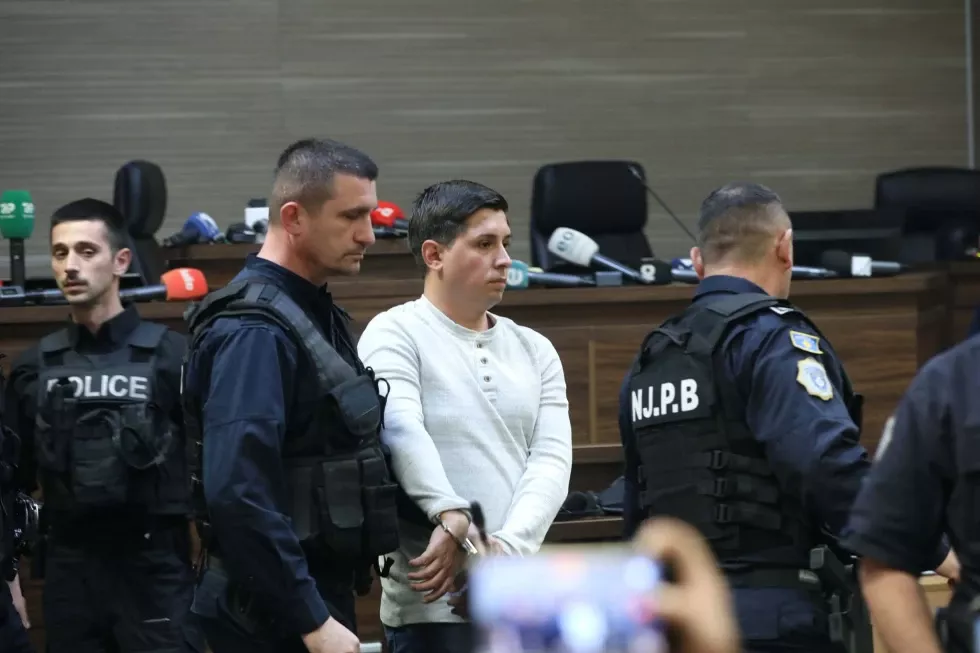
Therefore, there is no doubt that Vučić will try to compensate for his defeats in Banjska and Tivat by acting in Bosnia and Herzegovina, because it is clear to him that the space for political adventures elsewhere is increasingly narrow. And while in Sarajevo there is more discussion about which foreigner will implement foreign interests through the OHR for high fees than about the actual state of state institutions, especially the security sector, it is justified to assume that Vučić is already hatching new plans and looking for suitable events for further destabilization.
Experience teaches us that such activities are not announced in advance and most often take place precisely where institutions show weakness or insufficient vigilance. Therefore, any underestimation of such attempts can have serious political consequences.
Because those who think that the OHR, foreign factors or EUFOR are sufficient in themselves to deter the enraged leader of the "Serbian world" must face the truth. And the truth is that Vučić attacked a NATO member, which, regardless of the operation's failure, is a clear signal that he has not and will not give up his hegemonic policy.
Precisely because of this, the countries of the region must build their own capacities, strengthen institutions and develop security mechanisms that will not depend exclusively on international factors. The history of the Balkans has shown many times that stability is not preserved by declarations, but by strong and functional institutions.
Komentari (0)
Prijavite se za komentiranje
PrijavaJos nema komentara. Budite prvi!
Minuta
Sve →Iz drugih kategorija

High Representative Not Elected: Germans, French and British Sabotaged Americans, New Attempt at End of June

ČOVIĆ WITHOUT MERCY: How Those Who Brought Ademović to Office Created a Political Hell for Him



Sunny Saturday, quite warm



Tragedy in Albanian resort: Two minors drown












