
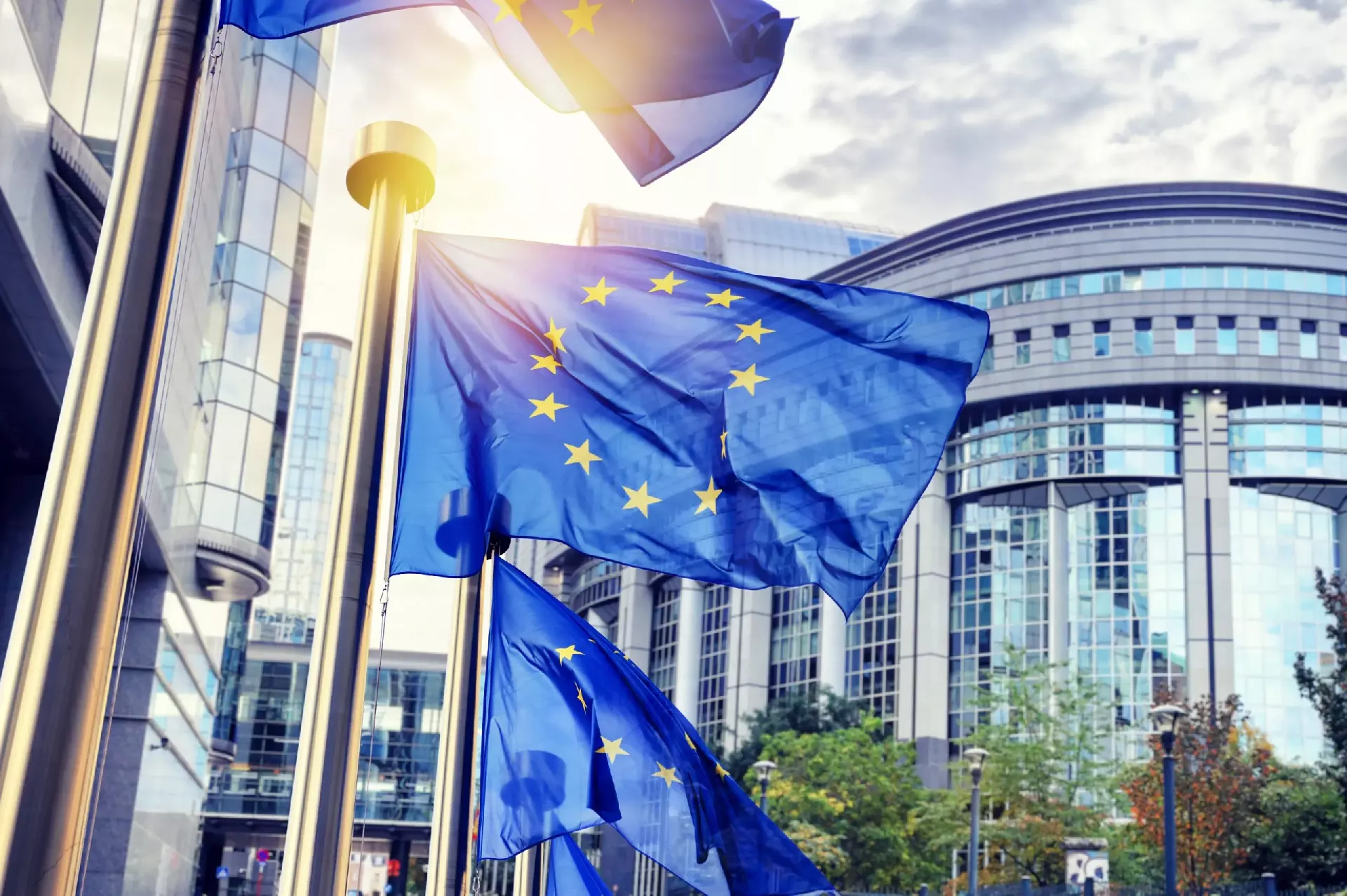
(Patria) - The war in Ukraine, the possible return of Donald Trump, necessary reforms, and the European Parliament elections - 2024 brings major challenges for the European Union, writes Deutsche Welle.
War in Ukraine
The oldest members have repeatedly promised to support Ukraine for as long as necessary, as a Russian victory would threaten Europe's security.
Will the EU keep that promise next year?
There is much talk in Brussels at the moment about dwindling solidarity and war fatigue. The EU is making enormous efforts to unanimously adopt aid for Ukraine.
The strategy whereby Ukraine is left to decide whether to negotiate with Russia or not could be called into question in 2024.
- Our goal must be lasting and just peace, not another frozen conflict. Ukraine's best path to stability and prosperity is EU membership. For a re-strengthened Ukraine, Europe is the answer - says European Commission President Ursula von der Leyen.
EU Enlargement
With this, Ursula von der Leyen is referring to a step that many member states consider too fast and too far.
With Ukraine and Moldova, Brussels should start accession negotiations in 2024.
The accession of war-torn Ukraine would be associated with enormous costs for the European Union. That is why even strong political friends of Ukraine, such as Poland or the Baltic states, have begun to fear such a scenario.
These countries receive far more from the European budget than they pay into it, but the situation could change with Ukraine's accession.
Admittedly, negotiations would begin, but full membership would take years, if not decades, to calm the anxious member states, high-ranking EU officials say.
The Western Balkan countries, all of which want to become full members and have spent up to 20 years in the European waiting room, are observing the record speed with which Ukraine and Moldova are progressing towards EU membership with dissatisfaction.
Concrete accession dates could be set for Montenegro, Albania, and North Macedonia, partly to curb Russian and Chinese influence in the Balkans.
For Serbia and Kosovo, these prospects are more modest, as the inter-ethnic conflict paralyzes overall progress.
Bosnia and Herzegovina is struggling to overcome its status as a dysfunctional state. Here, the conflict of Bosnian Serbs with other nations, fueled by Russia, is the biggest obstacle.
EU Reforms
Before admitting new members, the EU must reform its decision-making processes and funding methods.
Only a sovereign, economically strong Europe can offer "receptivity" - French President Emmanuel Macron has long argued.
The German government has also proposed more majority decision-making instead of unanimity.
Well-informed Brussels circles are unsure what will come of such proposals next year. If unanimous decision-making is to be abolished, that decision must be made - unanimously.
In recent years, the EU has not been able to reason with Poland and Hungary, which have ruthlessly used their veto. The rule of law deficit procedure is not yielding results.
The opponent of the European Union, Viktor Orban, will continue to rule firmly in Hungary next year. There is hope in Poland, as former European Council President Donald Tusk, a pro-European politician, is taking the helm.
Twenty years ago, after the accession of eight Central and Eastern European countries, as well as the island nations of Malta and Cyprus, the EU adopted the "Lisbon Treaties" with some hesitation, which remain the basis for the work of this union of states to this day.
Do these treaties need to be changed? This discussion will become increasingly present during 2024.
Donald Trump
If the radical Republican Donald Trump becomes US President again, despite the legal proceedings against him, difficult times await the European Union and the European part of the North Atlantic Alliance.
The most important ally in supporting Ukraine and curbing Russia, as well as in trade matters, could be lost. To appease the unpredictable Trump, the EU might offer to finance military aid to Ukraine itself.
The German-American Chamber of Commerce anticipates that Donald Trump will impose a series of punitive tariffs on Europeans. The European Union would have to do the same.
Trade volume and economic growth would decrease. Would Trump further worsen the already poor relations with China, which is the most important trading partner for a number of EU member states?
The world would be even more unstable - for a good number of foreign policy experts in Brussels, such a scenario is a real nightmare.
Only one politician would be happy - Viktor Orban. The Hungarian Prime Minister would see Trump as an ally in his fight for "illiberal democracy".
European Parliament Elections
At the beginning of June, 400 million EU citizens with the right to vote will elect their representatives to the European Parliament. That is the theory. In practice, about 200 million voters participated last time.
A victory for the Christian Democrats is expected again, but also a rise of the radical right and populists.
According to surveys, the most important issue for citizens is their economic situation and standard of living. Ukraine, migration, Union reforms, and enlargement are of lesser importance for their voting decisions, according to these surveys.
German politician Ursula von der Leyen will likely remain President of the European Commission. The new European Parliament would have to confirm her mandate, and she would be nominated by the 27 heads of state and government.
Positive Future for the EU
In addition to these major challenges, next year brings a number of important tasks for Brussels.
The reform of the asylum application procedure, which is a bone of contention, should become binding law as the so-called migration package.
Similarly, the EU must establish new rules for the budgetary borrowing of its member states.
A law to regulate artificial intelligence is also needed. New investments in green technology must be secured.
In addition to the 1.1 trillion euro budget for the next seven years, the EU will require an additional 66 billion euros. Member states are resisting, which is a potential conflict between northern countries that pay more into the budget and southern countries that receive more from it.
All of this does not overly concern citizens. According to surveys, they feel they have too little influence on decisions in Brussels, but despite this, they are optimistic about the future of the EU.
An average of 60 percent of respondents hold this view. The worst result was recorded in a country that is one of the EU's founding members - France. There, optimists are below 50 percent, the lowest in the entire EU.
Denmark recorded the highest proportion of optimists - 86 percent. In Germany, 58 percent of respondents view the EU's development in the coming year positively.
Komentari (0)
Prijavite se za komentiranje
PrijavaJos nema komentara. Budite prvi!
Minuta
Sve →Iz drugih kategorija

High Representative Not Elected: Germans, French and British Sabotaged Americans, New Attempt at End of June

ČOVIĆ WITHOUT MERCY: How Those Who Brought Ademović to Office Created a Political Hell for Him



Sunny Saturday, quite warm



Tragedy in Albanian resort: Two minors drown












