
By: Armin Sijamić
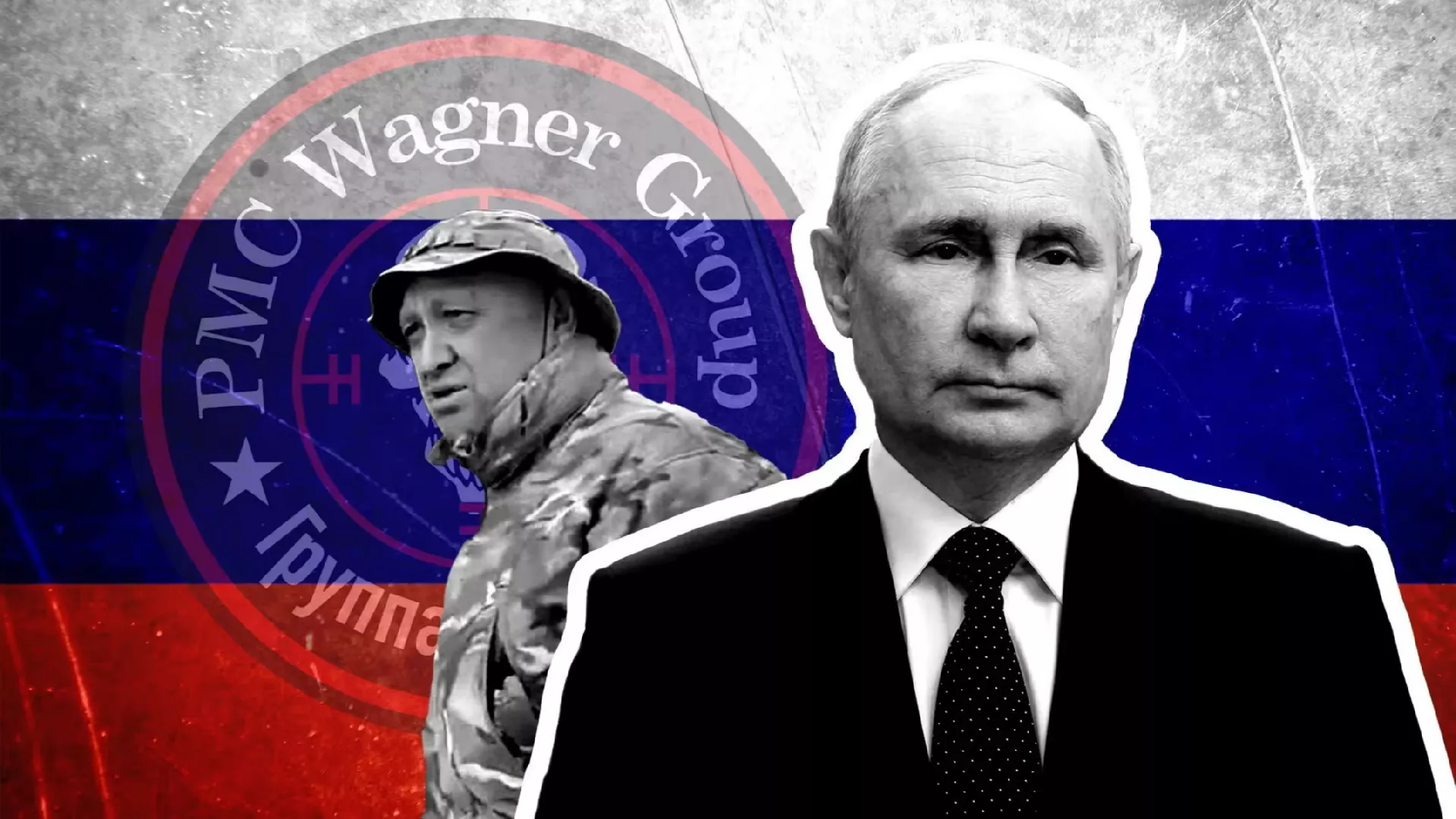
Last weekend, Wagner group members disobeyed the state leadership and turned their weapons on the Russian army, although their leader denied accusations that it was an attempted coup. On that occasion, they shot down a plane, several helicopters, and dealt a terrible blow to Russia and President Vladimir Putin. This event raised the question of who runs Russia, what are the centers of power that resist Putin, and is it possible to remove him from power.
Divisions in the Russian state leadership are not new. The struggles of different centers of power could not be hidden and usually ended in bloodshed and, consequently, new policies. Let's recall the October Revolution, Stalin's reckoning with Trotsky, Khrushchev's attitude towards Stalin, and all the way to Boris Yeltsin, who dealt with the communists. In the end, Yeltsin unexpectedly appointed Putin to power. Yevgeny Prigozhin's campaign did not bring such a result, but it reflected the conflict between, above all, the FSB intelligence service (the successor to the KGB) and the military intelligence service GRU. For the record, according to Russian laws, the FSB and other Russian services are accountable to the president, while the GRU is accountable to the Ministry of Defense, i.e., the Minister of Defense.
If we look at Prigozhin's rebellion through this prism, then things become clearer, but they open up other questions. Prigozhin did not seek to remove his friend Putin (for whom he earned the nickname "Putin's chef"), but rather Defense Minister Sergei Shoigu (a man without military experience and an ethnic Tuvan) and Chief of the General Staff Valery Gerasimov, and he praised General Sergei Surovikin, to whom Putin, after several dismissals, entrusted the leadership of operations in Ukraine. Surovikin, according to many, gained Putin's trust in the war in Syria. It is known from before that Putin's relations with the unpopular Shoigu among soldiers are not good. Other actors in the war in Ukraine have also called for Shoigu's dismissal, but the "all-powerful" Putin has not removed him.
Is Prigozhin's rebellion a reckoning between the FSB and the GRU? Is it preparation for the reckoning to come, or did Prigozhin act on his own initiative, or was he "encouraged" by someone to start a rebellion and then his support was withdrawn? Russian authorities have announced that they are investigating whether a foreign intelligence service was behind him. The public does not have answers to these questions, and they necessarily lead to the political scene, which is more divided than it seems. Namely, Putin is dealing not only with the arrested opposition (Alexei Navalny, for example) and with that in the Russian Duma, but also with the opposition within the system of power and centers of power between which he often balances.
Who is Putin's opposition?
In a formal sense, Putin's opposition in the Russian parliament over the past twenty years has been represented by several political parties, dominated by the Communist Party, the Liberal Democratic Party, and A Just Russia. Their opposition is reflected in criticism of obvious problems, when the entire public notices them. Sometimes they target people from Putin's United Russia, and most often they target the implementation of a decision. For example, they will not speak out against the war in Ukraine, but will support the war and complain about its impact on the battlefield. Such an approach is not unknown to us, as we have witnessed in Serbia that Slobodan Milošević was criticized for lost wars, not for starting them.
In this century, several other parties have operated, including the aforementioned Navalny, but they have been outside the Duma for a long time. They were suppressed by repression, but also by the policy of United Russia, which, until the aggression against Ukraine last year, consisted of people who were pro-Western, those who were against it, people looking towards Asia, believers, communists... A similar example, again, can be found in Serbia, where people of different beliefs are gathered in Aleksandar Vučić's party, so one minister is pro-Western, and another is pro-Russian. Such parties are powerful when they control the media, and Putin's party is unbeatable in elections that cannot be fair.
Putin is successfully dealing with the aforementioned opposition, but another battle is taking place far from the public eye. Putin's closest associates are often his biggest opposition. Some of them have remained at the political top for decades despite little merit. Known in the literature as "Russian liberals," they have been a lever that Putin used for years, but he also dealt with them. It should not be forgotten that Putin was a partner of the West and that cordial relations were maintained with him.
Some of the "liberals" include German Gref, head of Sberbank, Elvira Nabiullina, head of the central bank, former president and prime minister Dmitry Medvedev, and many others. They were in favor of close ties with the West, and the best example of this is Medvedev, who was fascinated by the USA and Europe. In the book "Medvedev," authored by the married couple Svanidze, written in the form of an interview, which follows the future president's rise to power, Medvedev talks about how Russia lags behind the West and that he is ready to implement reforms to resemble Europe and the USA.
Medvedev was ready to join a liberal party planned to be founded by "the political technologist of all Russians" Vladislav Surkov, who disappeared from public view at the beginning of the aggression against Ukraine. The party was supposed to oppose Putin's United Russia and turn the country towards the West. Since the beginning of the aggression against Ukraine, Medvedev has been a bitter opponent of the West. He said he hated Ukrainians and would "do everything for them to disappear" and called them "scum," and told the West that from now on they would only see each other through rifle sights. This was a break with the idea of approaching the West and an alignment with the new Russian political camps that are forming as the war in Ukraine progresses.
Since then, the idea of Russia turning towards Asia has been gaining strength in the Russian public, and one of the proponents of this idea is Alexander Dugin, who lost his daughter Daria in an assassination attempt last August. The idea of escaping the West is close to traditionalist, nationalist, and military circles, who believe that the West is in moral decay. They welcomed the war in Ukraine with enthusiasm.
Clan Conflicts
The sanctions imposed by the West on Russia due to the aggression against Ukraine have worsened the position of the "Russian liberals," so many have given up the fight. Let's recall that at the beginning of the aggression, there was an idea in the media that wealthy Russians would stop Putin and end the war. It was precisely these people who had businesses in the West and often stayed there who belonged to the group of Russians who wanted to bring the country closer to the USA and Europe. Putin ironically spoke about them and their wealth on several occasions, inviting them to wait a little and help Russia win in Ukraine.
Some authors claim that Putin has the FSB and the Orthodox Church on his side, while his opponents are gathered around parts of the army. Saturday's events give them arguments. Namely, Wagner covered hundreds of kilometers, having previously occupied barracks without a fight. The army did not resist, and on the approach to Moscow, the National Guard (which Putin founded in 2016 under the name Rosgvardiya) was preparing defenses. The head of the National Guard, Viktor Zolotov, a trusted man of Putin and also of Yeltsin, whom he accompanied in 1991 when he resisted a coup attempt, stated that his soldiers would receive tanks and heavy weapons. It is clear that with this move, Putin shows that he does not want to depend on the will of the army, at least when it comes to his security, so around 340,000 Rosgvardiya members will receive new roles.
Prigozhin's rebellion shook Putin, especially when it comes to his authority. Paradoxically, the biggest blow to Putin was dealt by a friend who, as things stand, will not go to prison. He is now in Belarus with Alexander Lukashenko, who appeared as a mediator between the two friends (Putin and Prigozhin), although a few years ago he accused Wagner and the Kremlin of preparing a rebellion and a coup against him. Some believe that Prigozhin could attack Ukraine from Belarus, thereby creating problems for Minsk, and such a scenario is a continuation of speculation about the political games being played in Russia.
What message are the Russian clans sending to the population and the army at the front in Ukraine when Prigozhin, for rebellion and the murder of several pilots, receives the protection of Minsk, which is under Moscow's control? What message did Prigozhin send to the Russian public about the army, who complained for months that the Ministry of Defense was not giving him weapons, even though his troops were the spearhead in Ukraine? Will Wagner continue to exist and in what form? Who will command a group of about twenty thousand people? These questions remain open, and the answers will likely show us what Prigozhin's goal was and in whose name he did it. What is certain is that after this episode, an even greater rift has been created within the Russian political elites, and this event will have a long-term impact on the situation in Russia. As Wagner was an important tool of Russian foreign policy (Ukraine, Syria, a number of countries in Africa), the damage to the Kremlin is even greater.
Komentari (0)
Prijavite se za komentiranje
PrijavaJos nema komentara. Budite prvi!
Minuta
Sve →Iz drugih kategorija

High Representative Not Elected: Germans, French and British Sabotaged Americans, New Attempt at End of June

ČOVIĆ WITHOUT MERCY: How Those Who Brought Ademović to Office Created a Political Hell for Him



Sunny Saturday, quite warm



Tragedy in Albanian resort: Two minors drown












