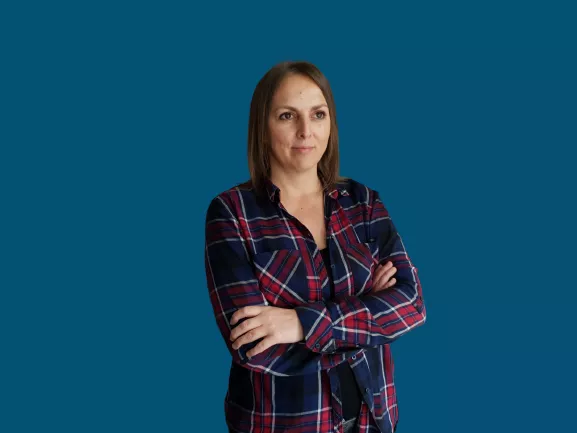
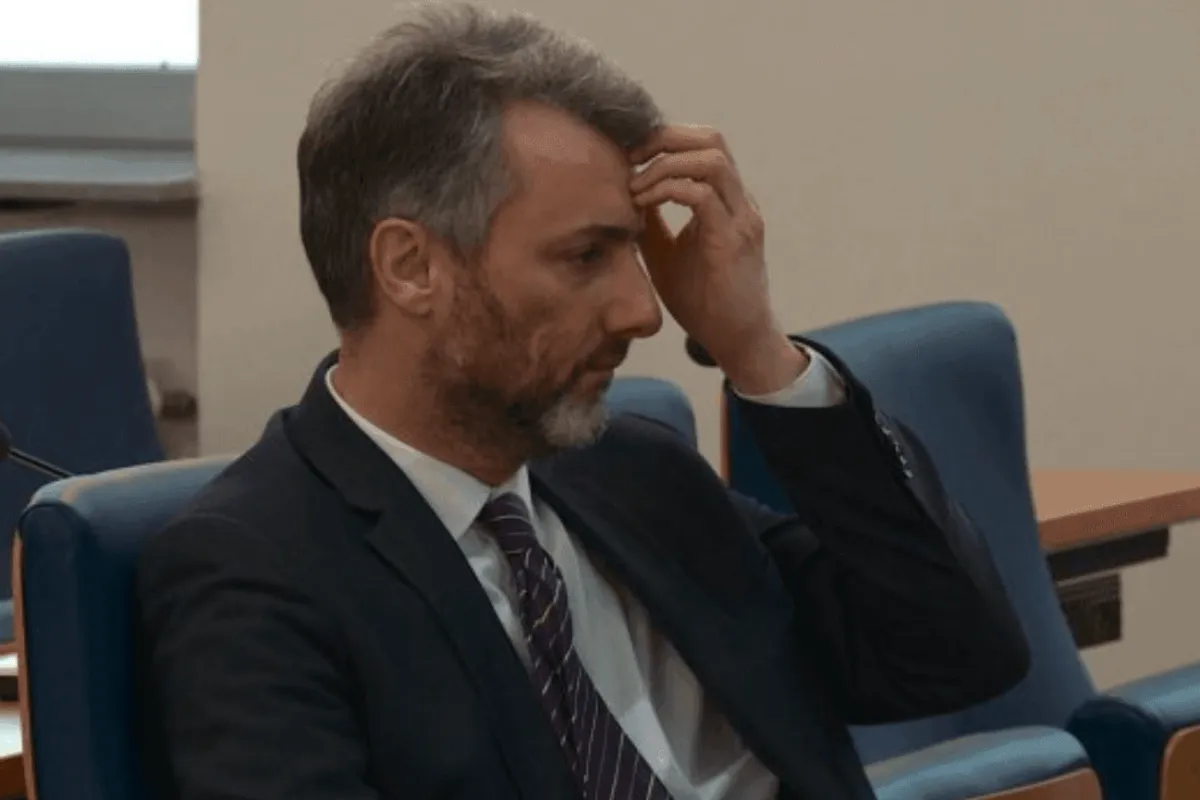
Do you remember this sentence from 2021?
"We must address the people in Široki Brijeg. If some craftsman from Široki Brijeg were to walk through that door, we would have to stand up, bow to him and say: 'Boss, you're in charge here.'"
At the time, it was presented as a new policy, as pragmatism, as breaking down old divisions. Today, five years later, it turns out that Edin Forto actually accurately described the political model that the Troika would adopt after coming to power.
In the meantime, the boss did arrive. Dragan Čović arrived. A coalition was formed with the HDZ, and then with Milorad Dodik as well. Citizens were told there was no alternative, that it was about the European path, stability and a new political culture.
Forto also had words of praise for Dodik back then. He spoke about a pro-European momentum, new energy and the possibility for Bosnia and Herzegovina to make a step forward towards the European Union. Today, after years and years of such a policy, we have the deepest political crisis since the end of the war, open blockades of institutions, attacks on the constitutional order and an almost complete halt to the European path.
It turned out that the Troika did not change Dodik and Čović. On the contrary, Dodik and Čović changed the Troika.
That is why it is interesting to listen to Forto today accusing others of politicising the case of the non-broadcast of the Bosnia and Herzegovina national team matches at the World Cup. Of course, it is true that the Ministry of Communications and Transport does not formally buy television rights. Of course, the procedure is commercial and the decision is made by the rights holder.
But politics is not just what is written in the law.
Politics is also the ability to protect the public interest. Politics is also the strength to ensure the functioning of the public service of the state you govern. Politics is also responsibility for the state of institutions that have been deteriorating for years before the public's eyes.
And BHRT has been deteriorating for years.
When the Bosnia and Herzegovina national team secures a historic qualification for the World Cup, and citizens cannot watch the matches of their national team on the public service they finance, then it is a political problem, regardless of how much Forto invokes procedures, tenders and market rules.
This is not a bill for one lost television rights contract.
This is an invoice for years of yielding, nodding along and condescension towards political partners. An invoice for believing that Dodik would become a European reformer. An invoice for the conviction that the HDZ would abandon its maximalist demands if enough concessions were made. An invoice for a policy that promised voters change, but ended in constant justification of others' moves.
That is why Forto's story about "politicisation" sounds quite unconvincing today. Because it was precisely his policy that for years convinced citizens that everything was under control, that the partners wanted the same as Bosnia and Herzegovina, and that it was enough to be cooperative for the system to start working.
The system did not start working.
On the contrary, today we have blockades, a crisis of institutions, a faltering public service, and a situation where even the historic successes of the national team are turning into a reminder of everything the government failed to do.
And when such an invoice arrives, it is no longer enough to say that the market process is to blame. Citizens then demand political accountability.
Komentari (0)
Prijavite se za komentiranje
PrijavaJos nema komentara. Budite prvi!
Minuta
Sve →Iz drugih kategorija

High Representative Not Elected: Germans, French and British Against Americans, New Attempt at End of June

ČOVIĆ WITHOUT MERCY: How Those Who Brought Ademović to Office Created a Political Hell for Him



Sunny Saturday, quite warm



Tragedy in Albanian resort: Two minors drown












