
By: Armin Sijamić
Since the collapse of the USSR, numerous non-Western countries have spoken of a multipolar world as a necessity, and in the last decade, they have perceived a new order as a reality. Recognition that the world is becoming multipolar is not common from Western officials, but last Friday, that too happened. The Secretary-General of the United Nations spoke about it on the eve of the G20 summit held in India.
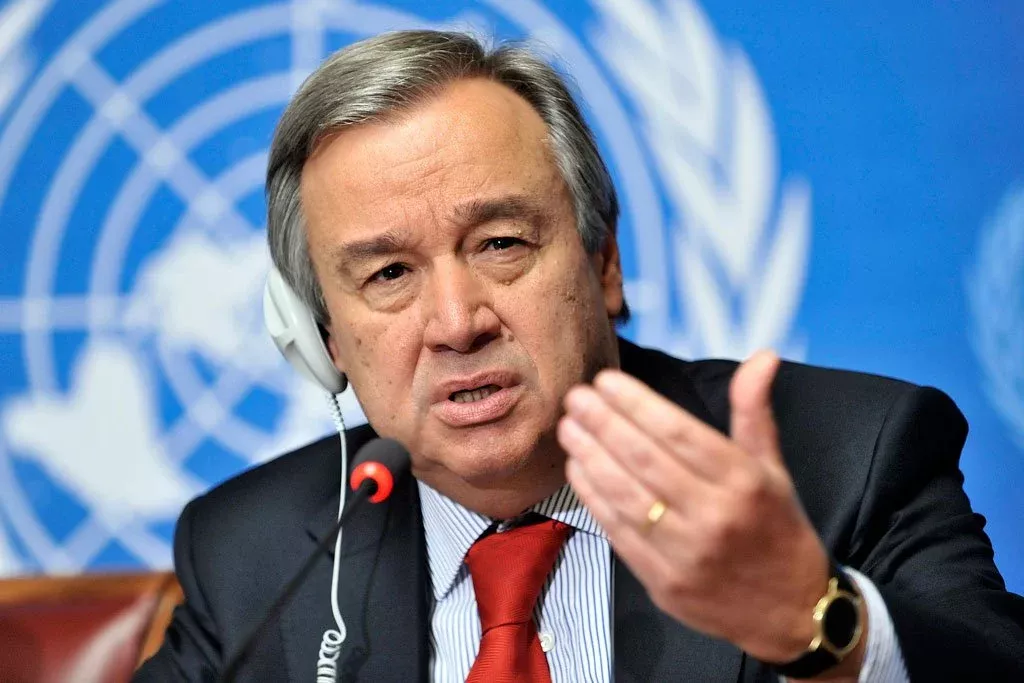
The G20 summit (nineteen of the world's most developed economies plus the European Union and, as of last week, the African Union) held in New Delhi was interesting and significant in many ways. In addition to numerous bilateral agreements concluded by participating states, the joint declaration on Ukraine, and the obvious and expected divisions among summit participants, the attention was drawn to the Secretary-General of the United Nations, António Guterres.
Although Guterres, by his function, represents all UN member states, this Portuguese socialist belongs to the West, and that is why he received support to be the UN Secretary-General for two terms. His address to journalists on Friday, the day before the summit of the world's most developed countries' leaders began, was quite unusual even for a UN Secretary-General who tries to awaken leaders and motivate them to work together with his statements.
Dysfunctional Family
"If we are truly one global family – today we look like a rather dysfunctional one," Guterres told reporters. "Divisions are growing, tensions are flaring, and trust is eroding, all of which raise the specter of fragmentation and, ultimately, confrontation," he continued.
"This fracturing would be deeply concerning in the best of times, but in our times, it means catastrophe," Guterres added. "Our world is in a difficult moment of transition. The future is multipolar, but our multilateral institutions reflect a bygone era.”
These words from Guterres are a rare example of recognition from the West that the world is rapidly changing and that the existing international order must change. There is no doubt that the authorities of China, Russia, India, and numerous other countries around the world would gladly sign these words.
This particularly applies to the countries of the so-called "global South," which have the largest percentage of the world's population, abundant resources, but little influence and economic power. They resent the West for not wanting to change the order established after World War II, when the victors agreed on the international political and financial framework.
In addition to controlling money flows through the World Bank and the International Monetary Fund, the West secured three seats in the UN Security Council. Thus, Japan, Germany, and India, the world's third, fourth, and fifth largest economies, are not represented in the Security Council. There is not a single majority Muslim country, nor an African, Middle Eastern, or South American country. This year, India became the most populous country and has long been "the largest democracy in the world." Italy, Canada, and Brazil, which have larger economies than Russia, are also not represented.
“The global financial architecture is outdated, dysfunctional, and unjust. It requires deep, structural reform, and the same can be said for the United Nations Security Council,” Guterres said.
The West does not want to relinquish the advantage gained in 1945, which bothers many countries. These countries are seeking reform of the UN and other international organizations, but there are no indications that this will happen soon. That is why numerous organizations that oppose the existing order, such as the Shanghai Cooperation Organization (SCO) or BRICS, have emerged in recent decades.
The divisions are evident, so Guterres warns of "fragmentation" and "confrontation" among great powers, which could lead to "catastrophe." He also mentioned the lack of agreement among great powers on climate change, which is increasingly gaining momentum. Numerous countries are facing drought, and some island and coastal nations are literally disappearing as sea levels rise.
The summit showed that it is increasingly difficult to bring leaders of great powers together. Russian President Vladimir Putin and Chinese President Xi Jinping did not attend the summit in India. Considering that the military budgets of great powers are at record levels, Guterres's warnings are even more alarming.
A Call for Change
Guterres's address is a kind of call to accept a different reality and the fact that the world is not the same as it was a few decades ago. The UN Secretary-General has no doubt that "the future is multipolar" and that existing world institutions and approaches to international politics must change.
What was said on the eve of a summit that brought together countries accounting for about 85 percent of global GDP and two-thirds of the world's population has added value. Also, the fact that it was said in India, a country striving to gain a seat on the UN Security Council, is particularly important.
The case of India shows that in the world of international politics, nothing is taken for granted, and there are almost no guarantees. In October 2020, Indian Prime Minister Narendra Modi, addressing the UN General Assembly, asked how long the reform of that international organization would take and when his country would receive the role it deserves. At the G20 summit, Modi once again emphasized India's desire to become a permanent member of the Security Council.
New Delhi's efforts to gain a seat on the UN Security Council were previously supported by Washington, but it was noted that China opposed it. At the same time, India, through BRICS and the SCO, has tried to shake the West's dominance with China.
This example shows that a multipolar world will not bring the necessary changes if the approach remains the same. The understanding of multipolarity among strategists in Beijing and Moscow is reflected in different powers gaining parts of the world to govern, and then establishing a global framework among themselves. This might be a step backward, as some countries would then remain "trapped" for a longer period with great powers establishing the rules of the game in their backyard.
Next week, a new session of the UN General Assembly will be held, which will be another opportunity to discuss this issue again, at least away from public view. It is unlikely that Guterres's address in New Delhi will convince anyone to act, even though it is clear to everyone that the conflicts between great powers are intensifying.
The existing world order is shaken, and there are few ideas on how to make it better and sustainable in the long run. In his address, Guterres did not speak about how to solve this problem either, but he stated that the world has a big problem and that a power transition is underway.
Komentari (0)
Prijavite se za komentiranje
PrijavaJos nema komentara. Budite prvi!
Minuta
Sve →Iz drugih kategorija

High Representative Not Elected: Germans, French and British Against Americans, New Attempt at End of June

ČOVIĆ WITHOUT MERCY: How Those Who Brought Ademović to Office Created a Political Hell for Him



Sunny Saturday, quite warm



Tragedy in Albanian resort: Two minors drown












