
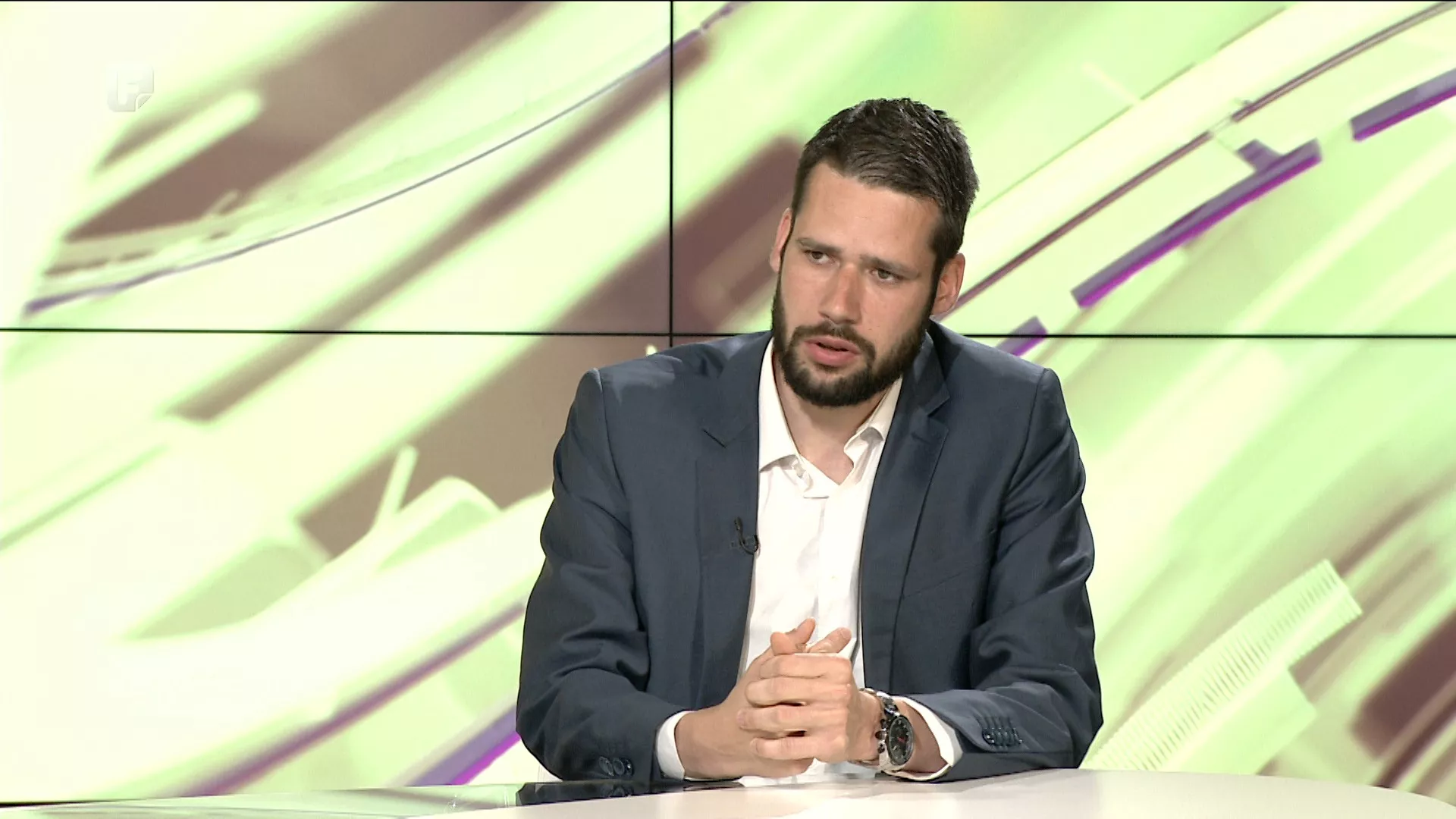
By: Jahja Muhasilović
Similar to how the strong wave of the AKP party began in the early 2000s, starting from the east and interior of the country, leading to the party's two-decade dominance, now, it seems, a breeze is felt in the opposite direction, moving from the western and coastal parts towards the conservative interior, transforming established voting patterns. Although it is too early to say whether this trend will continue, certain chronic and undeniable trends are emerging.
Although it might not seem so, according to most world media reports, the results of the local elections in Turkey are not overly surprising. Traditionally, the difference between the dynamics that determine the results of general and local elections is not small. Especially since the 2017 constitutional amendment referendum, when the presidential system was adopted, voter turnout in local elections has generally been lower.
The new constitutional and legal order has led to a greater degree of centralization of political power, which has inevitably pushed lower levels of political life into the background. Therefore, these local elections were marked by relatively low voter turnout (around 78 percent), considering that it is a country where turnout is almost always 80-90 percent. Instead of focusing on facts visible from a superficial reading of Turkish local elections, such as low turnout (by Turkish standards), the AKP's decline or the CHP's rise, the loss of major urban centers, or the spread of the 'red wave' towards the interior of the country, it is more important to try to answer the background of these processes.
Firstly, voting trends align with global tendencies. Especially among the younger population, disinterest in traditional themes of political division has begun to prevail, and there is a noticeable general distrust in the electoral process. Since the mid-2010s, the younger population has demonstrated a prioritization of other, unconventional for Turkey, issues that do not pay much attention to political or ideological differences, for which this country was known worldwide.
Young voters, unlike older Turks, focus on a different set of issues such as the economy or the quality of daily life. The fact that the younger population is a serious determinant of election results is also evidenced by the fact that approximately one million young Turks gain the right to vote each year. By the next general election, about 4 million new voters are expected, making up about 5 percent of the total population.
What is not bad for Turkey in the long run is that the sharp lines of ideological polarization are slowly fading. This trend is expected to intensify with accelerated urbanization, the expansion of mass education, and the increasing participation of women in the labor market. In short, we are increasingly talking about a global and modern Turkey, which has made the pursuit of popular votes a much more complex undertaking. This will inevitably force not only the AKP but also other parties to upgrade their traditional narrative and modus operandi.
Therefore, it should not be surprising that the almost only topic that dominated the pre-election period was precisely inflation and the devaluation of the Turkish lira, which has been draining the country's economy for six full years. Especially if we consider the fact that the issue of the PKK and terrorism was successfully resolved during the AKP's twenty-year rule. This has unexpectedly created a problem for the ruling party, which now has to meet the needs of a modern society accustomed to prosperity and stability.
The opposition has managed to politicize the issue of Syrian refugees and immigration. Again, it is more related to the 'myth of taking jobs' from the local population than to a change in the demographic character of the population. It has become particularly problematic that the government started issuing citizenship a few years ago. It is estimated that 3-4 million Syrians live in Turkey today. With other immigrants, such as Afghans, Iraqis, and African migrants, estimates rise to about 5 million foreigners, which is more than five percent of the total population.
One of the trends not only in Turkey's electoral process but also globally is the frequent punishment of the 'political establishment'. Although the CHP is the founding party of the Republic of Turkey and the oldest party, it has been in opposition for over three decades. The party, which has been considered the establishment party for most of Turkey's history, has rhetorically managed to present itself as an anti-establishment party.
Given that the AKP has been in power uninterruptedly for over 20 years (since 2002), it has necessarily become an 'establishment party'. Thus, the AKP is today where the CHP was for decades – the party of the elite, or simply put, 'ripe for punishment' in elections. The AKP has become a target for everything that is wrong in society, whether it is directly responsible for it or not.
One of the CHP's good moves has been the change of party leader. This move paid off in record time. Ozgur Ozel has been the new leader of the CHP since November last year. Due to the greed and obsession of the long-time leader Kemal Kilicdaroglu, the party was held hostage by his personal ambitions for a long time, hesitating for an eternity to inject the necessary dose of fresh air. It will be proven again that changing faded faces in politics often pays off. Although the CHP has more or less gone through a personnel transformation, it seems that the AKP will have to do something similar if it wants to prevent the negative trend of declining votes.
Although it has long been said that a two-party system, similar to the one in the US, is slowly forming in Turkey, what few expected was the solid performance of smaller political parties. Parties like the Yeni Refah Parti (a party founded by Necmettin Erbakan) have shown strength. This is an Islamist party that was part of a coalition against the AKP in the last general election. However, it has now been shown that this party has a solid base, which did not come to the fore in previous electoral processes under the banner of an ideologically diverse coalition. The reasons for this are very clear. The base of Yeni Refah consists of conservative populations close to political Islam.
In these elections, it was clearly seen that the coalition led by the extremely secularist CHP seriously irritated the base, which likely siphoned off some votes to the ideologically closer AKP in the last general election. However, the results of the smaller parties should not be overly confusing, as the general tendency is still towards a quiet transition to a two-party system. The strong positioning of the two largest parties and their dominance over other parties also support this. All in all, these elections, like the last few, were a stratospheric contest between two parties, the AKP and the CHP.
This year's local elections have opened several serious questions for the future. Given that it has once again been proven that the president's personality alone stands better in the perception of Turkish voters than his party, the first serious question that has been arising for years is, does the AKP have an answer for the post-Erdogan era? This question becomes particularly important as Erdogan said in the last general election that he would no longer run for president.
The situation is further complicated by the fact that the new Constitution adopted in 2017 concentrated power in the hands of the President. If something similar happens in the next general election in 2028, and if these local elections are an indicator of the post-Erdogan AKP, then a serious question arises about what kind of Turkey we will see after 2028. Given its geopolitical importance, this question transcends the national borders of this country and concerns a wider geographical area from the Middle East to the Balkans.
What has become more than clear is that the economy dominates the political narrative, and the winner of the next electoral cycles will be precisely the party that offers an exit strategy from the monetary crisis. It was precisely this issue that gave momentum to the AKP back in 2002, which implemented Kemal Dervis's fiscal discipline policy that resolved rampant inflation at the time. It was precisely on the wave of these reforms that the AKP turned Turkey into an economic miracle. There is no doubt that the search for a 'new economic miracle' will be the dominant theme of the next electoral cycles.
In the context of reduced turnout and changes in the demographic structure of the electorate, parties will have to find new ways to engage voters, especially younger ones. Economic recovery, resolving the issue of immigration, and adapting ideological platforms to modern values will become key factors in winning and retaining political power in Turkey. Globalist modern themes for a globalized and modern Turkey. Whoever first addresses and responds to the needs of the new Turkey will be the new ruler of the political scene.
(Investigation)
Komentari (0)
Prijavite se za komentiranje
PrijavaJos nema komentara. Budite prvi!
Minuta
Sve →Iz drugih kategorija

High Representative Not Elected: Germans, French and British Against Americans, New Attempt at End of June

ČOVIĆ WITHOUT MERCY: How Those Who Brought Ademović to Office Created a Political Hell for Him



Sunny Saturday, quite warm



Tragedy in Albanian resort: Two minors drown












