
By Armin Sijamić
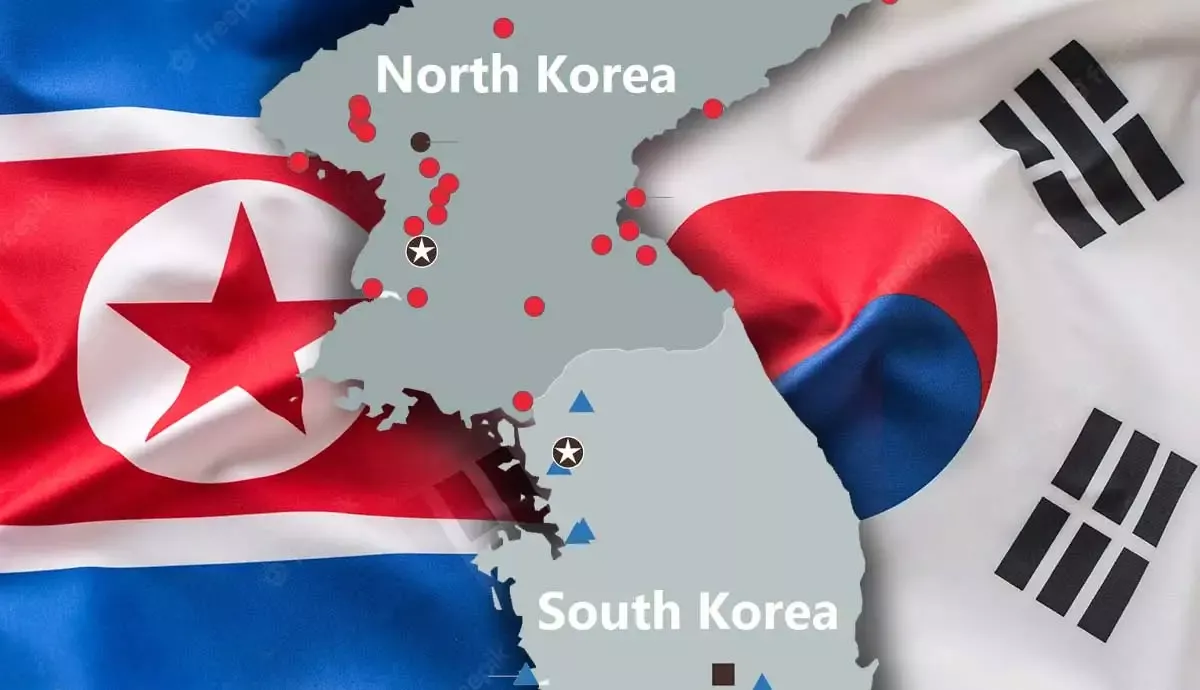
One of the West's goals in Ukraine is to strengthen the country to the point where it can confront Russia. On the other side of Eurasia, it seems, Russia wants to apply a similar recipe. Events in the past few weeks suggest that an empowered North Korea will become a hotspot that the United States and South Korea, and then Japan and other allies, will have to deal with.
For the past two decades, the crisis on the Korean Peninsula has unfolded according to a similar pattern. Isolated Pyongyang would test nuclear weapons and ballistic missiles, and the United Nations Security Council would impose sanctions. Pyongyang would respond with new tests and threats, and then, in exchange for stopping such activities, it would receive exemptions from sanctions, either by turning a blind eye to the actions of third countries or by lifting some blockades as part of an agreement.
Pyongyang has reached such a desperate position because there was no one to protect them from international sanctions. Moreover, neighboring China and Russia imposed sanctions along with the West, calculating that this country could be sacrificed in some way in the global competition. This particularly applies to Beijing's behavior, for whom North Korea serves as a buffer zone, preventing Korean unification where the government would likely ultimately become pro-Western.
But even that setup is changing due to the relationship between the West and Russia after the start of the war in Ukraine. It was clear as early as last summer that Moscow was counting on Pyongyang, violating resolutions it had voted for itself, de facto recognizing North Korea as a nuclear power and providing it with assistance in developing advanced technologies.
North Korea's Space Program on Russian Fuel
Since the beginning of Russia's aggression against Ukraine, the West has claimed that North Korea is sending aid to Moscow. Now the public has seen something else – Russia is helping North Korea develop its space program.
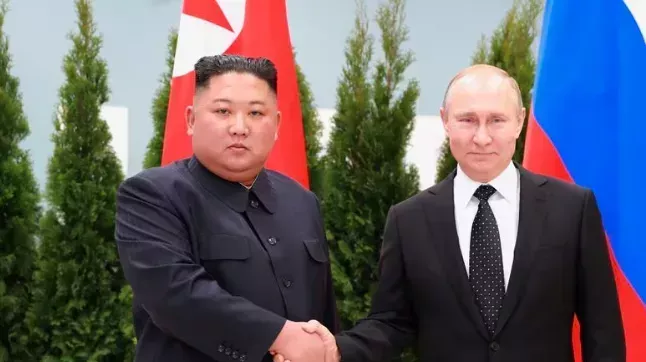
This nightmare for Washington and Seoul has been unfolding since September when North Korean leader Kim Jong Un arrived in Russia by special train, met with Russian President Vladimir Putin, and then visited several locations important for strengthening his army. Previously, Russian Defense Minister Sergei Shoigu visited North Korea, where ballistic missiles, the development of which Moscow had voted for sanctions against Pyongyang, were shown to him in a parade.
In the last ten days, the implementation of the agreement has been visible. Mid-month, Russian Minister of Natural Resources Alexander Kozlov arrived in Pyongyang, stating that the Russian delegation was there to develop "significant cooperation" with its neighbor based on the agreements reached by Putin and Kim Jong Un. The next day, North Korea announced that it had successfully conducted static tests of a "new type of high-thrust solid-fuel engine" for medium-range ballistic missiles.
On Wednesday, North Korea successfully launched a reconnaissance satellite, after the previous two attempts in May and August failed. South Korean lawmaker Yoo Saang-bum, citing intelligence from the national agency, said that Pyongyang was successful this time because Moscow helped them after the meeting of the two leaders in September. North Korea provided Russia with
"the design and data relevant to the first and second satellite launches. Russia, in turn, analyzed this data and provided them with feedback.”
Thus, a poor and isolated country possessing nuclear weapons has now gained the ability to observe its surroundings. The spy satellite, named Malligyong-1, has caused delight in North Korea and anger in Seoul and Washington. North Korean media reported that Kim Jong Un is already reviewing satellite-collected photographs of American military bases on Guam.
Washington and Seoul condemned the satellite launch, as North Korea required ballistic missile technology for the launch, which is prohibited for the country by UN resolutions that Russia and China, among others, voted for. The launch of the North Korean satellite occurred while the American aircraft carrier Carl Vinson was visiting South Korea.
The Great Game
South Korea immediately suspended part of the 2018 agreement on reducing military tensions on the peninsula, after which Pyongyang abandoned the agreement, accusing Seoul of "hysteria" and stating that the neighbor "must pay dearly for its irresponsible and grave political and military provocations that have brought the current situation to an uncontrollable phase.”
Seoul's alleged hysteria is not accidental. For months, this part of the world has been restless. North Korea tests missiles, the United States, South Korea, and Japan conduct joint military exercises, and Seoul is expected to receive its first spy satellite via a SpaceX rocket this month. Thus, an arms race is underway in this part of the world. Last week, Japan received US permission to purchase 400 Tomahawk missiles with a range of 1,600 kilometers. In recent months, a number of countries, including the unrecognized Taiwan, have reached arms agreements with the United States.
Many countries are frightened by China's strengthening, disputes in the South China Sea and the Pacific, as well as North Korea's behavior. Pyongyang could not run this race alone, but with Moscow's help, things are changing. After the satellite launch, North Korea announced that there would be more launches in the future, indicating that it will not abandon the development of its space program.
This turn of events does not favor Washington as it tries to contain China in its neighborhood. The war in Ukraine, as well as a potential major war in the Middle East that could arise from the conflict between Israel and Hamas, distracts and scatters American resources. The strengthening of North Korea's capabilities further complicates matters.
Moscow has shown that it is ready to support North Korea, which is under sanctions. Any aid to Pyongyang is welcome, and Russia can currently provide literally everything necessary for the survival of the current regime – technology, energy, and food.
This "investment" in its neighbor could be a great opportunity for Russia to cause major problems for Washington, on the same principle that the West planned to strengthen its allies on Russia's borders. The last obstacle to doing so was likely removed when South Korea decided to help Ukraine.
The only open question in the relationship with North Korea could be China's stance. Namely, China has stood behind Pyongyang for decades. Excessive tying of North Korea to Russia certainly does not please them, but it is certainly good news for Beijing that Russia plans to confront Washington and its allies in the region on China's borders.
Precisely because the relationship between Washington, Beijing, and Moscow has drawn the current border between the two Korean states is also important for the Ukrainian crisis, as some suggest ending the war in that European country according to the Korean scenario of a frozen conflict, where these powers are again on opposite sides. Just as Ukrainians fear the thought that their country could be divided like the Korean Peninsula, Koreans are likely equally afraid of the focus shifting from Ukraine to the two Korean states.
Komentari (0)
Prijavite se za komentiranje
PrijavaJos nema komentara. Budite prvi!
Minuta
Sve →Iz drugih kategorija

High Representative Not Elected: Germans, French and British Sabotaged Americans, New Attempt at End of June

ČOVIĆ WITHOUT MERCY: How Those Who Brought Ademović to Office Created a Political Hell for Him



Sunny Saturday, quite warm



Tragedy in Albanian resort: Two minors drown












