
By Armin Sijamić
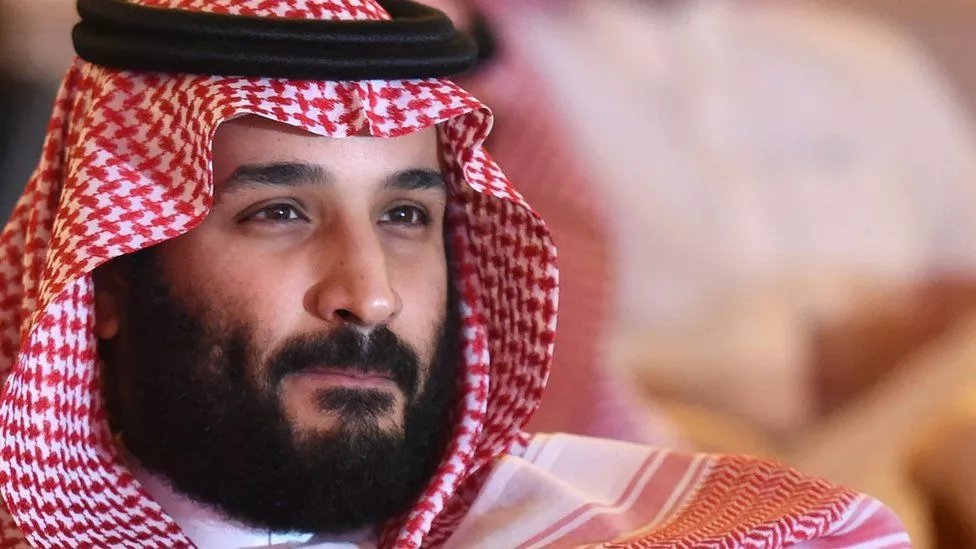
Crown Prince Mohammed bin Salman has been managing the country for the past six years, implementing various reforms. The trend of change has been particularly evident since the beginning of the Russian aggression against Ukraine, which the prince saw as an opportunity for Saudi Arabia to reposition itself in the Middle East. Several foreign policy decisions in the last eight months clearly demonstrate this.
The assertion that young people bring about greater changes in a society faster than older people is true in the case of Mohammed bin Salman. For decades, the conservative kingdom has remained on the sidelines, even on issues important to it. Participation in major regional political processes largely consisted of the West informing Riyadh about them. No major crisis in the Middle East in recent years has occurred on the principle that Riyadh dragged the West into a crisis, but rather the opposite. For example, Riyadh did not like Saddam Hussein and Bashar al-Assad, but Saudi Arabia did not plot their overthrow, although it later assisted in it.
Such an approach, it seems, is coming to an end. Bin Salman, who began managing the country in his early thirties, decided to capitalize on Riyadh's growing strength at a time when energy prices are high. Russia's attack on Ukraine filled the state treasury, as the main income is from the sale of energy. Mohammed bin Salman has excellently recognized the problem of overcommitment and overstretching, which looms over the great powers, Washington and Moscow, and has taken a series of steps that displease both the US and Russia.
Independent Decision-Making
An indication that Riyadh would pursue an increasingly independent policy occurred last October when bin Salman opposed Washington and the West. Due to the war in Ukraine and sanctions against Moscow, energy prices reached a record high, so Joseph Biden asked Riyadh to pressure OPEC+ to increase oil production and thus reduce energy prices. Bin Salman refused and decided to further reduce oil prices to maintain their level. His reasoning, simply put, was that they wanted to earn as much money as possible from the sale of energy.
Then, in early March, bin Salman decided to normalize relations with Iran, with China mediating, a piece of news that pleases neither Washington nor Moscow, as it is the first time that Beijing is directing processes in this part of the world. With this move, Iran and Saudi Arabia set off an avalanche of support for regional reconciliation and cooperation, and the only one in the region against it was Israel. The Israeli opposition described the reconciliation between the two countries as a "defeat" for Tel Aviv.
The agreement with Iran was welcomed by Yemen, Syria, and Lebanon. The two regional powers initiated a spiral of positive processes, opening doors for dialogue and cooperation, which excludes those who aspire to rule the Middle East. Thus, a new ceasefire and a series of important agreements on ending the war have been reached in Yemen, Syria is returning to Arab mainstream, and Lebanon has a new chance for an internal agreement.
Riyadh confirmed Saudi Arabia's significance in regional frameworks with two moves last month. The decision to readmit Syria to the Arab League was made after Saudi Arabia's consent, which hosted Bashar al-Assad. In parallel, Saudi Arabia positioned itself as a mediator in negotiations in Sudan when conflicts began between the army and paramilitary groups there.
Qatar opposed Syria's return to the Arab League, and Washington opposed the normalization of relations with Syria. Qatar believes that peace must first be established in Syria, while the US believes that normalizing relations will lead to violations of sanctions imposed against Damascus by the United Nations and a number of Western countries. Washington also warned of the consequences for those who violate the sanctions.
It is difficult to say what the consequences will be, but it is clear that they would lead to a disruption in relations between the West and Riyadh. The US and Saudi Arabia jointly mediated the Sudanese negotiations, and Riyadh received thanks from Washington for its help in evacuating foreign citizens from that African country. In recent weeks, Riyadh has hosted American delegations that have confirmed the friendship between the two countries.
The European War as a Turning Point
Ukraine and Russia occupy an important place in Saudi Arabia's new foreign policy. Saudi Arabia has stated that it is "neutral" in this war. However, Saudi Arabia's policy towards Ukraine and Russia is much more than neutral and can be said to be entirely subordinate to Riyadh's interests, which was not the case in previous crises. The era of blindly following the West seems to be over. Thus, Riyadh voted for UN resolutions that accuse Russia of aggression, but they did not impose sanctions on Russia. Moreover, relations between the two countries have become very good due to oil deals. According to numerous media reports, Saudi Arabia imports Russian oil in large quantities and then resells it.
Saudi Arabia has sent financial and humanitarian aid to Ukraine and has been involved in prisoner exchanges. Last week, Ukrainian President Volodymyr Zelenskyy visited Saudi Arabia, specifically the Arab League summit, and addressed the gathering. Vladimir Putin addressed the summit with a delivered message.
Riyadh's behavior does not suit either Washington or Moscow, who desperately want the wealthy kingdom to align with one of the two camps. As things stand, neither side has convinced Riyadh of its position. The approach to the European war fits perfectly with Mohammed bin Salman's new policies, which are based on cooperation and peace in the Middle East, one of the prerequisites for internal modernization of Saudi Arabia.
A Modern Kingdom
Since coming to power, bin Salman has faced various accusations from the West, the most serious being that he was behind the assassination of journalist Jamal Khashoggi. Biden himself accused him of this, which cost the US. Shortly after these claims, Biden asked Riyadh to increase oil production. Since then, accusations have become less frequent in the Western media, and officials almost never mention them, as they have realized that it hinders their relations with Riyadh, and China and Russia have no problem with the Kashoggi issue.
The Kashsoggi case also caused considerable damage to bin Salman, who is trying to present a different Saudi Arabia to the world. Since he came to power, a series of reforms have been launched that give more freedom to women and citizens in general. These days, news is coming from Saudi Arabia that Rayyanah Barnawi has become the first woman from that country to go into space.
The culmination of liberalization and reform should be the construction of the city of Neom as part of "Vision 2030," a set of development projects that will transform Saudi Arabia into a country that does not live off the sale of energy, a country strongly reliant on the latest technological advancements. The city of Neom will cost 319 trillion dollars and will cover an area the size of North Macedonia, where nine million people are expected to live. Located on the Red Sea coast, the city is intended to be a new center for industry, tourism, transport, and trade, and will be powered exclusively by renewable energy sources. The city would be an unrealistically long 170 kilometers.
Riyadh will pursue these policies without major problems for some time, given that the focus of world powers is not on the Middle East. Their preoccupation with other parts of the world, combined with increased revenues from energy sales, allows bin Salman to pursue a policy of reconciliation in the region and modernization at home, for which he has the support of a large number of young people in a country where about 65 percent of the population is under 35 years old. How successful this policy will be afterwards also depends on others. Saudi Arabia's independent policy, which unites Arab countries and has excellent relations with non-Arab countries with which it shares the region (Turkey, Iran, and Pakistan), does not please the great powers that want control over the Middle East.
Komentari (0)
Prijavite se za komentiranje
PrijavaJos nema komentara. Budite prvi!
Minuta
Sve →Iz drugih kategorija

High Representative Not Elected: Germans, French and British Sabotaged Americans, New Attempt at End of June

ČOVIĆ WITHOUT MERCY: How Those Who Brought Ademović to Office Created a Political Hell for Him



Sunny Saturday, quite warm



Tragedy in Albanian resort: Two minors drown












