
By Rasim Belko
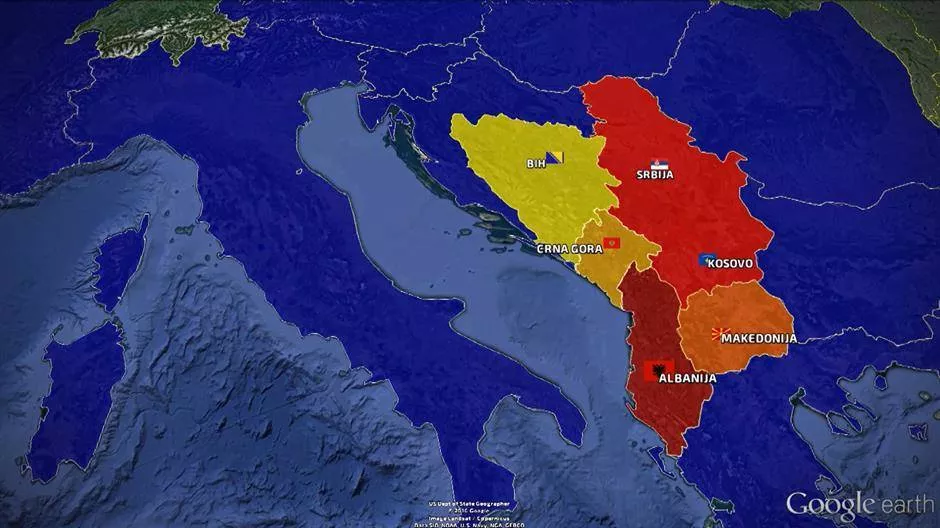
The mini Schengen project has stirred regional spirits in recent months, but also brought nationalist mice to light. Greater Albania and Greater Serbia, that will be the result of this project, believed individuals in Kosovo and Bosnia and Herzegovina. If they are right, Kosovo would disappear, and Bosnia and Herzegovina would be halved.
But, judging by the views of those who live in the real time of economy and entrepreneurship, mini Schengen could be a light at the end of the dark regional tunnel.
The very fact that the initiators of the agreement are Albanian Prime Minister Edi Rama and Serbian President Aleksandar Vučić gives hope. And there was no such hope in the decades past, because Serbian and Albanian politicians wasted time on accusations, insults, threats.
The duo Rama - Vučić was joined by one of the few visionary politicians of the Western Balkans, Prime Minister of North Macedonia Zoran Zaev. He changed the name of the country, at the request of the European Union, which in the end slapped him in the face. Zaev is not one to complain; he understood what mini Schengen could bring and joined the project.
BiH and Montenegro, as well as Kosovo, remained outside the project for the herds. True, Montenegrin President Milo Đukanović attended the last meeting in Tirana on the Balkan Schengen project. The President of Montenegro stated in media appearances that he is confused about the project and wonders if this project will be a substitute for European integration. Đukanović, therefore, due to the European path, still has resistance to the mini Schengen.
Similar to the Montenegrin president, former BiH Prime Minister Denis Bećirović thinks, who after the regional meeting in Ohrid said that BiH institutions should comment on everything, and that he does not want mini Schengen to be a substitute for the country's European path.
Kosovo, by all accounts, is resisting this project because it was initiated by Serbian President Aleksandar Vučić. Because of all this, the political establishment of Kosovo entered into a verbal conflict with the representatives of Albania.
According to announcements, citizens and businessmen would benefit from the project. That is, those who know how to wait for hours at the borders. Especially businessmen. Mini Schengen would benefit the economies of the countries that join the project, as the exchange of goods would be much simpler.
Zijad Bećirović, Director of the International Institute for Middle Eastern and Balkan Studies (IFIMES)
Ljubljana, in an interview with the Patria agency, believes that every initiative needs to be studied, analyzed, and evaluated, while showing vision.
“In these areas, we mostly look to the past, partly to the present, and the future seems non-existent! The idea of the Coal and Steel Community, which was the precursor to today's European Union (EU), initially gathered only six countries, and today the EU has 28 member states. However, there were political leaders with vision at the time, and they embarked on the project of uniting Europe. I am intentionally highlighting these facts because the idea of the so-called mini Schengen is being met with hostility in one part of the region, as well as within some of the countries that are initiators of the initiative.”
Bećirović adds that the fact is that the region has no visible progress, even though more than 25 years have passed since the tragic conflicts.
“Countries are not stagnating, but regressing, while most of the world is moving at the speed of light in its progress. Perhaps some will not like it, but the initiators of the initiative, Serbian President Aleksandar Vučić, and the Prime Ministers of North Macedonia and Albania, Zoran Zaev and Edi Rama, have shown vision with this initiative, but have gained new opponents in their countries, as well as in part of the international community. When it comes to the initiative of the so-called mini Schengen, it is necessary to be guided by rational, not nationalistic reasons and emotions. Emotions have never brought universal progress anywhere. World Bank data shows that 26 million hours are lost waiting at border crossings in the region, and that trade can be improved by 10 billion Euros,” Bećirović points out.
As he says, through rationalization and the effects of participation in mini Schengen, countries can secure additional revenues from 500 million euros to 1.5 billion euros, depending on the size of the country.
“The initiative is not easy to implement, but if there is political will, then it is possible. From a common-sense perspective, the initiative should bring improvement to everyone. When it comes to BiH and the initiative, the project of the so-called Greater Serbia is being raised, on the other hand, the so-called Greater Albania is mentioned, and in some places both projects are mentioned. By connecting, everyone will be able to live within their cultural corpus, and within their state. The architecture of borders in the Balkans has been completed. In addition to rational effects, invisible effects are also important, and that is the final relaxation of relations, connecting people in these areas, and improving cooperation. This does not suit a part of the international community, including EU member states, because it will improve regional economic cooperation, which will reduce the space for their companies. The strong support of the USA for this initiative is important. If political leaders in BiH want to ensure a better life and prosperity for their citizens and country, they should join the initiative and draw as much benefit from it as possible. The question arises, why haven't BiH political leaders initiated any pragmatic regional initiative so far. They haven't even done so within BiH,” Bećirović states in an interview with Patria.
The benefits that mini Schengen would bring are also highlighted by analysts who believe it will not come to fruition.
“Of course, it is good and these borders that apply to ordinary people, not to criminals, dealers, smugglers, should have been abolished long ago. It would be of great benefit to ordinary people from these countries to allow easier and faster travel, and it would also be of great benefit to the economy, but this is something I don't believe will happen in the near future, because we have much bigger problems in the region. There are significant disagreements among countries and leaders, I wouldn't say among peoples,” economic analyst Mijat Lakićević recently told Al-Jazeera Balkans.
It seems that being a driver of progress in the Balkans is the hardest. Visionaries throughout the history of our region had to flee far from home to make life easier for humanity and bring progress. Those who stayed were easily consumed.
Among other things, due to such a mentality, this initiative was met with hostility. Part of the negative reactions were fueled by the headquarters of the European Union, as well as by its member state Croatia. This is the same union that slammed the door on Albania and North Macedonia on the path to membership in the European Community.
And today they are bothered by the talk of uniting most of the Western Balkans. And that is understandable. We all know that the Balkan, Yugoslav community was not suitable for the European Community. The competitiveness of the Balkans will reduce the maneuverability of Western economies, which have been draining the best from the Balkans for years, leaving behind devastation.
The mini Schengen project has a special role for Bosnia and Herzegovina. Instead of the special ties of its entity, Republika Srpska, BiH would now have special ties with neighboring countries and be an equal partner to them. Because in a situation where RS and Serbia have special ties, which are most often used for daily political purposes and provoke anger in everyone who wants BiH to be sovereign and independent, and in a political momentum where BiH does not recognize Kosovo, it would be necessary to form special and parallel ties between the FBiH and Kosovo.
Because the general political climate in the Federation is far more inclined to recognize Kosovo. Why then, in such a situation, wouldn't they be connected, for example, by special economic ties where the economy of the FBiH would not suffer from Kosovo's taxes.
However, Bećirović believes that such ties between FBiH and Kosovo are unnecessary now.
“Existing special ties in the region are unnecessary. The EU, as the region's countries approach EU membership, will seek the abolition of special ties, because no EU member state has special ties with other countries or parts of other countries. Such ideas can be used to provoke stubbornness and/or eventual bargaining in the region. Tensions should be avoided and work should be done towards a more certain and better future for every citizen, country, and the region,” emphasizes the director of IFIMES.
Therefore, the political leaders of BiH and its institutions, since they are not capable of initiating regional integration, should already be ready to join initiatives that will lift our economy, which has glass legs, to higher levels.
Connections, unions, and alliances have made many regions earthly paradises. In the Western Balkans, we have talked for too long about the dissolution of Yugoslavia, conflicts, aggressions, and wars. It is time to leave that in history textbooks, and leave generations to come a cohesive community whose goal will be not to compete with unpromising African countries, but to create a Scandinavian system a little further south.
It is time to replace the gunpowder in the Balkan barrel with fertile soil and pave a better future for the generations to come.
Komentari (0)
Prijavite se za komentiranje
PrijavaJos nema komentara. Budite prvi!
Minuta
Sve →Iz drugih kategorija

High Representative Not Elected: Germans, French and British Sabotaged Americans, New Attempt at End of June

ČOVIĆ WITHOUT MERCY: How Those Who Brought Ademović to Office Created a Political Hell for Him



Sunny Saturday, quite warm



Tragedy in Albanian resort: Two minors drown












