
(Patria) - The east coast of Greenland rarely causes a stir. Then, without any warning, seismic instruments around the world lit up simultaneously with a slow, steady rhythm that lasted for a full nine days.
The pulse intensified and decreased every ninety-two seconds. The rumble was too quiet for people to feel, but strong enough to shake the bedrock from Alaska to Australia. No typical earthquake behaves this way.
Scientists soon linked the signal to Greenland's Dickson Fjord, a narrow bay surrounded by cliffs 900 meters high on each side.
New satellite images showed a fresh scar where a section of the mountain had disappeared. Something colossal had hit the water and set the fjord in motion.
Mountain Slips, Dickson Fjord Rises
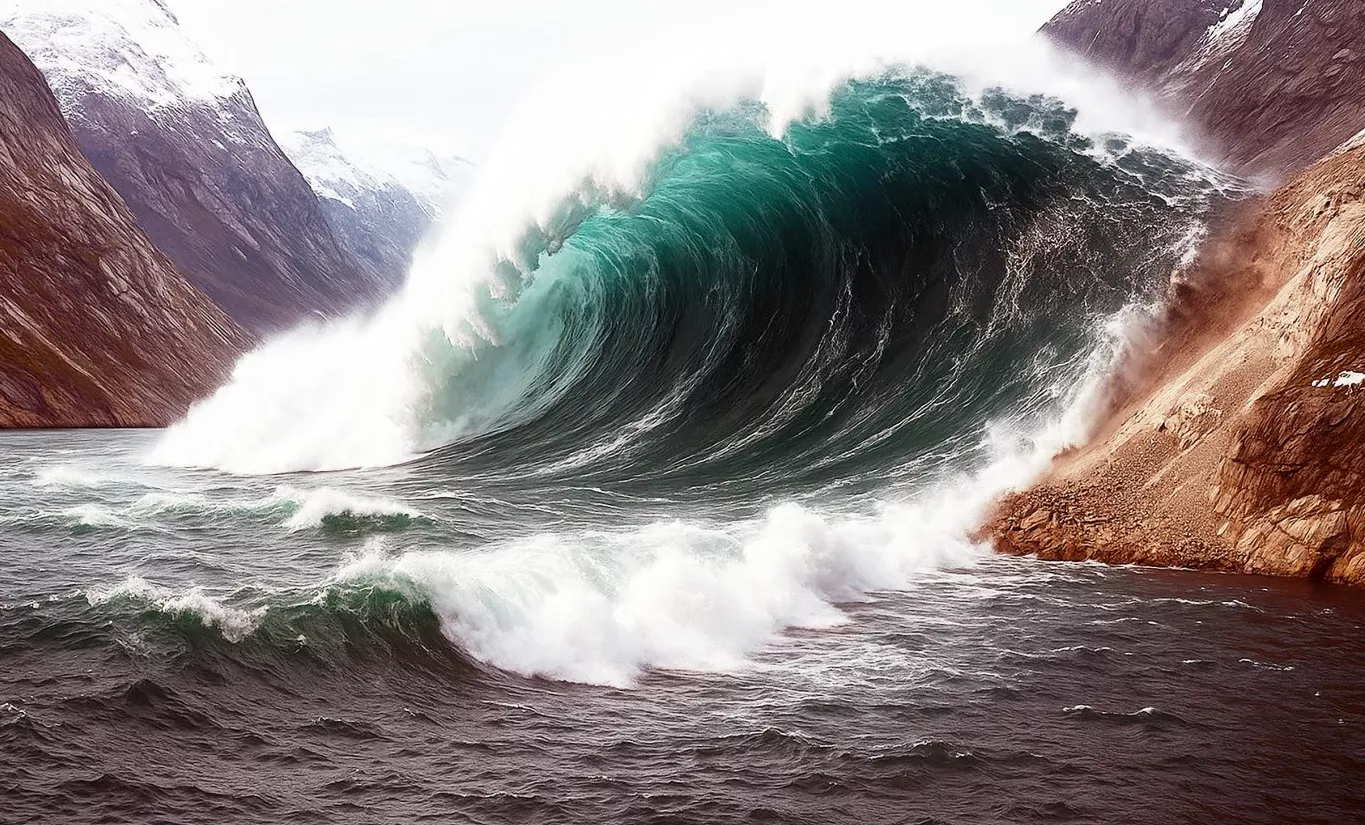
On September 16, 2023, more than 25 million cubic meters of rock and ice – enough to fill 10,000 Olympic swimming pools – broke off and plunged into Dickson Fjord.
The impact generated a mega tsunami wave, which reached a height of 650 feet (over 200 meters), as reported by Science.
The wave surged down a two-kilometer-long corridor, bounced off a headland, and surged back, destroying approximately $200,000 worth of equipment at an unoccupied research site on Ella Island.
The water did not settle after its first pass. Instead, it began to slosh back and forth, a motion known as a seiche.
Computer models later showed the surface rising as much as 9 meters, then dropping by the same amount in a steady rhythm that pressed down on the seafloor like a giant piston.
Heartbeat at Dickson Fjord
Seismic stations typically record frantic traces during earthquakes. This time, the trace formed smooth peaks spaced a minute and a half apart and barely weakened for most of two weeks.
No seiche had ever created such a persistent global signature. One modeling group estimated the surge at about 2.4 meters; another group estimated 7 to 9 meters.
The discrepancy arose from different assumptions about the shape of Dickson Fjord, but both sets of simulations agreed on the source: a landslide-induced wave.
The mystery drew more than seventy researchers from forty-one institutions.
"When we embarked on this scientific adventure, everyone was puzzled and no one had the slightest idea what was causing this signal," said Kristian Svennevig of the Geological Survey of Denmark and Greenland.
"All we knew was that it was somehow related to a landslide. We were only able to solve this enigma thanks to a huge interdisciplinary and international effort."
Field teams measured fresh gouges high on the cliffs, while supercomputers reconstructed the avalanche's path and the fjord's response.
"It was exciting to work on such an enigmatic problem with an interdisciplinary and international team of scientists," said Robert Anthony of the U.S. Geological Survey.
"In the end, it took a multitude of geophysical observations and numerical modeling by researchers from many countries to piece together the puzzle and get a complete picture of what happened."
Komentari (0)
Prijavite se za komentiranje
PrijavaJos nema komentara. Budite prvi!
Minuta
Sve →Iz drugih kategorija

High Representative Not Elected: Germans, French and British Sabotaged Americans, New Attempt at End of June

ČOVIĆ WITHOUT MERCY: How Those Who Brought Ademović to Office Created a Political Hell for Him



Sunny Saturday, quite warm



Tragedy in Albanian resort: Two minors drown












