
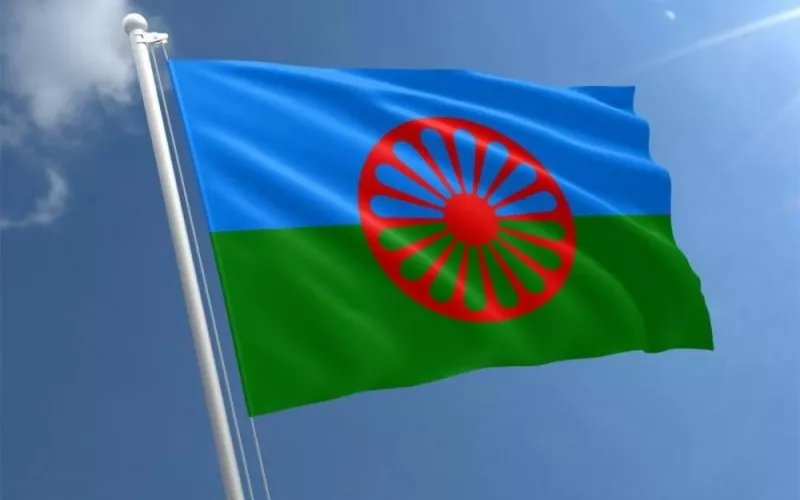
(Patria) - On International Roma Day, we reaffirm the importance of improving the well-being, inclusion, and status of Roma men and women in Bosnia and Herzegovina, including by addressing long-standing discrimination, prejudice, stereotypes, and hate speech that continue to affect Roma communities. As a human rights imperative and an important development priority, the inclusion of Roma is key to breaking the cycle of exclusion and providing hope for children and youth, according to a joint statement by the United Nations in BiH, the European Union in BiH, and the OSCE Mission to BiH.
As highlighted in the latest European Commission report on Bosnia and Herzegovina, Roma men and women remain the most vulnerable and endangered minority in the country, facing persistent discrimination, anti-Gypsyism, and social exclusion.
It is estimated that around 50,000 Roma in Bosnia and Herzegovina continue to encounter systemic barriers in exercising their civil, cultural, economic, political, and social rights. A disproportionate number of Roma men and women are regularly exposed to stigmatization and stereotypes, while institutions fail to protect their rights and respond to their needs. These challenges reflect ingrained discrimination, as well as long-standing deficiencies in the design and delivery of public services. Unequal access to education, healthcare, housing, water and sanitation, social protection, and employment further deepens long-term socioeconomic marginalization.
Accurate and up-to-date data are needed for timely, evidence-based policies, equitable service delivery, and stronger institutional accountability. With limited and insufficiently disaggregated data on Roma communities, it is not possible to fully grasp the true extent of these inequalities.
Roma remain the most marginalized minority in the country, disproportionately excluded from political, social, and economic life, with consequences that carry through generations. The extremely low percentage of Roma children in preschool education – less than 2% – puts this community at a disadvantage from the very beginning. While primary school attendance in the general population reaches 98%, only 69.3% of Roma children are enrolled in primary school. This percentage drops to 23% in secondary education – with only 18% of Roma girls. These educational barriers further deepen the socioeconomic exclusion of Roma communities, as they contribute to persistent inequalities in access to sustainable income sources and formal employment, active participation in the labor market, and social protection.
Roma women and girls face multiple and intersecting forms of discrimination based on gender, ethnicity, and socioeconomic status, creating additional barriers to accessing education, healthcare, employment, and participation in decision-making. In some Roma communities, early marriages have serious consequences for girls and boys – creating pressure to assume adult roles prematurely, narrowing their educational and economic opportunities, and affecting their bodily autonomy.
Roma continue to face obstacles in exercising civil and political rights, including electoral rights, due to their constitutional status as "Others." In the Sejdić and Finci v. Bosnia and Herzegovina case, the European Court of Human Rights found that the constitutional and electoral framework in BiH discriminates against "Others," including Roma, in exercising their electoral rights. The non-implementation of this judgment, as well as subsequent decisions in similar cases, further emphasizes the need for long-awaited reforms through inclusive consultations with civil society, including Roma men and women.
Potential statelessness further complicates the exercise of basic civil and political rights. While progress has been made, thanks to the support of international partners and civil society, and assistance has been provided to most identified vulnerable persons to confirm their legal identity, some Roma men and women remain at risk, partly due to missing or incomplete documentation for children born abroad whose parents are from BiH.
Greater inclusion of Roma men and women also requires acknowledging the historical suffering of Roma communities, including the crimes committed during World War II and the conflicts from 1992 to 1995. Recent research has documented mass killings, enforced disappearances, torture, conflict-related sexual violence, and forced displacement of Roma men and women, including children. In some areas, Roma settlements were completely destroyed. A just and effective process of dealing with the past in BiH requires ensuring accountability for these crimes against Roma men and women, as well as truth, reparations, and memorialization, to ensure that this history is not lost or forgotten.
"Looking ahead, and aware that there is still much work to be done, we welcome the preparation of the new Action Plan for the Social Inclusion of Roma and Travellers for the period 2026-2030. However, we note with concern that the Council of Ministers of BiH has not adopted the draft Plan. It is important that this process continues without further delay. We therefore call on the competent institutions to continue their work based on the significant efforts already invested and to submit a revised version of the Plan to the Council of Ministers for urgent consideration and adoption."
Improving the inclusion of Roma men and women stems from BiH's international human rights obligations; recommendations from international human rights mechanisms, including those within the Universal Periodic Review; commitments undertaken through the 2030 Agenda for Sustainable Development and the principle of leaving no one behind; relevant obligations undertaken by BiH as a member state of the OSCE, as well as the Declaration on Roma Inclusion adopted in Poznań in 2019. The inclusion of Roma men and women is also one of the key benchmarks for BiH's progress on its path to European Union membership, explicitly recognized in the Reform Agenda of Bosnia and Herzegovina and the European Union's Growth Plan, particularly in the area of public policies related to human capital, which emphasizes the need to address the vulnerabilities of marginalized groups, including Roma men and women, through better access to education, employment, and social services.
Ultimately, ensuring the full inclusion of Roma men and women is also essential for building a more just, cohesive, and resilient society for all.
Komentari (0)
Prijavite se za komentiranje
PrijavaJos nema komentara. Budite prvi!
Minuta
Sve →Iz drugih kategorija

High Representative Not Elected: Germans, French and British Against Americans, New Attempt at End of June

ČOVIĆ WITHOUT MERCY: How Those Who Brought Ademović to Office Created a Political Hell for Him



Sunny Saturday, quite warm



Tragedy in Albanian resort: Two minors drown












