
By: Marko Attila Hoare/Atlantic Council
Bosnia and Herzegovina is currently experiencing its worst crisis since the 1992-1995 war. The Biden administration sent its highest-ranking envoy, Derek Chollet, to the region to explore how progress could be made. His trip has not resulted in any breakthroughs.
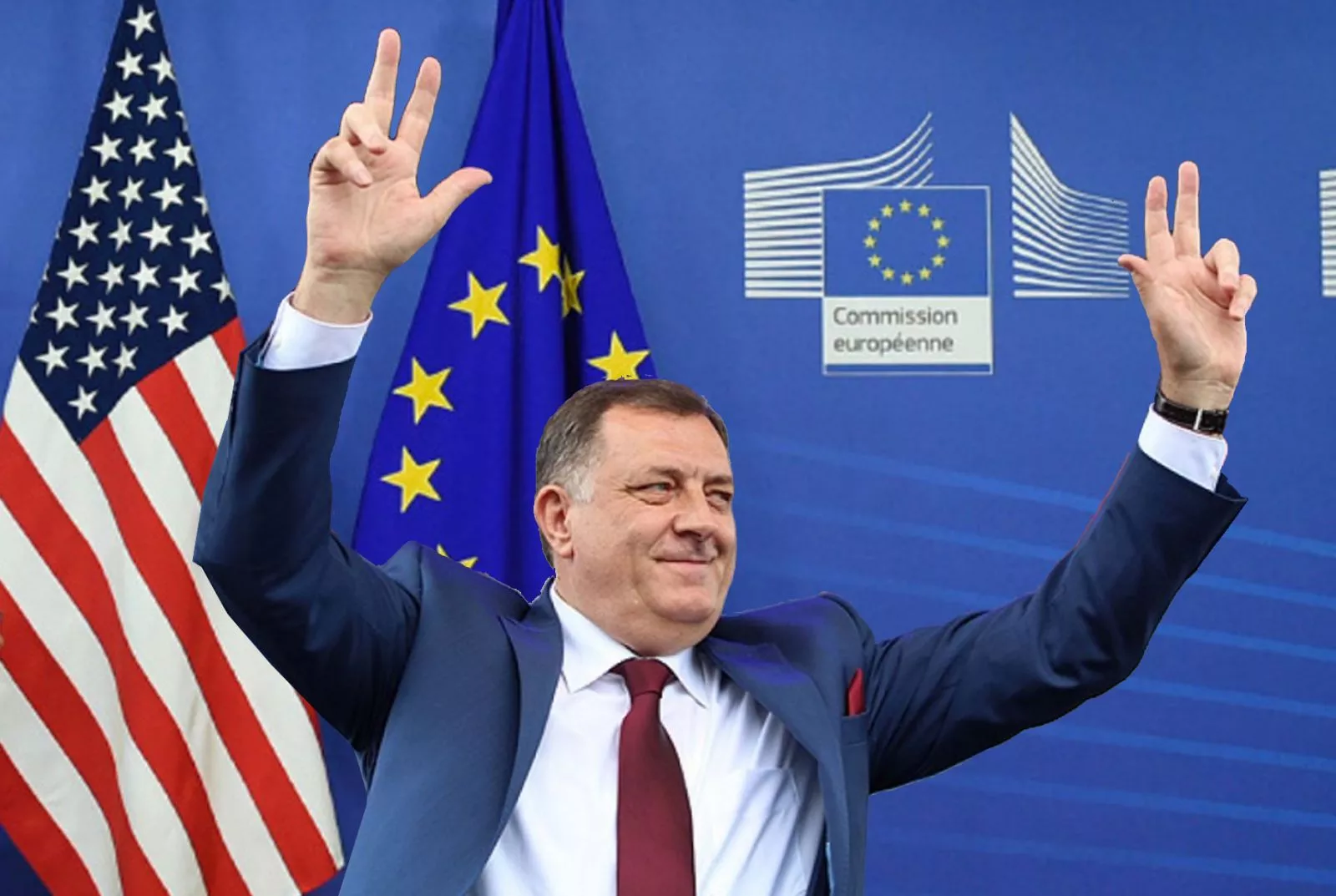
Milorad Dodik, the Serb member of the three-member Presidency of Bosnia and Herzegovina and de facto leader of the majority-Serb entity in the country, Republika Srpska (RS), has announced the effective secession of RS, threatening to withdraw it from the central BiH government, armed forces, judiciary, tax and customs services, and other state bodies, as well as to establish an independent Bosnian Serb army. These moves, violating the 1995 Dayton Peace Agreement that ended the war in BiH, would establish RS as a rogue state similar to Moldova's Transnistria and effectively divide the country.
Dodik has been clear in his desire to see the end of Bosnia and Herzegovina since he became Prime Minister of RS in 2006. But today, his threats seem more realistic than ever, especially as he enjoys Russia's support — with the latter threatening earlier this month to block the annual renewal of EUFOR, the EU peacekeeping mission in Bosnia and Herzegovina. Russia has helped train the RS police force, which is now armed with military weapons, potentially enabling it to act as an army for the entity. Such moves are part of a broader attack by Serbia and Russia on the international order in Eastern and Southeastern Europe, which includes threats to Kosovo, destabilization of Montenegro, calls for the unification of Serbs across the Balkans through the "Serbian World," and escalating Russian presence on Ukraine's border.
Furthermore, Dodik wants to see the closure of the Office of the High Representative in Bosnia and Herzegovina (OHR), the body tasked with implementing the Dayton Peace Agreement and which traditionally curbs Serb and Croat separatism in the country — although the office, with the current Christian Schmidt (who is seen as soft on Russia), has never seemed more ineffective. Meanwhile, increasingly vocal right-wing populists in Europe, including Slovenian Prime Minister Janez Janša and Hungarian Prime Minister Viktor Orbán, sympathize with RS separatism. Neighboring Croatia has also supported the Croatian Democratic Union in Bosnia and Herzegovina, which supports Dodik's goal of dismantling the country.
Therefore, the international balance is more likely to tip in favor of those seeking the breakup of Bosnia and Herzegovina than at any point since the end of the war. This means that no broad multilateral effort to resolve the crisis on a consensual basis is likely to succeed. In any case, Dodik regularly threatens to undermine the Dayton Peace Agreement to extract concessions from the international community. Western leaders regularly appease him, superficially avoiding immediate crises by fueling RS's secessionist drive in the long term.
Of course, Bosnia and Herzegovina's international supporters are tempted to call for strengthening existing international structures — the OHR and EUFOR — to support the crumbling Dayton system. Multinational Bosnia and Herzegovina with the presence of a Serb sectarian entity that emerged from a genocidal attempt to destroy multinational Bosnia and Herzegovina. This contradiction will always fuel RS separatism. Even Dodik is not an aberration, but an inevitable product of the system; he started as a moderate but evolved into a radical separatist. And without a strong international administration — like the powerful and proactive OHR that existed under High Representative Paddy Ashdown in the mid-2000s, which took coercive measures against troublemakers among the country's elites and was supported by a strong international troop presence — RS will inevitably return to separatism in the future.
Supporting the current crumbling order leaves Bosnia and Herzegovina indefinitely as a powder keg waiting to explode as soon as the international balance of power is sufficiently disrupted. Given the current international climate, this could happen sooner rather than later.
It is time to accept that the Dayton system — which was a measure to end the war and was never intended to be permanent — has failed to bring stable peace to Bosnia and Herzegovina. Dodik's actions, including his rejection of international court rulings declaring the Srebrenica massacre a genocide, represent a rejection of Dayton. Since the Serb side so decisively rejects it, neither Bosnia and Herzegovina nor any other member of the international community is obliged to adhere to the terms of the agreement.
Therefore, it is time for the United States, the United Kingdom, and other willing NATO members to send a message to the RS leadership that the allies, unless it abandons its secessionist policies, will accept the immediate restoration of a functional Bosnian state.
Komentari (0)
Prijavite se za komentiranje
PrijavaJos nema komentara. Budite prvi!
Minuta
Sve →Iz drugih kategorija

High Representative Not Elected: Germans, French and British Sabotaged Americans, New Attempt at End of June

ČOVIĆ WITHOUT MERCY: How Those Who Brought Ademović to Office Created a Political Hell for Him



Sunny Saturday, quite warm



Tragedy in Albanian resort: Two minors drown












