
By Armin Sijamić
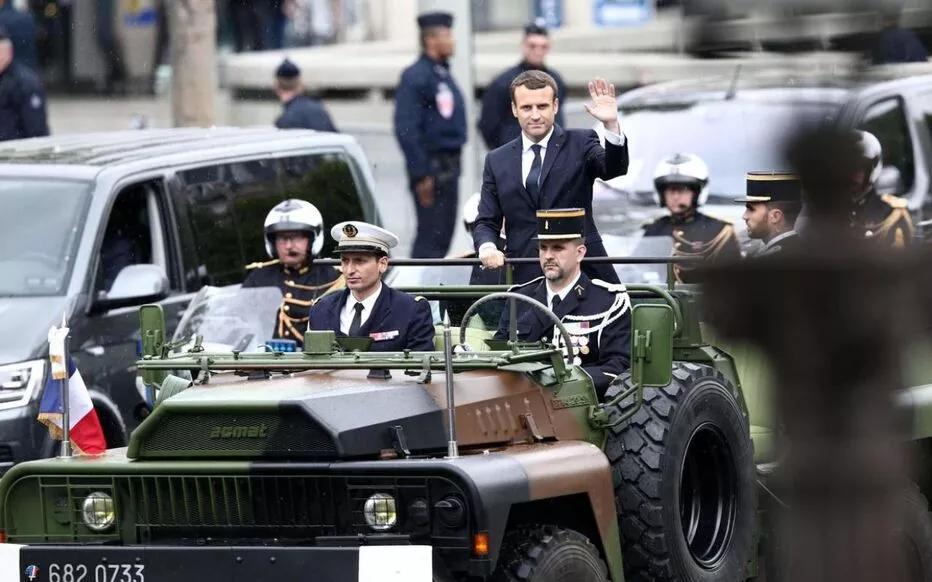
The idea of French troops in Ukraine, put forward by Emmanuel Macron at the end of last month, is gaining new details. Faced with the possibility of Kyiv being defeated, Macron (a banker and technocrat from the center party) has begun to publicly draw geopolitical maps.
In recent days, numerous media outlets have been discussing Macron's stance on Ukraine, after he announced that he was considering sending French troops there and after Russia responded that this was a prelude to war with NATO leading to nuclear war.
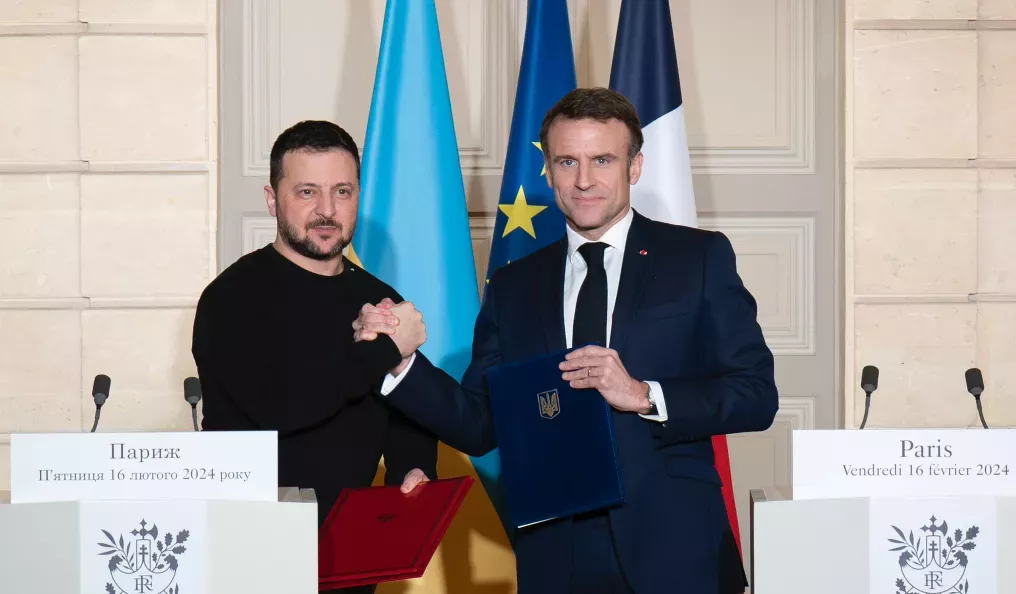
Some media outlets have unearthed a video in which Macron is on the phone with Ukrainian President Volodymyr Zelensky on the first day of the Russian aggression. A concerned Macron asks where the Russian troops are, if Zelensky is safe, and says he will see what he can do to stop the attackers. Macron promises Zelensky nothing, no harsh words, nor announcements of how he will specifically help him.
Yesterday, the French Le Monde published a new vivid story about Macron and his attitude towards Ukraine, or rather, what to do after a series of Ukrainian military defeats in recent months.
“Emmanuel Macron was sitting with a glass of whiskey in his hand. The night was long in the room with portraits in the Élysée Palace, on February 21. The President was clinking glasses with guests, responding to their congratulations on his 'beautiful speech' in honor of the Armenian resistance fighters of World War II, Misak and Mélinée Manouchian, whom he had just inducted into the Pantheon. Nevertheless, the President was thoughtful. The situation in Ukraine, which has been invaded by Russian troops for the past two years, was deteriorating. The war had stalled.' 'In any case, I will have to send boys to Odesa next year,' the President told a few guests," writes Le Monde.
Five days later, Le Monde continues, Macron, from the same palace, answers a question about the possible deployment of French troops in Ukraine and states that 'no option should be ruled out.' Thus, a story is launched that has not lost its significance for two weeks and is being discussed and written about all over the world.
Odesa on the Black Sea
The history of the Black Sea is also the history of Odesa, the largest city on the European side of that sea. Since ancient Greek times, this city has been an important point on the world map. Wars have been fought for Odesa since then, and Greeks, Jews, Turks, Russians, Ukrainians, and other peoples who lived and did business in that large multi-ethnic city for centuries have left their mark there.
Vladimir Putin also spoke about the importance of Odesa, claiming that it belongs to Russia and that the goal of the 'special military operation,' as Russia calls the invasion of Ukraine, is to take the city from Kyiv. At the beginning of the invasion, the Russians tried to capture Odesa, but they were defeated, and the Russian navy was driven away from the coast.
In addition to the aforementioned historical importance of Odesa, the city has an important geographical position on the Black Sea, as Moldova, with its breakaway Transnistria and Russian troops, is located behind it, the Dniester River flows into it, and Odesa is the closest seaport to Kyiv and western Ukraine. Essentially, in this war, Odesa is a window to the world for Ukrainian ships. If Russia were to capture Odesa, Ukraine would be left without a coastline and without access to the Danube.
Macron's interest in Odesa is therefore not accidental, because if he wants to defeat Putin, Odesa is as important as Kyiv, both for the survival of the Ukrainian state and for the interests of the West.
Macron's Interview
The deployment of French troops in Ukraine is increasingly interesting to the French public. It is clear to everyone that this would be a possible prelude to war with a nuclear power like Russia, while some in France claim that Macron wants to show the strength of a leader in Ukraine, ahead of the European Parliament elections.
Macron also spoke about this topic on state television last night, while Russian troops are advancing. "If the situation were to worsen, we would be ready to ensure that Russia never wins this war," Macron said, warning that anyone who advocates for 'limiting' aid to Ukraine 'chooses defeat.' He said it was important for Europe not to draw red lines, which would signal weakness and encourage the Kremlin to continue the invasion. He refused to give details about what troop deployment in Ukraine might look like. "I have reasons not to be precise," he said. "I will not give (Putin) visibility."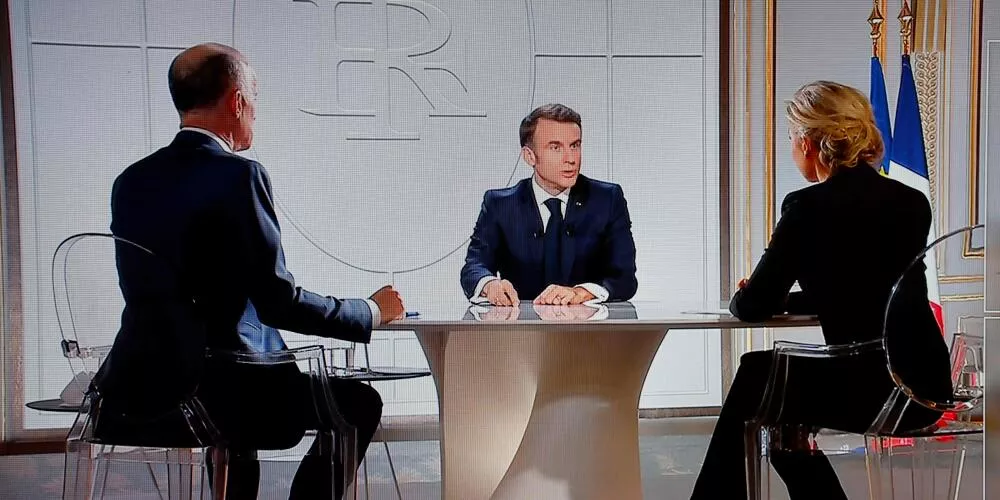
Macron did not call Russia an enemy, but a 'rival,' adding that the time will come when negotiations with the Russian leader will be necessary, regardless of who sits in the Kremlin. He says that troop deployment would not mean a French attack on the Russian army, as responsibility for the conflict would fall on Russia.
Macron claims that Russia's victory in Ukraine would 'reduce Europe's credibility to zero' and warned that this war is a matter of Europe's security, reiterating his position that sending troops to that country remains an option and that it is important for allies not to show signs of weakness towards the Kremlin. He said that at this moment France will not send troops to Ukraine, because the situation does not require it. "If the war were to spread to Europe, it would be an exclusive choice and exclusive responsibility of Russia. But for us to decide today to be weak, to decide today that we will not respond, that is already defeat. And I do not want that," he said.
Russia, Europe, and NATO Allies
Macron's stance on Ukraine is an attempt at European leadership and it is noticeable that he does not mention the United States as the most powerful Western country, while Western officials fear that Donald Trump could return to the White House. On the other hand, Moscow seems to be concerned only about American troops, after US Secretary of Defense Lloyd Austin spoke about the possible defeat of Ukraine last week before the US House of Representatives. Austin said at the beginning of the month that if Kyiv is defeated, he believes that "NATO will be in a fight with Russia."
Russian Foreign Minister Sergey Lavrov says this is a declaration of conflict. "The meaning of this statement is that if Ukraine loses, NATO will have to go against Russia. In a Freudian slip, he said what they had in mind. Before that, everyone was saying: We cannot allow Ukraine to lose, because Putin will not stop there and will occupy the Baltics, Poland, Finland. "But it turns out, according to Mr. Austin's open, unambiguous statement, the opposite. We do not have such plans and cannot have them, but the Americans do," Lavrov said.
The great game being played in Ukraine could not have passed without a rising regional power – Poland. After Warsaw initially rejected Macron's idea of sending troops to Ukraine, different voices are being heard just ten days later. Last week, Foreign Minister Radosław Sikorski stated that it is "not inconceivable" for NATO troops to be deployed in Ukraine. "Soldiers from NATO countries are already in Ukraine. I would like to thank the countries that are taking this risk, they will be recognized," he said at the commemoration of the 25th anniversary of his country's membership in that military alliance.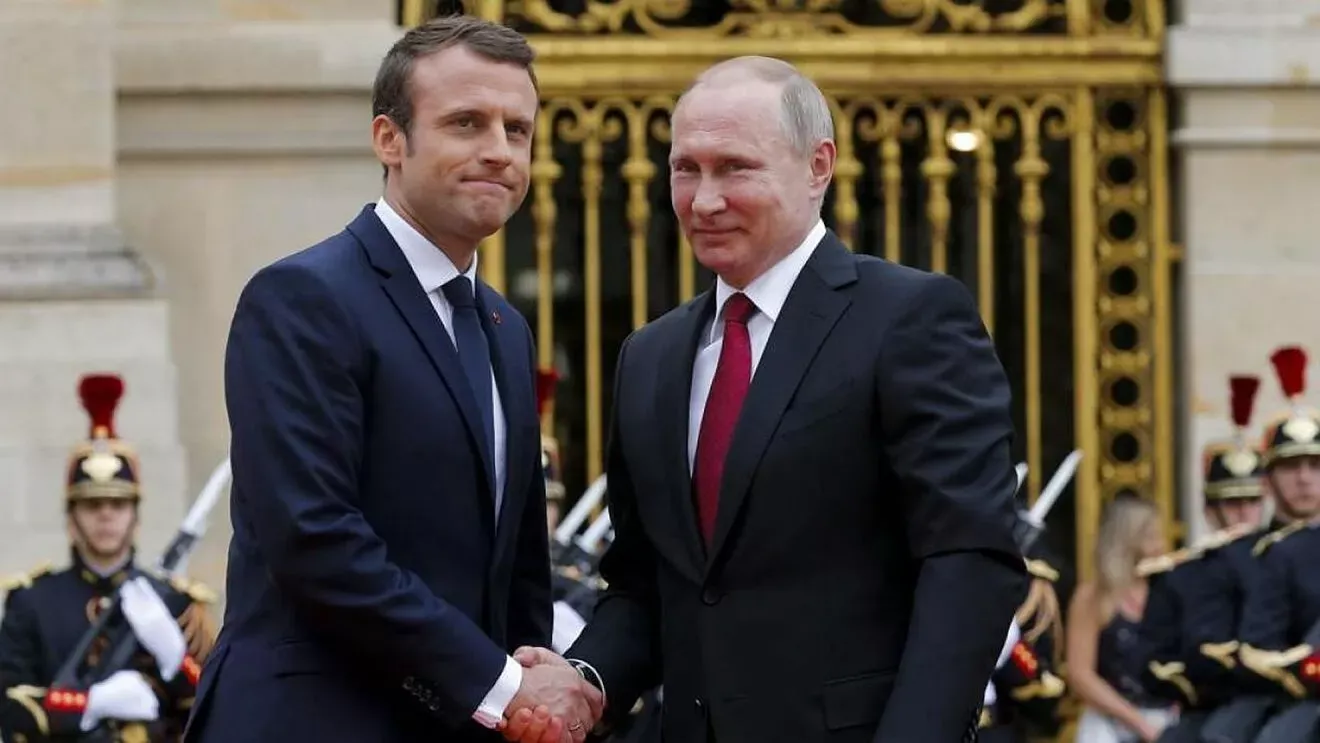
Putin also addressed the Polish presence in Ukraine this week. During an interview before the presidential elections in which he de facto has no opponents, Putin said that the arrival of Polish troops in Ukraine would be tragic for everyone, especially for Ukraine, because they would not withdraw from there, as they view that territory as historically theirs and that Warsaw wants to correct the injustice done to them by the USSR.
Macron has already internationalized the idea of sending troops to Ukraine when he spoke about it to Czech media ten days ago, ahead of his visit to Prague. "In response to a question I was asked about sending units (to Ukraine), I said that nothing is ruled out. Every word counts. Right now, Europeans need to ask themselves if their current strategy matches their declared goals. Our democracies need a boost, they need a strategic awakening," Macron said in an interview with a Czech daily.
Macron's announcement that he might send French troops to Ukraine has divided the West. Although some have supported such an idea, for example, the Baltic states, some other countries reject it. Whether troops will be sent, or whether they will be massed if we take Sikorski's statement as accurate, remains an open question. However, what is clear is that the way Macron and other officials envision Kyiv's victory and Moscow's defeat, and how the Kremlin envisions its neighboring country surrendering territory, leaves little room for debate. One side must emerge defeated from this clash.
Komentari (0)
Prijavite se za komentiranje
PrijavaJos nema komentara. Budite prvi!
Minuta
Sve →Iz drugih kategorija

High Representative Not Elected: Germans, French and British Sabotaged Americans, New Attempt at End of June

ČOVIĆ WITHOUT MERCY: How Those Who Brought Ademović to Office Created a Political Hell for Him



Sunny Saturday, quite warm



Tragedy in Albanian resort: Two minors drown












