
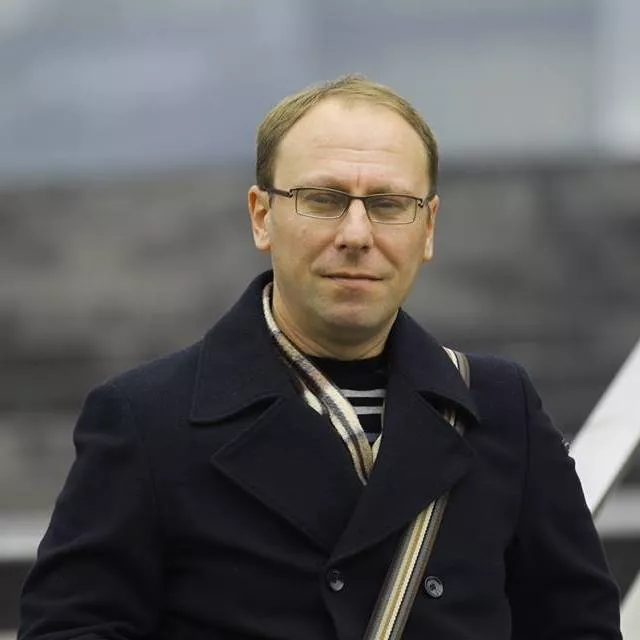
Political analyst Almir TERZIĆ writes for Patria
Political parties in Bosnia and Herzegovina are not in favor of transparent financing and spending methods as recommended by the Group of States against Corruption (GRECO) of the Council of Europe, as well as the Central Election Commission of BiH, because this would deprive them of a significant portion of financial flows that they often use not only during election campaigns to buy voters, but also for personal spending.
One of the earlier suggestions of the BiH CEC is that the Law on Financing of Political Parties should include a provision regulating the methods and conditions for acquiring funds for the operation of political parties, as well as the supervision and transparency of the acquisition and spending of funds.
It is also suggested that it should be prescribed that funds which a political party secures for its financing in accordance with the Law on Financing of Political Parties are prohibited from being spent on personal needs of party members and officials, as well as other activities not related to achieving the party's political goals.
Sufficient proof of this are the manipulations of political parties with payments of funds for private purposes – paying for the education costs of members and their children, excursions, and even electricity bills, purchasing their own books, fake fuel receipts, official travel, daily allowances, illegal payments for hot meals and observer fees are just some of the irregularities identified by the audit investigation of financial reports.
As a glaring example of fraud in political parties, the case will be recorded where aid for paying an electricity bill of 3,000 KM went to an official of HKDU, even though he owns two luxury cars – a Porsche Cayenne and a BMW 540.
In this context, one should also view the situation where GRECO has for years pointed out in its evaluation reports that the authorities of Bosnia and Herzegovina have not fulfilled obligations related to establishing transparency in the financing of political parties.
For political parties to be able to carry out such and similar activities, their key segment is financing. And not only from the budget, which usually makes up about 80 percent of all funds. A very important segment for political parties is also the part related to donations – from legal entities (companies) and natural persons (individuals).
The new, controversial Law on Financing of Political Parties in BiH, which came into force in December 2012, as shown by the later report of the Audit Service of the Central Election Commission of BiH, was supposed to allow parties to legalize their donations, primarily from legal entities (firms and companies) and natural persons, and thus avoid future sanctions from the BiH CEC.
This is best evidenced by the fact that in the following years, parties generated revenues in the millions from donations by legal and natural persons. Indeed, one of the main amendments to the Law on Financing of Political Parties in BiH was the increase of the annual limit for donations from legal entities from 15 average salaries (about 12,000 KM) to 50,000 KM, and from natural persons from eight average salaries (about 6,400 KM) to 10,000 KM.
A new category was also introduced – member donations, which allows them to give their parties annual contributions of up to 15,000 KM (including membership fees), without those parties facing sanctions.
Political parties often use companies as a source of financing, whether for cash or other services. The ODIHR Mission of the OSCE clearly pointed out in its report (financing from private sources) that “the amount of contributions from a single donor can be limited to a certain maximum amount, in order to minimize the risk of corruption.”
There is a risk of circumventing these limitations by using intermediaries to make payments. Effective supervision by competent regulatory agencies is the only way to prevent any attempts to violate this provision. To increase the effectiveness of such supervision, amendments to the Law on Financing of Political Parties should be considered in a way that would oblige banks to have a special bank account through which parties would acquire all monetary income and through which competent bodies could fully control and monitor such income, as stated in the proposals of the ODIHR Office, which, like those of GRECO, have not been accepted.
Therefore, it is difficult to expect that the new solutions offered through amendments to the Law on Financing of Political Parties in BiH will introduce more order in this area. Because no one wants to give up the money that ensures power.
Komentari (0)
Prijavite se za komentiranje
PrijavaJos nema komentara. Budite prvi!
Minuta
Sve →Iz drugih kategorija

High Representative Not Elected: Germans, French and British Sabotaged Americans, New Attempt at End of June

ČOVIĆ WITHOUT MERCY: How Those Who Brought Ademović to Office Created a Political Hell for Him



Sunny Saturday, quite warm



Tragedy in Albanian resort: Two minors drown












