
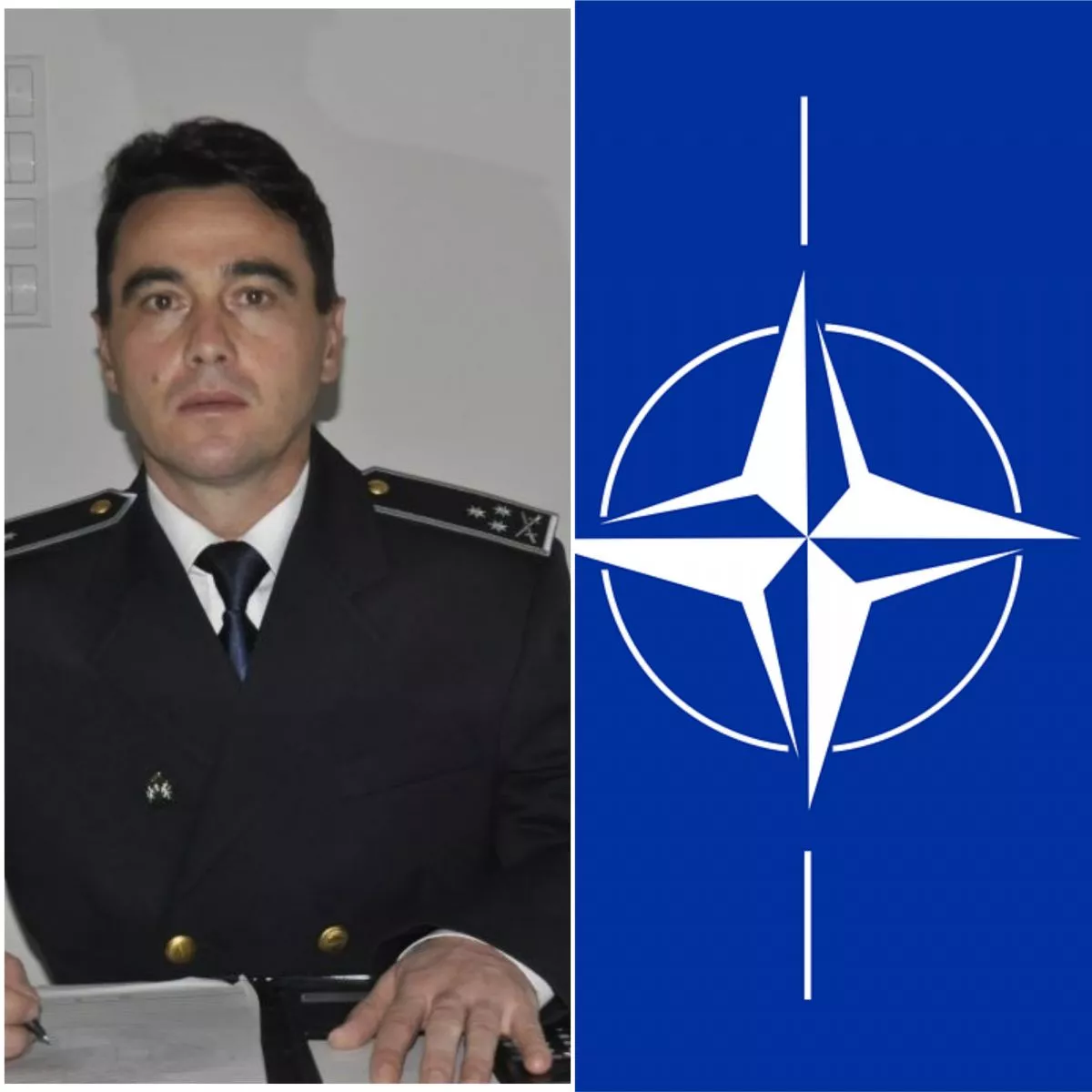
(Patria) - Bosnia and Herzegovina's path to NATO has fallen into the rut of political everyday life in our country. The topics that follow one after another and the overall social situation have led to us talking about NATO incidentally, when in fact finalizing that path would remove many internal problems in Bosnia and Herzegovina.
We discussed all of this with Alija Kožljak, a professor and former military representative of BiH to NATO.
The Reform Program was a gentleman's offer from the NATO foreign ministers to Bosnia and Herzegovina, and despite not fulfilling the Tallinn criteria, it offered the submission of the First Annual National Program (ANP), and thus the activation of the MAP, Kožljak says at the beginning of the conversation with Patria.
"And we spent a year convincing our politicians whether we would submit this first ANP, what it would look like, and after that year, we submitted what they called a reduced document with a changed title. The good thing about it is that the call from the NATO foreign ministers was answered and that the Reform Program, by its structure, contains all the areas that are in the ANP. That is why NATO accepted it, and thus the MAP was activated," adds Kožljak.
As he says, it was a good signal.
"What needed to be done was for every institution in BiH, in accordance with its competences, to fulfill the tasks it set for itself in that first Reform Program. For example, the Ministry of Justice was supposed to fulfill all activities that would show that BiH is achieving results and progress in this area. The same applies to other institutions, ministries, and agencies," explains Kožljak.
We were supposed to submit the second Annual National Program, Kožljak notes, by December last year at the latest, but we did not because BiH once again failed on a politicized technical issue.
"This time it is the Commission for NATO Integration. The Ministry of Foreign Affairs of BiH was supposed to form this commission, which gave this task to the Council of Ministers of BiH. The Council of Ministers collected proposals for commission members and submitted them to the Ministry of Foreign Affairs, and this Commission was never confirmed. This is the Commission that, in essence, should formalize the tasks and activities that should be included in the second National Program," our interlocutor points out.
These days, Kožljak says, political maneuvering is again underway to include the item on the Commission on the agenda of the Council of Ministers, so that the Commission can be confirmed and the technical part of the work can be completed by listing the activities for the second National Program, thereby showing the continuity that Bosnia and Herzegovina is working on its path to NATO.
"There is a problem of substance here. What is in those activities and in the document. That is our standard problem, that some try to prevent us from including even what we can do as our obligation. It has happened many times that representatives from the RS entity remove some activities that were actually included in the Program because, in their opinion, they overemphasized BiH's commitment to NATO. This is our approach of duplicity, where through procedures we have adopted documents that unequivocally state that all BiH institutions have undertaken obligations to work towards BiH becoming a NATO member. The Presidency and other institutions in BiH have addressed NATO with specific documents and expressed their commitment to fulfilling tasks, and then when it comes to doing something concrete, we don't do it," Kožljak stated.
He points out the lack of financial resources as a third segment.
"For example, to fulfill the Defense Review, which is an integral part of the Reform Program and the Plan for Modernization and Development of the BiH Armed Forces 2017-2027, financial resources are needed for its realization, and the adopted budget does not provide them," added Kožljak.
We also asked Professor Kožljak about the behavior of the international community, for whom local authorities have suddenly become a priority.
The professor had an interesting answer: "Until the Local Elections, the international community did not pay much attention to lower levels of government. What I conclude is that the international community is looking for an alternative in the lower levels to this inefficient and dysfunctional system, which is incapable of making key decisions. The international community is looking for a pattern that would start from lower levels of government, where partners would be found in key cities who would be willing to fulfill the tasks and obligations that institutions set for themselves when it comes to both European and Euro-Atlantic integration.
It is evident, the professor says, that the state government has failed the test, as it has not managed to register even non-prospective property that is actually used by the BiH Armed Forces.
"Through the joint efforts of the international community and institutions like NATO, everything will be done to unblock processes, and this may also involve some new political actors on the scene," said Kožljak.
Response from NATO officials to the Patria News Agency
The Reform Program can help Bosnia and Herzegovina strengthen its cooperation with NATO. We are committed to supporting Bosnia and Herzegovina in implementing reforms, as we have been doing for many years, because the Allies are committed to a stable and secure Bosnia and Herzegovina, and more broadly - the Western Balkans. Therefore, we continue to consult with them on this matter. For further comments, I refer you to the authorities of Bosnia and Herzegovina.I would like to add that NATO and Bosnia and Herzegovina have a long-standing and mutually beneficial cooperation. Cooperation with NATO does not prejudge Bosnia and Herzegovina's potential future membership in NATO. We fully respect the country's sovereignty and independence and welcome Bosnia and Herzegovina's contribution to our Euro-Atlantic security, including through our Resolute Support Mission in Afghanistan and the Afghan National Army Trust Fund.NATO maintains a presence in Bosnia and Herzegovina through NATO Headquarters Sarajevo, which performs a range of tasks, including supporting reforms and capacity building within the defense and security forces, structures, and institutions of BiH, under the umbrella of NATO's Partnership for Peace. We also maintain a strong political dialogue with the authorities in BiH.
We asked Professor Kožljak about the situation in the Ministry of Defense of BiH and the Armed Forces, as well as about the theft from the barracks.
"Certainly, the Ministry of Defense and the Armed Forces need to take all measures to prevent such situations from occurring. I am sure that the Ministry is establishing programs that are in line with NATO standards. It would be easiest for me to find many such shortcomings, but there are agencies that will deal with them. The biggest problem is that the BiH Armed Forces do not have sufficient resources to implement the security of military locations according to NATO standards. The BiH Armed Forces guard both prospective and non-prospective military locations. By guarding these non-prospective locations, the BiH Armed Forces allocate a large number of resources that they could actually use to better implement procedures for guarding prospective property, including these armories and ammunition depots. This is one of the key problems. This problem is again related to political issues. Some deliberately do not want to approve activities that would lead to the handover of non-prospective property, while others do not want to approve a budget that would compensate for the lack of personnel. The third problem is deliberate undermining, as there are always elements that want to show that our defense system does not function adequately," Kožljak stated.
He told the Ministry and the BiH Armed Forces that it is necessary to identify the perpetrators of the theft as soon as possible, but also to eliminate the shortcomings so that such things do not happen in the future.
With our observation that we are, by all accounts, far from NATO, Professor Kožljak disagreed.
"I think we are much closer to NATO than to the EU. I have cooperated with the BiH Armed Forces and the Ministries of Defense of all NATO countries, and Bosnia and Herzegovina, apart from the political part and to some extent the judiciary, is already in NATO. There are problems everywhere, including here. There are problems in NATO countries, which we sometimes overemphasize here. The biggest problem here is the political situation. I hope that this initiative from the international community from the shadows will now remove the obstacles and blockades that have led to dysfunctionality," concluded Kožljak.
Komentari (0)
Prijavite se za komentiranje
PrijavaJos nema komentara. Budite prvi!
Minuta
Sve →Iz drugih kategorija

High Representative Not Elected: Germans, French and British Sabotaged Americans, New Attempt at End of June

ČOVIĆ WITHOUT MERCY: How Those Who Brought Ademović to Office Created a Political Hell for Him



Sunny Saturday, quite warm



Tragedy in Albanian resort: Two minors drown












