
By Armin Sijamić
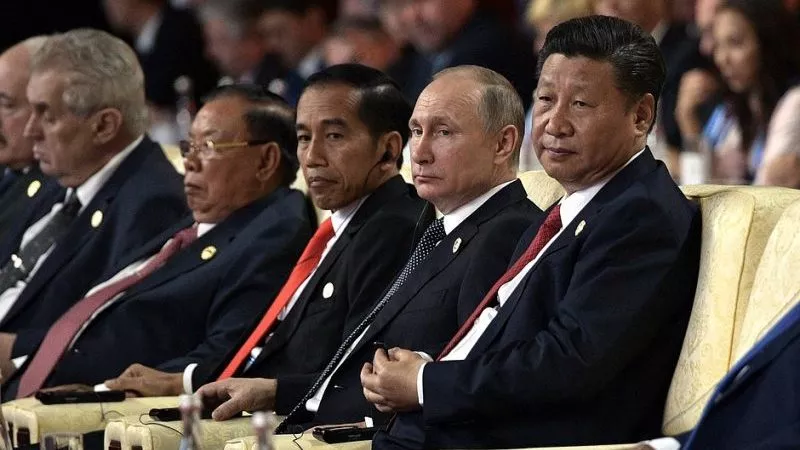
The Belt and Road Initiative celebrates its tenth anniversary. Beijing hosted delegations from more than 130 countries, over twenty heads of state and government, and representatives of about thirty international organizations on October 17 and 18. At the same time, wars in Eastern Europe and the Middle East threaten to undermine the West's positions, while the US and China battle for economic supremacy.
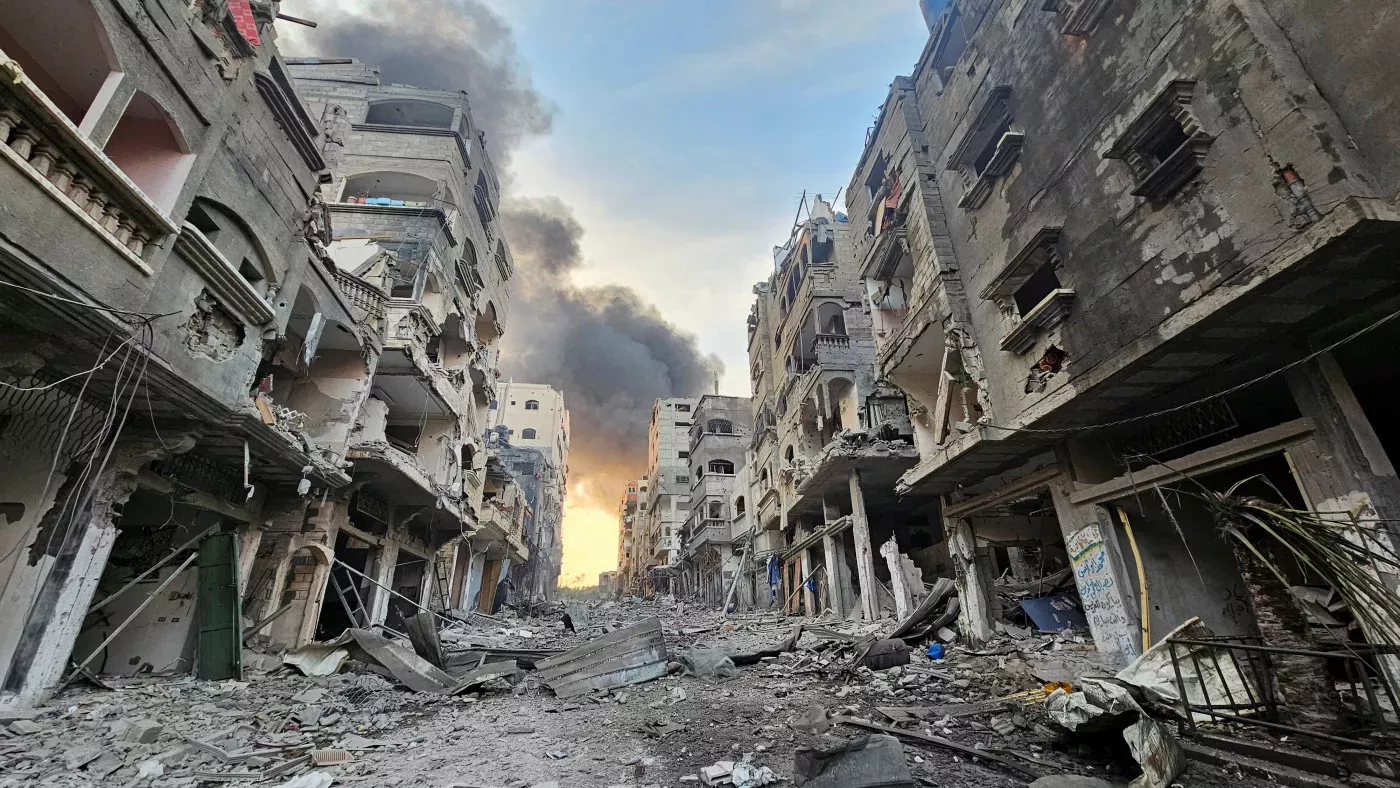
For the past two weeks, almost all Western media attention has been focused on Israel and Palestine. The brutality of this war frightens the West less than the consequences if the war continues and expands across the Middle East.
China, as the world's second-largest power, welcomed guests from around the world in recent days and announced its readiness to invest billions of dollars in projects worldwide, meaning it is not abandoning President Xi Jinping's idea of connecting the world according to China's vision.
Numerous problems accompanying this project have been set aside, meaning the initiative continues, even though the arms of the new "Silk Road" have been cut off in some parts of the world. The visit of Russian President Vladimir Putin, a man on an international arrest warrant who rarely travels abroad since the indictment in The Hague, attracted the most attention in the West.
His arrival overshadowed President Xi Jinping's speech, although parts of that speech are a direct message to the West, China's allies, and all those weighing which side to take in a world transitioning to a multipolar order.
Xi's World Without Ideology
"We do not engage in ideological confrontation, geopolitical games, or political confrontation," Xi said at the opening ceremony. "We oppose unilateral sanctions and economic coercion," added the leader of a country governed by the Communist Party, which seeks to reshape the world, even with those holding opposing ideological positions.
Although he did not name anyone, it is clear that the Chinese president was referring to the West's behavior and invited all those who disagree with such policies to align with the Chinese camp.
Sanctions as a threat to all who do not comply with the West were condemned at the forum in China, and by offering hundreds of billions of dollars in loans and investments, an alternative to the existing economic order shaped after World War II was presented. Two Chinese banks, Xi Jinping said, have prepared nearly one hundred billion dollars for projects worldwide.
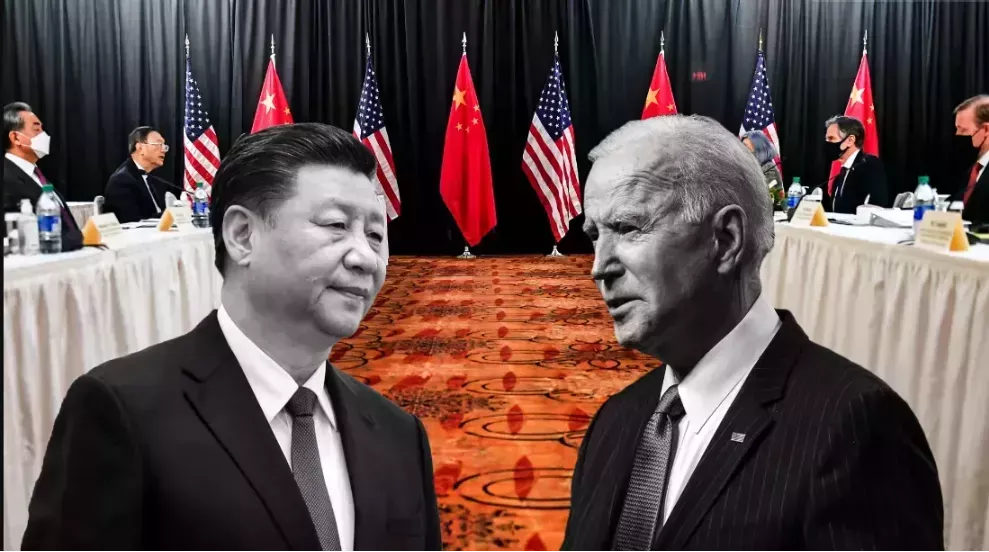
China's economy has been experiencing significant difficulties in recent years, while the number of foreign investments in key industries is decreasing. Nevertheless, the US's containment of China leaves Beijing with few options, forcing it to fight for the favor of every country.
Following a series of decisions by the United States and the European Union to suppress Chinese companies, ongoing since Donald Trump's presidency, China is trying to develop a response in all areas. In some parts of the world, this is going quite well, particularly in Africa, Latin America, large parts of Asia, and recently the Middle East.
Current events in the Middle East favor China, and any further confrontation between Israel and neighboring countries increases Beijing's chances and reduces the West's influence, especially in the public opinion of those countries. Support for Tel Aviv from the United States and several European powers means that the dissatisfied can turn to China. At the beginning of the war in Gaza, Washington asked China to get involved in resolving the conflict, while Beijing is trying to stay as far away as possible, simultaneously giving the impression that it supports Palestine and Israel's regional rivals.
For Chinese strategists, this is a much easier situation than after the Russian aggression against Ukraine, when the West demanded sanctions against Moscow, with which Beijing has strategic relations. In the Middle East, Washington cannot demand much from China, and Beijing could exploit any dissatisfaction with the American approach to Israel and Palestine. In the past two years, the West has thus handed Russia and Putin over to Beijing, turning the world's largest country into China's junior partner.
A Project That Must Continue
The arrival of a large number of delegations in Beijing while wars are raging in Eastern Europe and the Middle East shows that there are those interested in cooperation with China. The Belt and Road Initiative has suffered severe blows in the last two years, and rival initiatives, including India's, are emerging. The European legs of the Belt and Road have been halted at the borders of Russia and Belarus, and further west, few countries remain in the initiative, surrounded by those who oppose it. It seems that Italy's announced withdrawal from the initiative would be the final verdict on Europe's acceptance of the Chinese plan.
But in other parts of the world, China's presence is welcome. The arrival in Beijing of the presidents of Russia, Indonesia, Argentina, Kenya, Kazakhstan, or Sri Lanka indicates that these countries, located at strategically important points on the world map, are ready to continue cooperation. In his speech, Putin described the Belt and Road as "truly important, global, future-oriented, aimed at creating more equitable, multipolar world relations," and told reporters that "we have no contradictions there, on the contrary, there is a certain synergy."
The hundreds of billions of dollars that China has invested in various sectors in over a hundred countries through this initiative in the past ten years, especially in the energy and infrastructure sectors, speak to the strategic nature of these investments, although there have been failed investments that did not yield returns.
However, some of these investments align with what China advocates within BRICS, leading some economies to become more dependent on Chinese investments and debts to Beijing, meaning countries are aligning with China as the conflict with Washington intensifies.
US Treasury Secretary Janet Yellen outlined the economic future of the world during a speech this year. She says two economies are being built, which nevertheless cooperate in some areas and exclude each other in others.
One will be centered around the US, and the other around China. Therefore, China will insist on the Belt and Road, regardless of how (un)successful this initiative is. It is a tool that China has, while it shapes the world's economic landscape with the United States.
Komentari (0)
Prijavite se za komentiranje
PrijavaJos nema komentara. Budite prvi!
Minuta
Sve →Iz drugih kategorija

High Representative Not Elected: Germans, French and British Sabotaged Americans, New Attempt at End of June

ČOVIĆ WITHOUT MERCY: How Those Who Brought Ademović to Office Created a Political Hell for Him



Sunny Saturday, quite warm



Tragedy in Albanian resort: Two minors drown












