
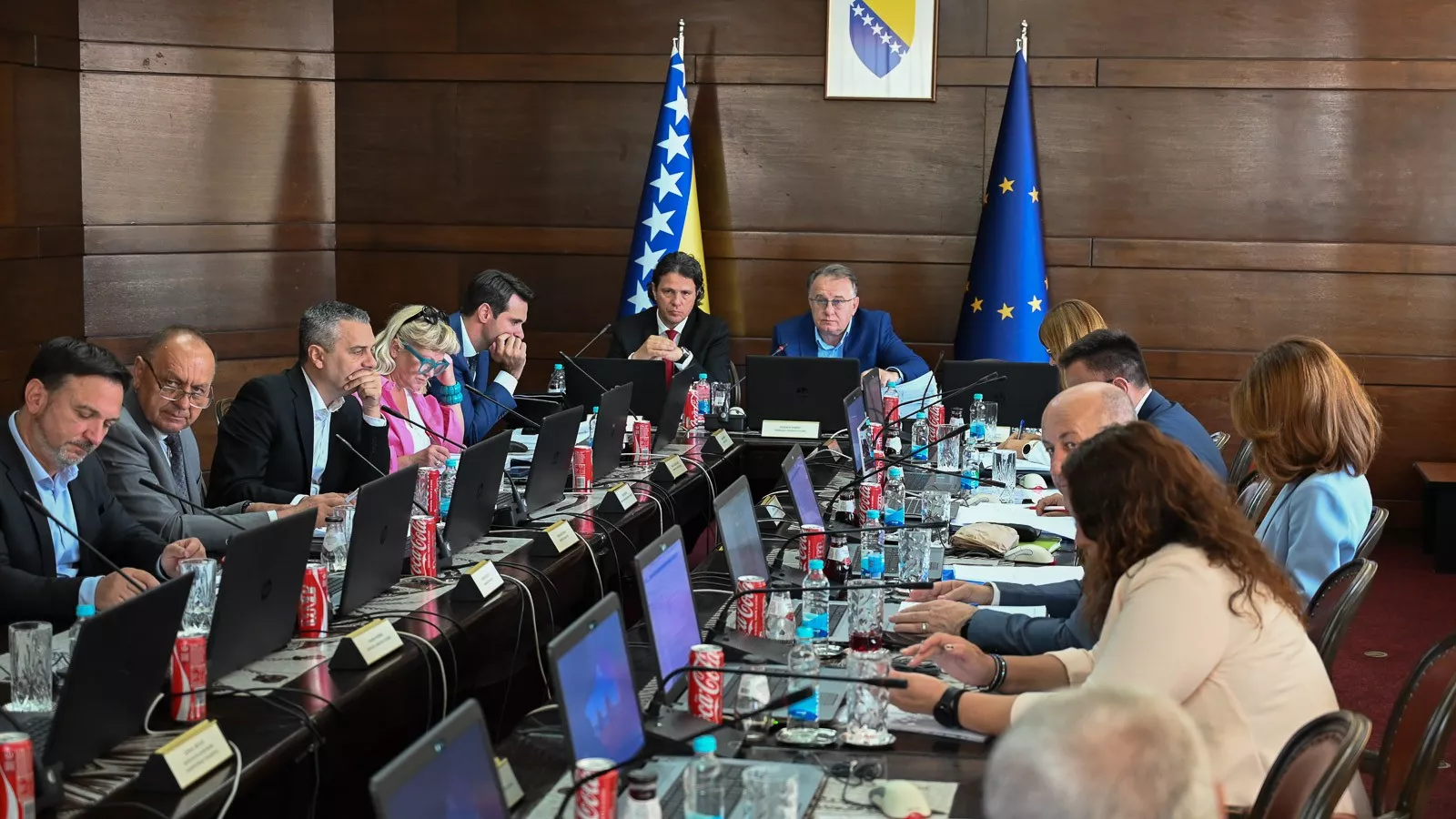
(Patria) - The FBiH budget proposal for the period 2026-2028 shows a distinctly negative trend - public spending is growing faster than revenues, and the difference is systematically covered by new borrowing.
In the next three years, continuous growth in expenditures, increased borrowing, and a structural deficit are projected, which is covered almost exclusively by new borrowing.
According to official budget projections published by Istraga.ba, the Federation will record an annual deficit between one and 1.4 billion convertible marks in the next three years!
In 2026, total revenues/expenditures of 6.51 billion marks are planned, with a deficit of 1.32 billion.
For 2027, a framework budget of 6.68 billion is projected, with a deficit of 1.02 billion, while for 2028, a total budget of 6.97 billion KM and a total surplus/deficit of 1.37 billion KM are foreseen.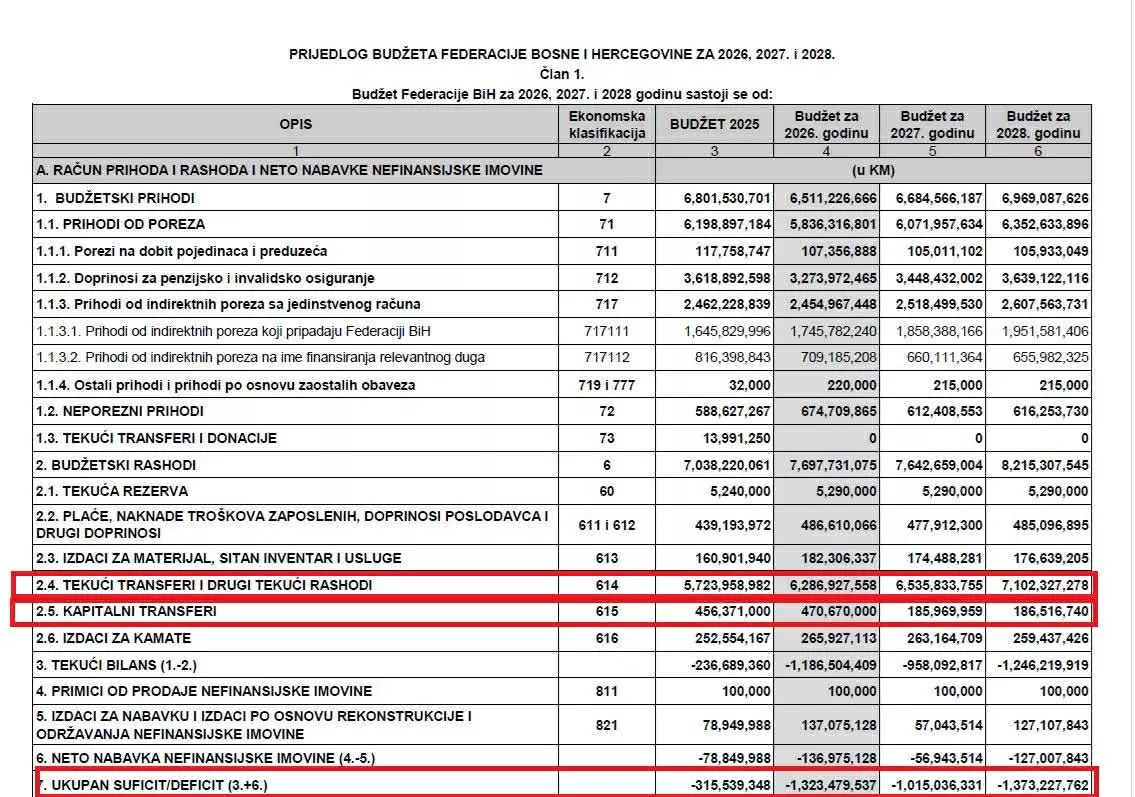
Regarding the Federation's revenues, a high dependence on taxes and contributions is observed - tax revenues account for over 90% of total budget revenues in the next three years, and the main sources for filling the FBiH budget are pension and disability insurance contributions (3.27-3.64 billion KM) and indirect taxes (2.45-2.60 billion).
On the other hand, non-tax revenues (fees, taxes, dividends) remain weak and unstable, with no clear growth plan.
On the expenditure side, the largest portion of funds will be allocated to current transfers and social benefits. On the other hand, capital investments, crucial for long-term development, show a sharp decline after 2026, further narrowing the budget's development component.
When it comes to expenditures, social spending dominates this segment. The largest expenditures are planned for current transfers and social benefits, which will increase from 6.28 billion in 2026 to as much as 7.10 billion KM in 2028.
For salaries and employee benefits, about 47 million marks more will be allocated this year compared to 2025, and the amount for this budget item should remain approximately the same in the next three years - around 480 to 485 million annually.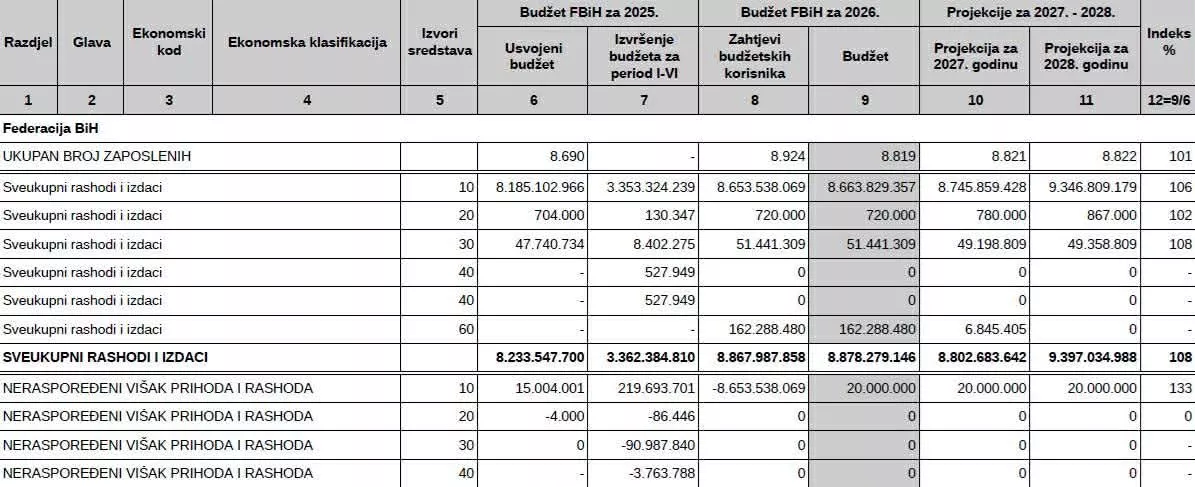
Now we come to the most shocking items in the three-year budget projection, which relate to capital investments and borrowing. According to this proposal, capital transfers will drastically fall after 2026 - from 470 million marks, as planned this year, to only about 186 million KM in 2027 and 2028.
It is clear that without stable capital investments, there is no growth in productivity or long-term economic development of the Federation, whose budget in such frameworks becomes almost exclusively an instrument of social spending.
Borrowing, it seems, from the perspective of the current government, has become the key mechanism for the financial survival and "treading water" of the Federation.
The Federal government thus plans 2 to 2.4 billion marks in new borrowing annually, with predominantly external borrowing and constant short-term domestic borrowing (360 million KM annually).
Although a portion of the debt is regularly repaid, net borrowing is constantly increasing, meaning a significantly higher fiscal pressure in the future and increased interest expenses (over 250 million KM annually).
As a reminder, in 2024, the Federation of Bosnia and Herzegovina allocated a record 452 million euros for the repayment of external debt, which amounted to about 2.58 billion euros, almost double the amount in 2020.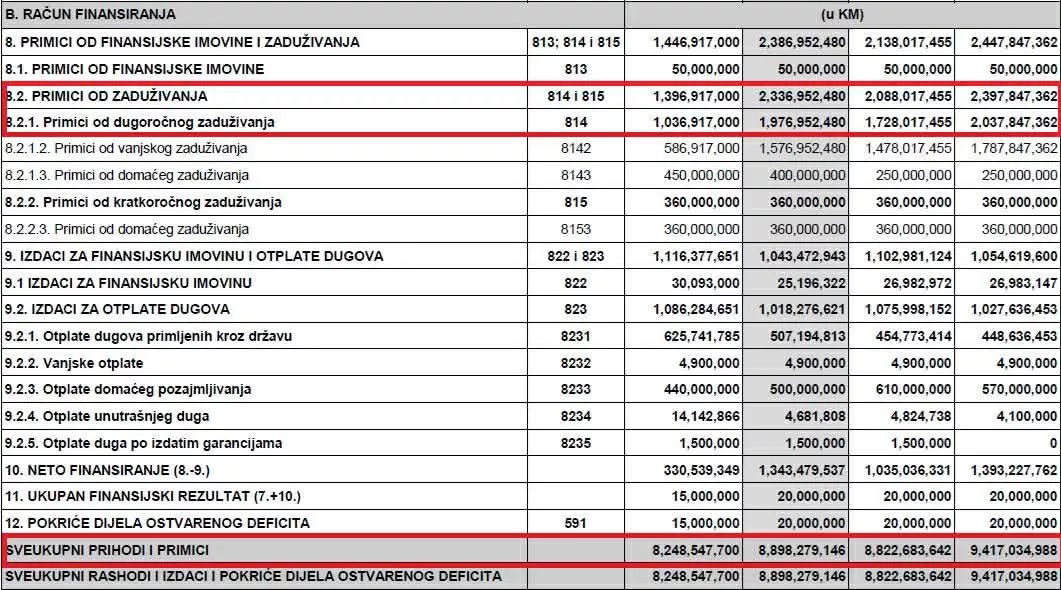
With the planned projections for the next three years, the Federation of Bosnia and Herzegovina faces a systemic deficit and stagnation. In a budget that is almost exclusively consumer-oriented rather than development-oriented, increasing borrowing replaces reforms.
Capital investments have become a casualty of social peace, maintaining the appearance of fiscal reforms, and (alleged) improvements in the standard of living for workers and pensioners, which the current government of Nermin Nikšić consistently presents to citizens.
Not to mention that in the event of any crisis or emergency situations, the Federal government, with such a budget, has extremely limited fiscal maneuverability. Ultimately, the FBiH budget for the next three years does not represent a development plan, but a plan for mere survival.
Komentari (0)
Prijavite se za komentiranje
PrijavaJos nema komentara. Budite prvi!
Minuta
Sve →Iz drugih kategorija

High Representative Not Elected: Germans, French and British Against Americans, New Attempt at End of June

ČOVIĆ WITHOUT MERCY: How Those Who Brought Ademović to Office Created a Political Hell for Him



Sunny Saturday, quite warm



Tragedy in Albanian resort: Two minors drown












