
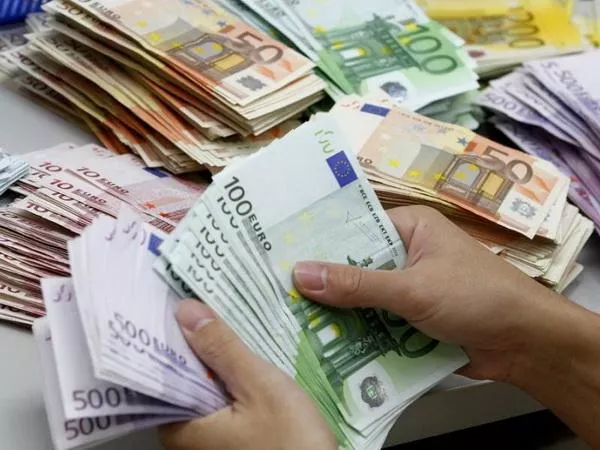
The newly introduced measures of the European Central Bank (ECB), implemented from March 2015, relating to the so-called quantitative easing policy, have, as expected, led to a sharp fall in the value of the EUR against the USD, as well as other important world currencies such as the CHF and JPY, reports the BiH news agency Patria.
The global foreign exchange market reacted in line with the elementary logic of economic behavior. Namely, quantitative easing measures mean additional "pumping" of euros into the monetary system, which has disrupted the mutual relationship of supply and demand for currencies on the foreign exchange market, so the significant increase in the supply of euros has led to a sharp fall in its value, primarily against the USD. This situation has accurately shown the extreme sensitivity of financial markets, even to the mere announcement of the application of a more expansive monetary policy by the monetary authorities of the eurozone. The EUR/USD exchange rate showed a slight strengthening trend from the second quarter of 2013 until the second quarter of 2014, in line with indications and announcements of a gradual recovery of the European economy. During that period, the EUR had strengthened by about ten percent against the USD.
However, the eurozone, exposed to problems of both an economic and political nature (unfulfilled expectations regarding the dynamics of resolving economic and financial problems, as well as the emergence of different views and strategic approaches to resolving debt problems, primarily Greece, and the persistent prolongation of the crisis in Ukraine, which has significantly disrupted economic and political ties with Russia as one of the key economic partners of the EU), and without full political consensus, decided on what could be called a dramatic shift in its strategy to exit the crisis, changing course from austerity policies to de facto expansionary spending policies. This monetary policy of the eurozone is entirely in line with the expansionary monetary policy that the US central bank began to implement back in 2010 and which yielded excellent results in terms of increased employment and overall economic growth in the country. Exposed to very complex mechanisms of harmonization and decision-making, and regardless of the high degree of political integration, the need to satisfy particular national interests, Europe has once again been late. The strategic political advantage of the USA has once again been demonstrated, which is reflected in the concentration of political power and decision-making, unlike the "old lady" (Europe), whose mechanisms in this regard are complex, slow, and thus significantly less effective. The rule, which is the alphabet of management in crisis situations, has been confirmed, which is that a crisis situation necessarily implies a high concentration of decision-making.
The fundamental reason for introducing these ECB measures is to stimulate new investments, primarily in capital-intensive infrastructure projects and "leading" economic sectors, which should then drive intensive growth in small and medium-sized enterprises, ultimately leading to a rapid reduction in unemployment rates. The depreciation of the euro is not fundamentally bad news for the European economy. It will significantly contribute to the price competitiveness of European goods and, on that basis, to increased foreign demand for those goods. This is a necessary, but not sufficient, condition for exiting the crisis. Without necessary structural adjustments and reforms, without resolving the problem of "energy dependence," the European economy will not solve its fundamental problems. It will more easily fall into crises in the future and emerge from them more slowly.
In the context of the fall in the value of the euro and all the problems of exiting the crisis facing the eurozone, the Bosnian-Herzegovinian economy will, to a large extent, share the European fate. The foreign trade flows of the Bosnian-Herzegovinian economy, which chronically suffers from high deficits with a very negative impact on the general economic situation in the country, have a high degree of monostructure from the perspective of their impact on the deficit. The value of imports is significantly influenced by energy sources, oil and gas, cereals, and all other commodities traded on the stock exchange that are payable in USD. Unfortunately, for the same quantities of these goods, we will pay 30-35% more than before the strengthening of the USD exchange rate began. The same will happen on the export side, where payments are exclusively in USD. In this context, we will suffer negative consequences. On this basis, it is certain that we will experience significantly higher outflows, regardless of the currently low level of oil prices, which are certainly not solely due to economic trends. On the other hand, the value of realized exports significantly depends on the export of electricity and non-ferrous metals, so we could conclude that we have a very unfavorable and unbalanced export structure, especially considering that both are essentially raw materials which, when incorporated into final products, we import, thus realizing high deficits. A favorable circumstance is that our foreign debts are only 20% denominated in USD.
However, given the strict connection between the KM and the EUR, the consequent weakening of the KM against the USD will certainly strengthen the price competitiveness of our exporters oriented towards markets outside the EU. Unfortunately, the value of BiH's exports to non-European countries does not exceed 15-20% of total exports. There cannot be significant positive effects on export growth in this regard.
The Bosnian-Herzegovinian economy must undertake thorough structural adjustments towards strengthening the real production sector, with a special emphasis and incentive given to export-oriented and import-substituting branches. This follows from our macroeconomic model. Furthermore, structural adjustments must move towards strengthening institutional competitiveness compared to countries in the region, as the sustainability of the macroeconomic model is extremely linked to our economy's ability to attract foreign investors, but primarily into the real sector.
Therefore, the fundamental challenge for the BiH economy is its structural adjustment to the demands of the real sector and the strengthening of the institutional framework and competitiveness. The convertible mark will, in the context of inter-currency relations, share the fate of the euro, and the general economic situation, growth, and progress will exclusively depend on the ability of domestic governments to respond to the challenges ahead.
Text prepared by the Office of the Lead Economist of the Central Bank of Bosnia and Herzegovina
Komentari (0)
Prijavite se za komentiranje
PrijavaJos nema komentara. Budite prvi!
Minuta
Sve →Iz drugih kategorija

High Representative Not Elected: Germans, French and British Against Americans, New Attempt at End of June

ČOVIĆ WITHOUT MERCY: How Those Who Brought Ademović to Office Created a Political Hell for Him



Sunny Saturday, quite warm



Tragedy in Albanian resort: Two minors drown












