
By Dean Džebić
These days, "Unit 9900" has been working tirelessly, if the large number of sorties by IAF (Israeli Air Force) reconnaissance aircraft over the Eastern Mediterranean is any indication.
By name, Unit 9900 does not attract particular interest, although it is probably the most significant and intelligent branch of the IDF, or rather, the cartographic department within the Aman military intelligence service.
With its technical and technological capabilities, this unit can scan the terrain to geolocate enemy fighter groupings through any type of terrain or object they are located in.
Although the mainstream narrative, both in Israel and globally, relentlessly blames the intelligence community for the oversight during Hamas's attack, the true value of Aman lies in the technological power of the launched Ofeq spy satellites for LEO orbit (low Earth orbit up to two thousand kilometers).
It is precisely these satellites that are capable of creating a 3D projection of the urban terrain within Gaza, according to which maps of completely destroyed streets, neighborhoods, and settlements in Gaza would be updated.
Additional support in reconnaissance and terrain scanning is provided by the American RC-135V, an aircraft specialized in electronic jamming and reconnaissance, which has joined the Israeli preparations for the war in Gaza among the observed flights in recent days.
It is unlikely that there are armed forces in the world with more experience in urban and asymmetric threats than the IDF. Until the first war in Lebanon in 1982, the defense doctrine and the doctrine of IDF use were mainly focused on conventional and symmetrical threats.
Only the hell of Beirut and western Lebanon would create the contours of urban guerrilla warfare, which would become the hallmark and generally accepted type of combat for almost all terrorist groups in the Middle East, but also create the foundation for studying urban warfare in modern conventional conflicts.
It should be noted that the FLN, or the National Liberation Front of Algeria, introduced urban guerrilla warfare through the back door as the simplest form of asymmetric warfare.
Bloody Lessons from Beirut and Gaza
Israel's defense doctrine is largely determined by a series of specific circumstances, among which the composition of the war army, which includes a broad recruitment pool of individuals who have completed their military service, stands out.
Interestingly, the IDF has no non-commissioned officer corps at all and relies exclusively on officers capable of commanding a large war army with a peacetime composition.
Additionally, all formations larger than a battalion have complete "reserve command structures," with the added ease of unified ranks for all branches, both active and reserve components.
With the mass mobilization of reservists come additional challenges of command responsibility, which is particularly evident during campaigns against Hamas and Hezbollah in the very complex conditions of urban warfare.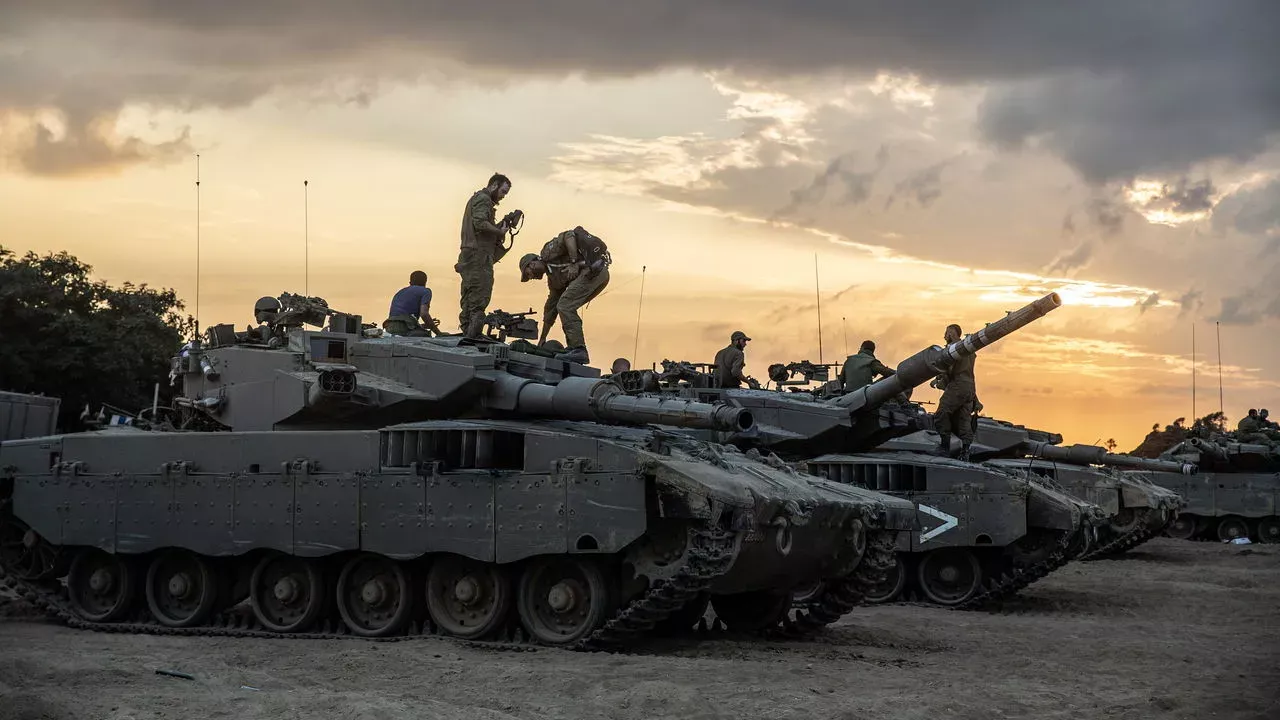
Chronologically, the Israel Defense Forces have had two phases and one interphase (period) in studying and conducting urban warfare. The first phase is from the establishment of the State of Israel until the 1980s and Lebanon, or the first encounter with an asymmetric opponent.
Indeed, until the first Lebanese war, the greatest and only conventional threat was a large attack by Syria across the Golan Heights. In this regard, the defense doctrine remained focused on the development of armored-mechanized units as the central branch of the ground forces.
The IDF had its baptism of fire in urban warfare during the Six-Day War in 1967, when Israeli paratroopers (reservists) fought with the Jordanian army in the eastern part of Jerusalem.
In those battles, Israeli forces clashed with Jordanian forces in a conventional conflict, during which the civilian population was evacuated, which will not be the case in future instances.
For understanding the modern way of conducting urban warfare by the IDF, the interphase, or the historical period from the first Lebanese war to Operation "Defensive Shield" in 2002, or the Second Intifada, is the most significant.
During that period, the dominance of Israeli planners who insisted on conventional threats, such as an attack by several divisions of armored-mechanized units with the use of combined arms units, was broken.
In fact, after the Lebanese war, with the diversification of terrorist groups that carried out terrorist attacks in the 1970s and 1980s, the IDF began to recognize the shortcomings of the previous approach to urban warfare, both in terms of technical and technological readiness and doctrinal misconceptions.
The second phase actually began after the IDF's operation in the West Bank in 2002, when the IDF entered densely populated areas for the first time, where the population was largely not evacuated and was strongly hostile.
In these battles, the IDF entered with its cumbersome tank and armored units, with massive use of aviation. In these battles, in fact, the completely wrong use of all branches of the army became apparent.
For example, intelligence preparations completely failed, as the IDF's advance was carried out in the classic way of searching for enemy vehicles and equipment concentrations.
In reality, they encountered a system of fortified firing positions from which mortars or multiple rocket launchers operated from camouflaged positions.
The air force no longer operated only on fixed and stationary targets but also had to operate on moving targets that had been unsuccessfully located by intelligence preparation.
An additional challenge was the need to use more precise weapons, i.e., missiles and bombs, that would reduce collateral damage and casualties, which, in turn, boomeranged as an injection of combat morale for the enemy.
If the use of unguided bombs with high destructive power were chosen, the streets would become so clogged that armored unit columns could not break through to their deployment areas without engineering units.
On the other hand, engineering units had previously been used for classic engineering tasks in preparing offensive or defensive actions; now, the need for front-line engagement of bulldozers that broke through blockades or debris, thus clearing the route for advancing armor, was recognized.
Additionally, engineering gained a new dimension of use: combating underground tunnels, their destruction, and collapse.
In fact, no technological or tactical innovation has extended the life and survival of Hamas and Hezbollah as much as tunnel digging, taught to them by tunnel experts from Mexican-American cartels.
Today, Hamas in Gaza digs tunnels at depths of over 20 meters and lengths of up to 300 meters, with equipped rails for rapid transport of material and technical resources and personnel.
As a need for combat in tunnels, IDF engineering was tasked with forming units to destroy tunnels, while infantry faced the most difficult and expensive task, namely combat in tunnels, where both Hamas and Hezbollah are exceptional opponents.
Recognizing all these shortcomings and the misunderstanding of the concept of urban warfare, a large urban warfare center of the IDF was established at the Tzelim base in 2005.
The multi-million dollar project to build "Mini Gaza," as IDF soldiers call it, represents a real settlement with over 500 buildings with authentic Palestinian architecture, including mosques, houses, clinics and hospitals, schools, and associated facilities.
Narrow streets and protruding firing positions serve as a complete training ground, sufficient for training up to two brigades simultaneously.
Although the second phase of IDF urban warfare contributed to significant changes, it was only the catastrophic losses of the IDF that indicated the complete failure of using large formations without specialized units to engineer demining and clear road communications.
The completely wrong use of armored-mechanized units was particularly evident, as was Hezbollah's ability to destroy several dozen tanks in anti-tank combat while simultaneously and equally precisely engaging and hitting with anti-tank, anti-aircraft, and anti-ship missiles.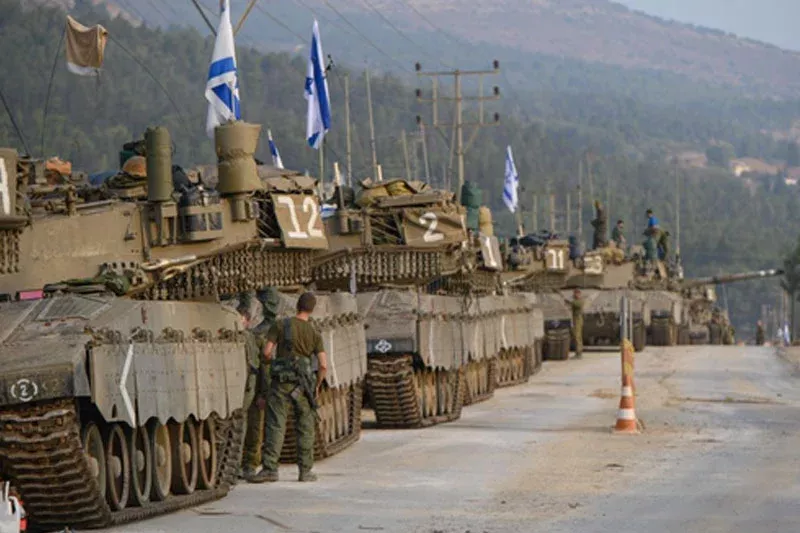
The IDF's Modern Urban Warfare Model and the Role of Armor
Despite the extremely high price paid, the IDF does not abandon the use of tanks in urban warfare, but with specific formation and tactical frameworks that it takes today.
The IDF still refrains from using mechanized infantry as a branch; instead, infantry continues to play a central role, supported by Namer and Puma combat armored vehicles or M113 transporters, but not as mechanized infantry.
Given that Pumas and M113s proved to be easy targets in urban warfare due to their extremely thin armor, the level of ballistic protection on the upper projection has been strengthened.
As a need for a vehicle that could respond with mass transport of squads with accompanying weapons and, if necessary, carry a significant amount of ammunition and material-technical resources itself, the Namer armored personnel carrier was created.
On the chassis of the Merkava IV tank, it weighs 63 tons, approximately the weight of an average Western-produced tank.
At the operational-tactical level, in an attack on urban areas the size of an average street in Gaza, the IDF advances with two to three Merkava tanks, up to four Namer vehicles, and two bulldozers leading the way with engineering units entering urban settlements.
Merkavas and Namers, following the pattern from the 2006 war, move in a rhomboid formation, covering the advancing area with machine guns and cannons in a range of up to 180 degrees.
This formation is covered by an infantry company located in transporters, advancing with the support of machine guns from Namers or automatic grenade launchers.
In the urban conditions of densely populated Gaza, a whole squad of the IDF is engaged for a single-story building, while a whole company is engaged for a multi-story building.
Of course, these are tactical patterns that can change depending on the active situation on the ground, as well as the support coming from the air and land from armored-mechanized units, and ultimately from specialized engineering units that remove all obstacles.
On the other hand, although eternally asymmetric, Hamas's response is also increasingly modern and innovative, and in fact, the IDF can only win an urban war if it does not enter it.
The day units enter Gaza, whether the population is there or not, that war can no longer be won. Ultimately, any form of urban warfare leads to the victory of the defender or, at best for the attacker, to an unresolved outcome that will be decided by negotiations.
As long as forces acting from a distance have the role of attackers, they have superiority; the moment one enters the ruins, the defender executes the order that General Nguyen Giap gave to the Vietnamese soldiers: "Grab the Americans by the belt."
And Hamas and Hezbollah have shown that they can firmly grab the Israeli belt.
Komentari (0)
Prijavite se za komentiranje
PrijavaJos nema komentara. Budite prvi!
Minuta
Sve →Iz drugih kategorija

High Representative Not Elected: Germans, French and British Sabotaged Americans, New Attempt at End of June

ČOVIĆ WITHOUT MERCY: How Those Who Brought Ademović to Office Created a Political Hell for Him



Sunny Saturday, quite warm



Tragedy in Albanian resort: Two minors drown












