
By Amra Vrabac
Public companies, hospitals, mines, and companies in bankruptcy have been leading the list of largest debtors according to the FBiH Tax Administration for years. It is no secret that the FBiH Government partially covers some of these debts with money from the budget, making payments for workers of failed companies or those in bankruptcy so they can retire.
Instead of the FBiH Government using all the mechanisms at its disposal to reduce the debts of these companies, and to force management, at least of public companies, to do something concrete and reduce debt, the Government has decided on a measure that will very likely extend the list of debtors because the burdens that both the public and private sectors will face after the increase in the minimum wage and related taxes will cause a strong shock to the economy in FBiH.
On the list published by the FBiH Tax Administration in June 2023, as many as 4,823 companies owed more than 50,000 KM in taxes and contributions. Among the top ten with tens of millions of KM in debt are public companies, and the total debt is estimated at almost 3 billion KM, which is slightly less than half of the annual budget of the Federation of BiH.
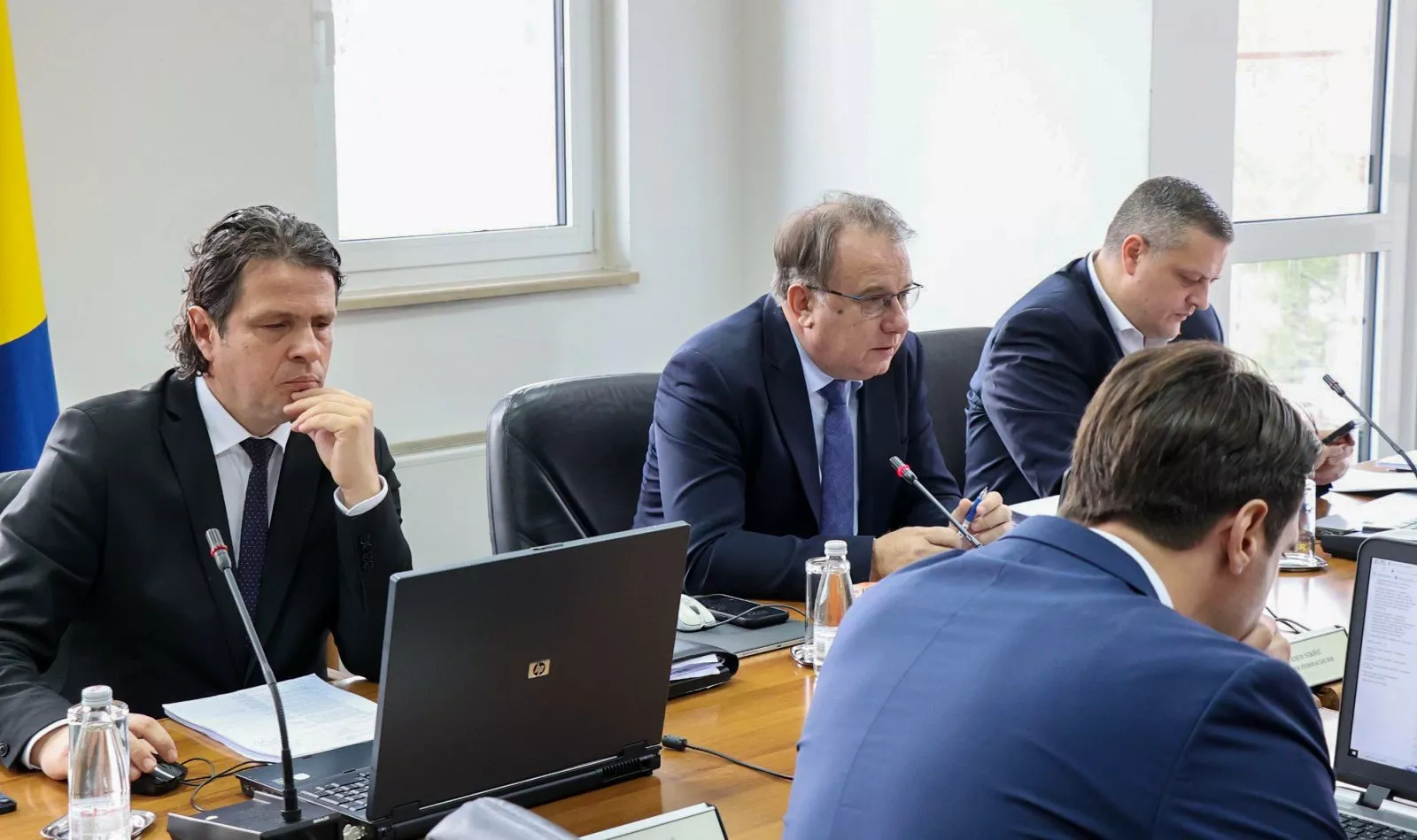
In 2025, the Government, without Nermin Nikšić who was replaced by Vojin Mijatović, entered with a decision on a minimum wage of 1,000 KM. For workers registered at the minimum wage, this sounded like good news. However, for all employers, it is an economic shock that few will be able to withstand. After the minimum wage increases, all other prices of services and products will increase, and then requests for increases in all other wages will follow. Do you think the authorities will exempt the public sector from further wage growth? The answer is of course no. This is also shown by two decrees on the payment of non-taxable employer assistance that the Government adopted during 2024. According to the FBiH Prime Minister Nermin Nikšić's own statement, the largest part of this money was paid by the public sector, companies, agencies, and institutes that are mostly financed from the budget. When someone else fills your budget, all you have to do is grab. That's how Nermin Nikšić's Government behaves. Like a drunken government, which is not far from the truth. On a minimum wage of 1000 KM, the state takes more than 700 KM.
If public companies are debtors even before the new decision on the minimum wage, then they will continue to increase their debt. Those who were not debtors and regularly settled their obligations are now at risk of no longer being able to do so. Those who must give all their profits to employee wages and taxes to the state will reduce their number of employees. No one can know the consequences of such a sudden decision by the Government to increase minimum wages by 380 KM until the first data from the FBiH Tax Administration becomes available at the beginning of February.
Let's take the example of the Public Broadcasting Service of BiH (BHRT), where more than 50 percent of employees receive a salary of around 800 KM. At the moment, BHRT does not have money for any wage increase, although the Trade Union clearly presented such a request during 2024. It is also no secret that BHRT has not been paying contributions for years, and this is done after the termination of employment, so that workers can exercise their right to a pension. And this is waited for months.
The state authorities and the relevant Minister of Transport and Communications Edin Forto have not found a sustainable solution for BHRT in two years. There is no new law, an agreement on the distribution of the RTV fee between RTV FBiH and BHRT was barely reached, and the authorities temporarily resolved one crisis by taking money from the Communications Regulatory Agency, and BHRT was paid 4 million KM. Wages were delayed for several months, and any wage increase without resolved financing will increase BHRT's debt to workers and the state.
And instead of solving problems one by one, because the parties of the 'trojka' form the government vertically, they are not capable of even maintaining the existing situation, which is most evident in the Canton of Sarajevo. The KS Government has spent a budget of 1.5 billion despite all warnings and will continue to borrow. The Canton of Sarajevo is on temporary financing, and there is no budget in the Federation of BiH or at the state level.
Let economists talk about the numbers and forecasts of how many workers could lose their jobs, and how much the grey economy will now flourish, and how much the debt of public companies will increase.
When asked whether the FBiH Government consulted experts when making the decision to increase the minimum wage at the same tax rate, we see the answer ourselves. It did not. Because so far we have only heard individual opinions of economists and analysts, and for example, we have not heard forecasts from the Faculty of Economics of the University of Sarajevo or the position of the Institute of Economics.
Komentari (0)
Prijavite se za komentiranje
PrijavaJos nema komentara. Budite prvi!
Minuta
Sve →Iz drugih kategorija

High Representative Not Elected: Germans, French and British Sabotaged Americans, New Attempt at End of June

ČOVIĆ WITHOUT MERCY: How Those Who Brought Ademović to Office Created a Political Hell for Him



Sunny Saturday, quite warm



Tragedy in Albanian resort: Two minors drown












