
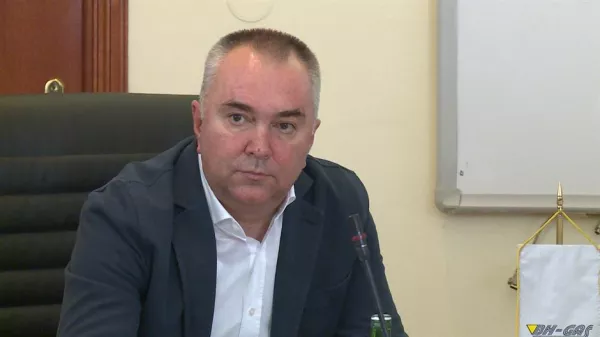
By Almir Bečarević
Considering the importance of energy security, as well as the complexity of energy policies, the following provides an overview of the natural gas market in BiH, with a focus on planned interconnection projects.
The issue of signing an intergovernmental agreement for the Southern Interconnection or the New Eastern Interconnection is more complex than simply giving consent to one or the other document. Namely, these two gas pipelines are in direct opposition because, above all, they do not have the same gas source. The gas source for the New Eastern Interconnection is ONLY Russian gas, via TurkStream, which is 90% leased by Russian Gazprom. In addition to the lease, the owner of the infrastructure, i.e., the gas pipeline (except for the section through Bulgaria, which is burdened by a loan from Bulgarian Bulgartransgas), is Russian Gazprom. It is particularly important to emphasize that the New Eastern Interconnection is not represented in any strategic document of the Energy Community/EU as a project of regional and/or national importance, and this dimension is precisely what is now being confirmed by the EU's abandonment of Russian gas.
The New Eastern Interconnection is based on the planned consumption of gas-fired power plants (two are planned), which would be built in the future along the gas pipeline route and whose owners would again be Russian companies, i.e., Russian capital. It is also important to note that the entire New Eastern Interconnection project is based exclusively on Russian participation in design and construction.
In addition to this, the concept of gas market development in Republika Srpska is also based on the construction of a gas pipeline from Šekovići towards Istočno Sarajevo. This concept is based on increasing the transport tariff on the Sarajevo-gas Istočno Sarajevo system, which would be paid by consumers in the Federation of BiH, as it is widely known that the gas market in Republika Srpska is underdeveloped. The increase in the transport tariff for Sarajevo-gas Istočno Sarajevo would serve to have consumers in the Federation of BiH pay for, i.e., finance, the development of the gas market in Republika Srpska, given that gas consumption is concentrated in the Federation of BiH.
At the same time, the development of the Northern Interconnection of BiH – HR is blocked by the construction of a direct gas pipeline from the direction of Croatia to the Brod Refinery, where the Brod Refinery is now licensed as a gas supplier via trailers (truck transport), given that a CNG facility has been built within the refinery complex, which (for now) supplies gas to consumers in Republika Srpska.
Both the New Eastern Interconnection and the branch from Šekovići and CNG from the Brod Refinery are projects based exclusively and ONLY on Russian gas, without the potential for any diversification of natural gas sources. In addition to the planned gas-fired power plants, the main goal of all these projects is to take over the market in the Federation of BiH, either by taking over consumers or by financing gas development in Republika Srpska through transport tariffs paid by consumers in the Federation of BiH.
The realization of the New Eastern Interconnection is absolutely unacceptable, and in addition to rejecting this "interconnection," the gas connection at Brod and the development of the branch from the existing system in Šekovići should be further problematized. I especially note that the connection at Brod was built without any state consent (under the Sava River, under the cover of night), and the capacity of that connection is at the same level as the connection at Zvornik.
All activities currently led by the entity RS have proponents in the FBiH as well, which are again in direct opposition to the activities of the EU and American friends. What the proponents of these RS entity activities forget is that there will be no Russian gas, nor oil, in the EU, and that activities are currently underway in the EU to revoke Gazprom's license to operate TurkStream. Likewise, proponents of projects in RS forget that gas is not potatoes and that the New Eastern Interconnection project costs about 500 million EUR with one gas-fired power plant, and that there is no creditor in the EU that will finance it except Gazprom itself or disguised Russian capital. We should not forget that in case of project failure, BiH pays everything (as the authors devised). All of Russian Gazprom's projects for the development of new transport routes to the EU are a forgotten story, except for the last one, which is the branch from TurkStream towards BiH/RS.
At the same time, Bosnia and Herzegovina can hardly realize two gas projects at the same time (both the Southern and Eastern Interconnections), especially considering the estimated value of both gas pipelines and the market development, and when we add the fact of the EU's abandonment of Russian gas to this context.
The only project that diversifies both supply routes and sources and enables the integration of the BiH gas transmission system with the Western European transmission network is the Southern Interconnection of BiH and Croatia project, which is currently at the highest stage of development. In addition to diversifying natural gas supply routes, the project's realization would enable the diversification of supply sources, i.e., access to gas sources from the Krk LNG terminal (HR), the Caspian region (TANAP - TAP - IAP), EU gas hubs (Algerian, Norwegian, etc.), as well as access to gas storage facilities in the region. I note that Slovenia buys gas from Algeria, Croatia via the LNG terminal, Bulgaria gas from Azerbaijan, Italy gas from Africa (reduced Russian gas imports from 40% to 10%), etc., etc.
The project is included in a number of national strategic documents, and is fully aligned with current EU/Energy Community policies and strategies, as well as regional plans, such as ENTSOG TYNDP, the Economic and Investment Plan for the Western Balkans, and others.
Therefore, the conclusion of an intergovernmental agreement between Bosnia and Herzegovina and the Republic of Croatia on the construction of the Southern Interconnection of BiH and Croatia gas pipeline is inevitable, which will not be conditioned by the signing of an intergovernmental agreement for the New Eastern Interconnection, considering the maturity of the Southern Interconnection project and the current EU policy towards Russian oil and gas.
And to be clear, the author of this text is not entirely against Russian gas, but assesses the reality because only 9% of Russian gas remains in the EU and will continue to decrease.
Komentari (0)
Prijavite se za komentiranje
PrijavaJos nema komentara. Budite prvi!
Minuta
Sve →Iz drugih kategorija

High Representative Not Elected: Germans, French and British Sabotaged Americans, New Attempt at End of June

ČOVIĆ WITHOUT MERCY: How Those Who Brought Ademović to Office Created a Political Hell for Him



Sunny Saturday, quite warm



Tragedy in Albanian resort: Two minors drown












