
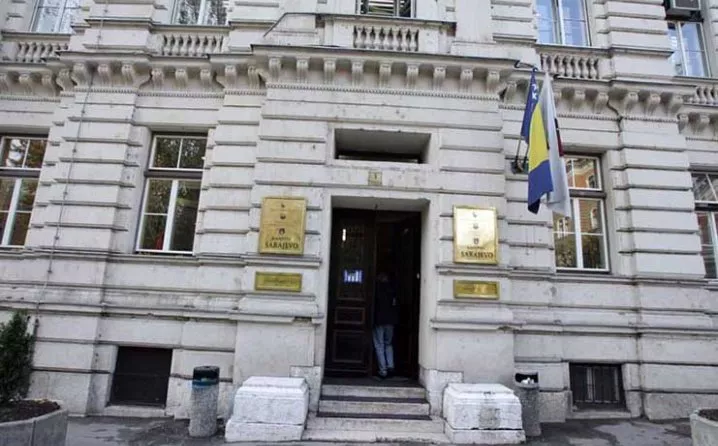
SARAJEVO, (Patria) – Representatives in the KS Assembly had numerous questions regarding the proposed Law on Mitigating Economic Consequences, and answers were provided by the ministers of finance and economy and the prime minister.
Minister of Finance Jasmin Halebić stated that the obligation to pay para-fiscal levies for March and April remains, as it falls under the legal category. All economic entities will be exempt from para-fiscal levies from the adoption of the law until 60 days after the natural disaster state ceases. The criteria will be precisely defined but will depend on the situation in April.
“To issue any measure, we must have data.”
Regarding the Credit-Guarantee Fund, the KS Government will define the criteria, and the Government will subsidize interest rates.
Halebić stated that KS is in a difficult situation that is changing and becoming more complex.
“We supplemented it in cooperation with our other partners, which is why some parts concerning the economy were included as an addition in the amendment section.”
Minister of Economy Draško Jeličić, responding to representatives' questions, said that the law is limited by the budget rebalance and that they cannot know how many companies and workers will be covered.
“Everything depends on the number of companies that have experienced a decline, have not laid off workers, and are registered in KS.”
Jeličić stated that a large number of companies did not meet the prescribed criteria, and their applications for wage subsidies for March were rejected.
Regarding tourism, the Tourist Board allocated one million KM for March, April, and May.
“For April and May, we will include companies that had a drop in turnover, and we will include hoteliers and companies that are endangered but not prohibited from operating. Tourists and other workers who have lost their jobs will be encouraged through a public call that we will issue if they have not been laid off.”
The minister stated that he cannot say how much money the Government will have for each month regarding subsidizing part of the wages, as it depends on available funds and the number of workers.
For March, a total of 4,950 forms were received, 3,387 met the conditions with 13,796 workers, and money has already been paid to those who met the criteria. Forms for those whose work was prohibited, such as shopping malls and market spaces, are still being processed.
In the set of short-term and long-term measures, the budget provides 51,785,000 KM, support for economic revitalization 85,000,000 KM, and support for crafts and trades 2,000,000 KM. A total of over 163 million KM is planned for the economy.
Prime Minister Mario Nenadić stated that the measures were prepared while awaiting funds from the IMF.
“We need to respond to something that is new in the whole world. There are many factors why the harmonization of this law was delayed. With the provision for the continuation of negotiations with trade unions, we opened the way for all socio-economic partners to express their views on the obligation to bear consequences in KS. We wanted these discussions to take place in a legal and transparent manner. A whole series of collective agreements have expired or were about to expire; we wanted to strengthen the obligation to complete negotiations.”
When asked if they expect new lawsuits due to the abolition of fees in management and supervisory boards and other governing bodies, Nenadić said there are no grounds for initiating new lawsuits.
“This issue is regulated by a Decree. These are special regulations and competencies of KS,” said Nenadić.
Komentari (0)
Prijavite se za komentiranje
PrijavaJos nema komentara. Budite prvi!
Minuta
Sve →Iz drugih kategorija

High Representative Not Elected: Germans, French and British Sabotaged Americans, New Attempt at End of June

ČOVIĆ WITHOUT MERCY: How Those Who Brought Ademović to Office Created a Political Hell for Him



Sunny Saturday, quite warm



Tragedy in Albanian resort: Two minors drown












