
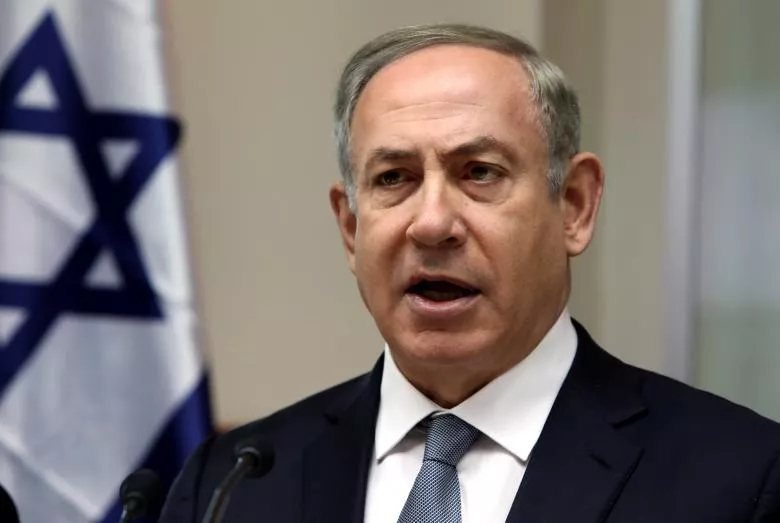
US President Donald Trump will officially receive Israeli Prime Minister Benjamin Netanyahu on Wednesday. This is their first meeting in the first 100 days of the new US President's White House tenure, Reuters reports, as carried by Patria.
The agenda will include the most complex issues of the Middle East region: the war in Syria, Iran in the context of nuclear armament, and the Israeli-Palestinian conflict, including the construction of Israeli settlements on occupied Palestinian territory.
Netanyahu, who is currently under investigation in Israel on suspicion of abuse of office, spent most of the previous day preparing for talks with senior advisors in Washington. Officials claim they are trying to avoid any divergence of views between the US and Israel during the planned two-hour meeting in the Oval Office.
While social media emphasizes the close friendly relations between Netanyahu and Trump, who presents himself as the "best friend" Israel has ever had in the White House, the US President has recently somewhat softened his pro-Israel stance.
During his election campaign, Trump's rhetoric was undoubtedly pro-Israel, promising to move the US embassy from Tel Aviv to Jerusalem, and supporting David Friedman, who promotes settlement construction, as his envoy to Israel, emphasizing that he would not pressure Israel to negotiate with the Palestinians.
However, that tone has changed recently: moving the embassy does not seem to be one of President Trump's priorities, at least for now – mostly due to warnings about the possibility of unrest in this turbulent region. A similar warning and suggestion to President Trump came from Jordanian King Abdullah.
Thus, a White House spokesperson recently stated that the construction of new or expansion of existing Israeli settlements "would not be conducive to peace."
Friedman, who is awaiting confirmation of his appointment as ambassador to Israel, will not attend the White House meeting on Wednesday.
For Palestinians, as well as much of the rest of the world, settlements built on occupied land are considered illegal under international law. Israel opposes such a view, which is why it faces growing criticism from its allies, especially after Prime Minister Netanyahu announced plans to build 6,000 new housing units across the West Bank, according to the Reuters report.
Komentari (0)
Prijavite se za komentiranje
PrijavaJos nema komentara. Budite prvi!
Minuta
Sve →Iz drugih kategorija

High Representative Not Elected: Germans, French and British Sabotaged Americans, New Attempt at End of June

ČOVIĆ WITHOUT MERCY: How Those Who Brought Ademović to Office Created a Political Hell for Him



Sunny Saturday, quite warm



Tragedy in Albanian resort: Two minors drown












