
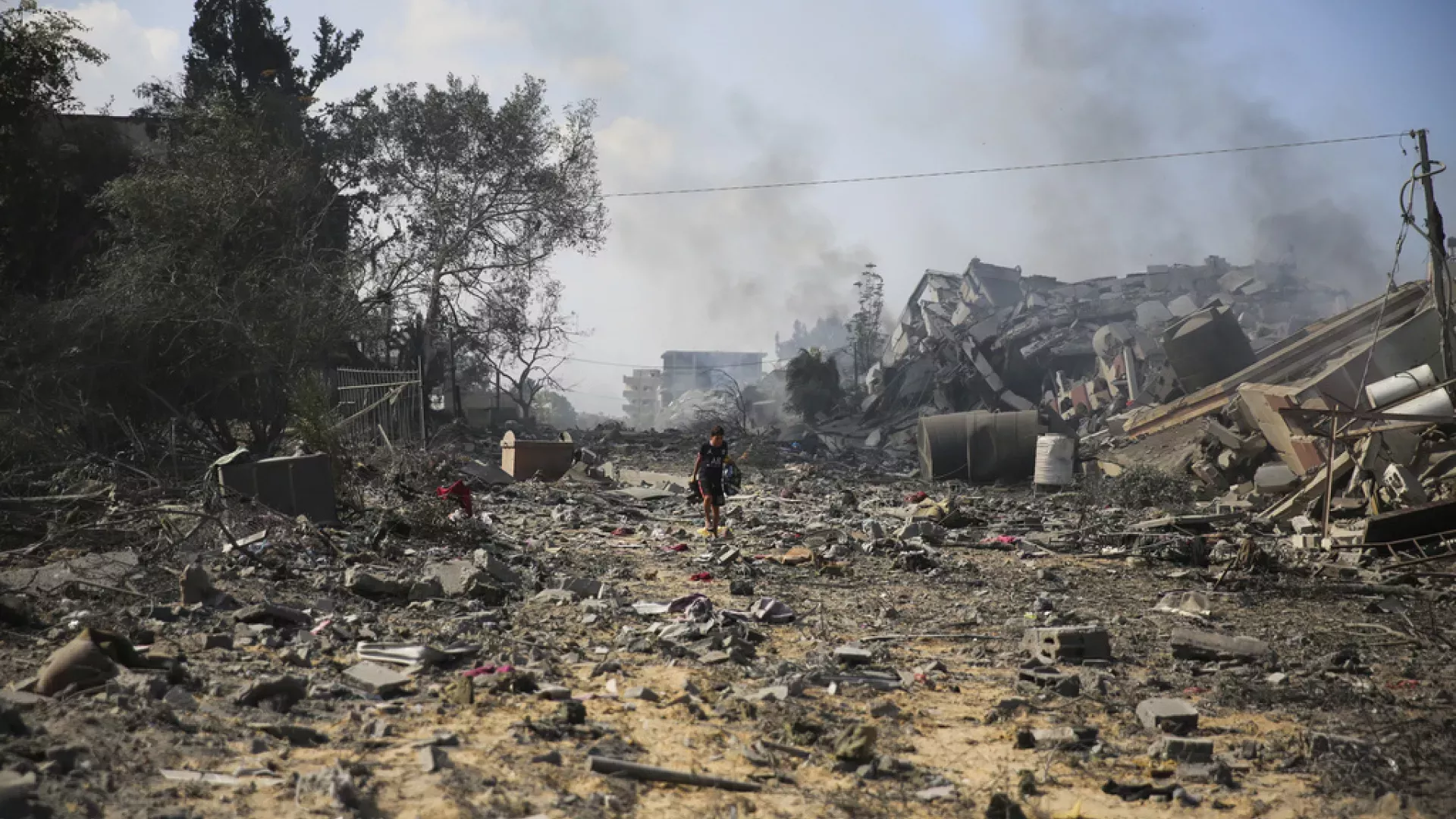
(Patria) - In the first month of the war in Gaza, Israel dropped hundreds of enormous bombs, many of which were capable of killing or injuring people hundreds of meters away, according to an analysis by CNN and artificial intelligence company Synthetaic.
Satellite imagery from those early days of the war reveals more than 500 impact craters with diameters larger than 12 meters, consistent with those left by nearly 1,000-kilogram bombs, reports Danas.rs.
High Casualty Count
These are four times heavier than the largest bombs the US dropped on ISIS in Mosul, Iraq, during the war against the extremist group there.
Weapons and warfare experts blame the widespread use of heavy munitions like the 1,000-kilogram bomb for the high casualty count. Gaza's population is packed much tighter than anywhere else on earth, so the use of such heavy munitions has a profound effect.
- The use of 1,000-kilogram bombs in an area as densely populated as Gaza means it will take decades for communities to recover, says John Chappell, a lawyer and legal advisor at CIVIC, a Washington-based group focused on minimizing civilian harm in conflict.
Israel has come under international pressure over the scale of destruction in Gaza, with even a staunch ally, US President Joe Biden, accusing Israel of "indiscriminate bombing" of the coastal strip.
Israeli officials claim its heavy munitions are necessary to eliminate Hamas, whose fighters killed more than 1,200 people and took more than 240 hostages on October 7. They also claim Israel is doing everything it can to minimize civilian casualties.
- In response to Hamas's barbaric attacks, the IDF is working to destroy Hamas's military and administrative capabilities.
In stark contrast to Hamas's deliberate attacks on Israeli men, women, and children, the IDF adheres to international law and takes feasible precautions to mitigate harm to civilians, the Israel Defense Forces (IDF) said in a statement in response to CNN's reporting.
Proponents of Israel's campaign in Gaza argue that heavy munitions act as bunker busters, helping to destroy Hamas's underground infrastructure.
But Western militaries typically rarely use 1,000-kilogram bombs, experts say, due to their potential impact on densely populated areas like Gaza.
"Not Seen Since Vietnam"
Marc Garlasco, a former US Defense Intelligence analyst and former UN war crimes investigator, points out that the density of Israel's bombing of Gaza in the first month "has not been seen since Vietnam."
Garlasco, now a military advisor at PAX, a Dutch NGO advocating for peace, reviewed all incidents analyzed in this report for CNN.
- You have to go back to the Vietnam War to make a comparison. Not even in both Iraq wars has it been this dense, Garlasco said.
Heavy munitions, mostly manufactured in the US, can cause mass casualties and can have a lethal fragmentation radius – an area of exposure to injury or death around a target – of up to 365 meters, or the equivalent of 58 football fields in area.
Weapons and warfare experts blame the widespread use of heavy ordnance, such as the 1,000-kilogram bomb, for the high casualty count.
According to data from the Hamas-controlled Gaza Strip authorities, around 20,000 people have been killed since October 7. According to this data, most of the dead are women and children.
CNN partnered with the US artificial intelligence company Synthetaic, which used rapid automated image categorization (RAIC) to detect craters, plumes of smoke, and damaged buildings in satellite imagery over the Gaza Strip.
The findings, manually reviewed by a Synthetaic team member and CNN journalists, "reveal and underscore the sheer intensity of the bombing in a very short period of time," says Annie Shiel, US advocacy director at CIVIC.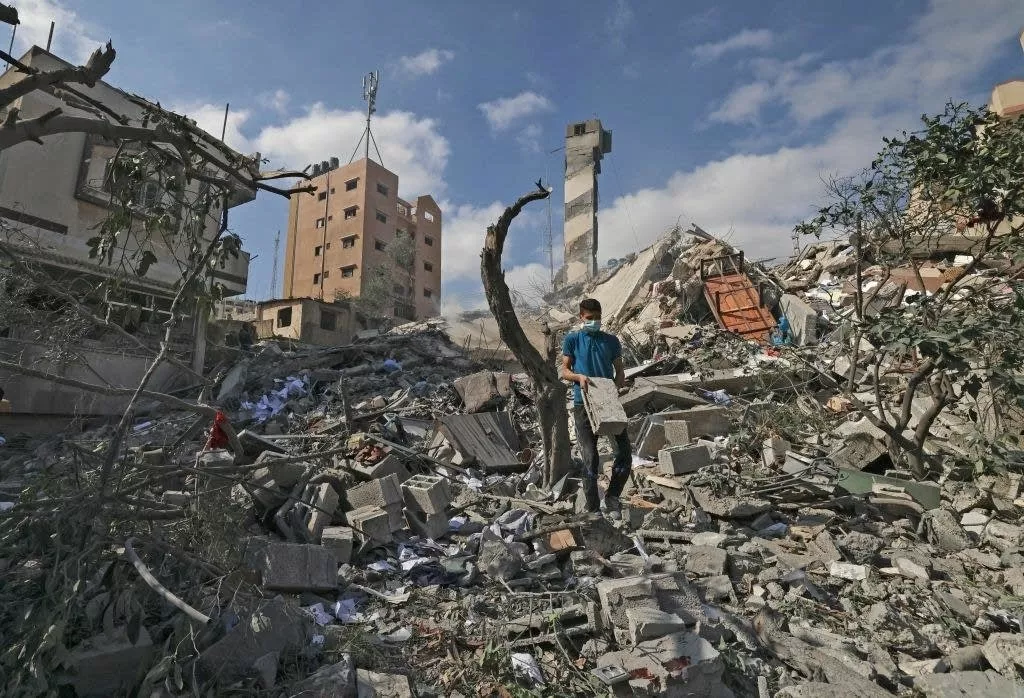
High-Intensity Offensive
For more than two months, Israel has waged a high-intensity war in Gaza, combining heavy aerial bombardment with relentless artillery fire, as well as a ground invasion that began on October 27.
The operation has caused devastation stretching across parts of the besieged enclave, satellite imagery and video feeds.
- In two months, we've had about the level of strikes in this small area in Gaza as what we saw in Mosul and Raqqa combined. It's an incredible amount of strikes in terms of the period, says Larry Lewis, director of research at the Center for Naval Analyses (CNA).
The US dropped a 1,000-kilogram bomb only once during its fight against ISIS – the most recent Western war against the militant group in the Middle East. It fell on the self-proclaimed capital of the so-called caliphate – Raqqa in Syria.
Last week, US intelligence sources told CNN that 40-45 percent of the 29,000 air-to-ground munitions dropped on Gaza by then were so-called dumb or unguided bombs, munitions that can pose a greater threat to civilians, especially in densely populated territories like Gaza.
Some of these are likely the 1,000-kilogram bombs identified in satellite imagery craters. Israel has a large arsenal of large bombs, known as MK-84. When a GPS guidance kit is attached to an MK-84, the bomb becomes known as a GBU-31.
According to two people familiar with the matter, the US has supplied Israel with more than 5,400 MK-84s since October 7.
- The devastation we've seen for the communities in Gaza, unfortunately, has been co-signed by the US. Too much of it has been carried out with bombs made in the US, points out Chappell from CIVIC.
In the Jabalia refugee camp in northern Gaza, satellite imagery shows two large craters consistent with an Israeli bombing on October 31, which the UN described as a "disproportionate attack that could amount to war crimes."
It claimed more than 100 lives, according to the organization Airwars, and caused catastrophic damage in the densely populated area.
An Al Jazeera employee lost 19 members of his family in the bombing, which Israel claims targeted Hamas commander Ibrahim Biari, killing him and destroying his base.
According to satellite imagery, the two craters left by the attack, described by experts as "earthquake-like," were 24 meters and 13 meters wide.
- Certainly, Israel's tolerance for civilian harm relative to expected operational benefit seems to be significantly different from what we would accept as the US, said a former State Department advisor.
A large crater left by a 1,000-kilogram bomb is also visible on the coastal highway passing through the Al Shati or Beach camp.
In a neighborhood north of the camp, 14 craters indicating 1,000-kilogram bombs appear within one square kilometer.
Lethal Fragmentation Zone
The large lethal fragmentation radius of a 1,000-kilogram bomb is evident in many videos reviewed by CNN, showing several buildings leveled in a single strike.
On October 24, Israel struck a site less than 100 meters from Wafa Hospital. In an interview with Al Jazeera shortly after the strike, hospital director Fouad Najm said the attack "terrified patients and medical staff." The hospital has since ceased operations due to ongoing strikes nearby and fuel shortages.
In one area near Beach camp, seven schools were within the lethal fragmentation zone of at least five craters.
Satellite imagery taken on November 6 shows extensive destruction in the area. These satellite images also show Israeli armored vehicles in and around the schools.
On the sixth day of its offensive, the Israeli Air Force announced on the X platform that it had dropped 6,000 projectiles since the start of the war, an average of 1,000 bombs per day.
On December 10, the Israeli military announced that it had attacked more than 22,000 targets in Gaza.
Komentari (0)
Prijavite se za komentiranje
PrijavaJos nema komentara. Budite prvi!
Minuta
Sve →Iz drugih kategorija

High Representative Not Elected: Germans, French and British Sabotaged Americans, New Attempt at End of June

ČOVIĆ WITHOUT MERCY: How Those Who Brought Ademović to Office Created a Political Hell for Him



Sunny Saturday, quite warm



Tragedy in Albanian resort: Two minors drown












