
By Armin Sijamić
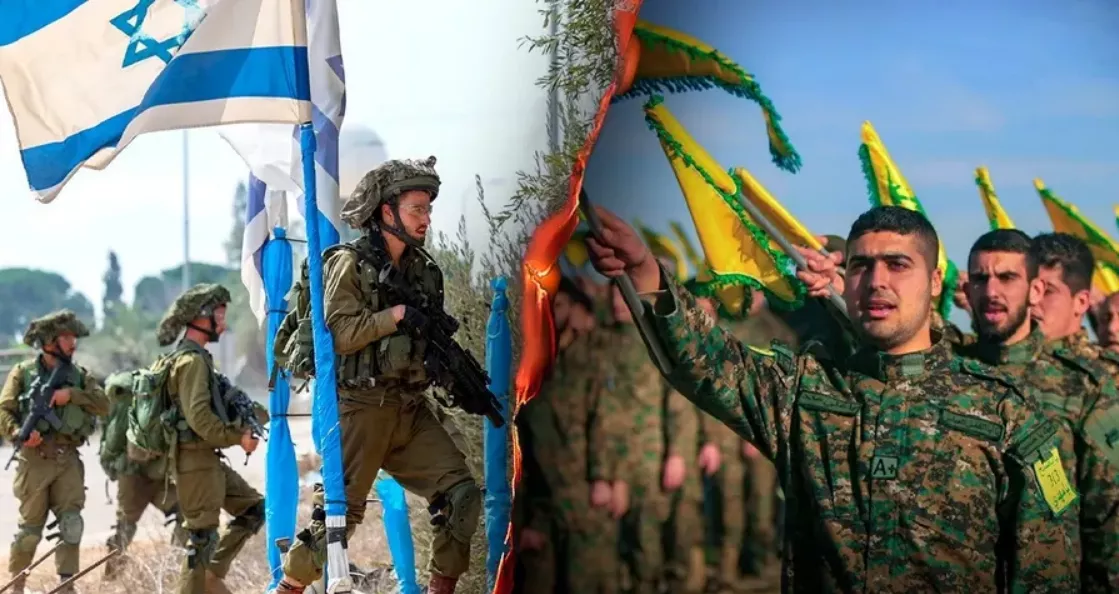
The border area between Lebanon and Israel has been the scene of clashes between two old enemies since October 8, the day after Hamas's incursion into southern Israel, which triggered the current war in the Gaza Strip. Hundreds, or even thousands, of soldiers, according to some claims, have been killed since that day, smaller military bases, tanks, bunkers have been destroyed... However, two events, in terms of their importance, surpass all of the above.
From the very beginning of the war in the Gaza Strip, Hezbollah has been participating in a low-intensity war, tying down some of the most elite Israeli military units, according to the Lebanese group. In doing so, Hezbollah is achieving several different goals within the broader confrontation between the United States and Israel on one side, and Iran on the other.
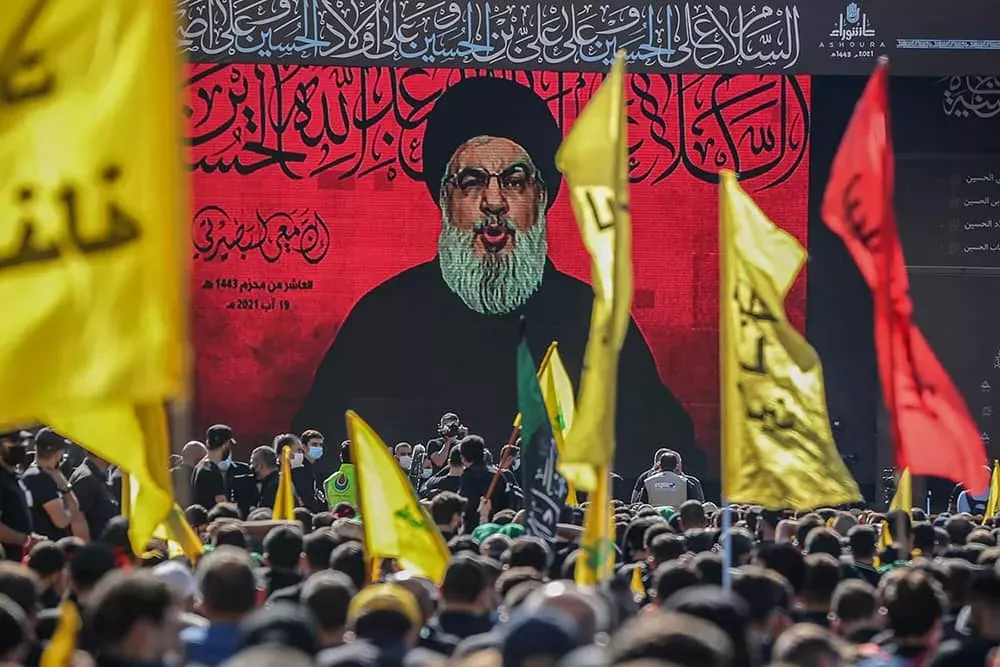
The clashes in southern Lebanon and northern Israel have already inflicted heavy losses on both sides, as well as on the civilians living there. Israeli media reported that tens of thousands of people have left their homes, tourism has been halted, and economic activity has decreased. Israel has bombed southern Lebanon several times so far, effectively turning the border area into a war zone.
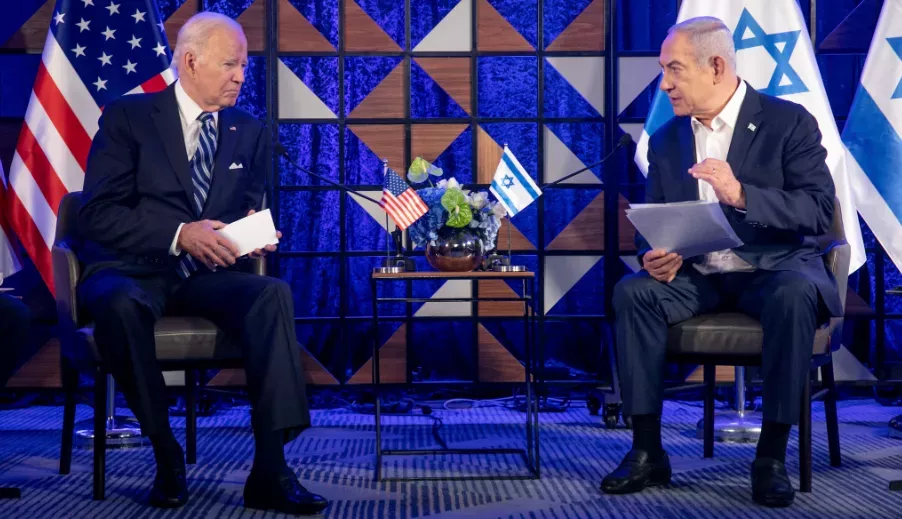
The conflict and its potential escalation are worrying Washington, which has been trying to deter other actors from getting involved since the beginning of the war in the Gaza Strip. Aircraft carriers have been sent to the region, and US Secretary of State Antony Blinken has visited regional capitals for the fourth time in less than a hundred days.
Nevertheless, Hezbollah has not relented and continues to carry out increasingly bold attacks week after week. On the other hand, Israel is resorting to tried-and-tested methods of liquidating important (pro)Iranian officials, and one such liquidation seems to have initiated a new phase in the war against Hezbollah.
Liquidation of Arouri and Hezbollah's response
On January 2, Saleh Arouri, deputy head of Hamas's political bureau, was liquidated in a drone attack in the southern part of Beirut, a Hezbollah stronghold. This Palestinian official was likely supposed to meet, or had previously met, with a Hezbollah official there, so his liquidation was an additional slap in the face to the Lebanese group. Israel did not take responsibility for this liquidation, but Hezbollah threatened revenge against that country.
On Saturday, Israel suffered its heaviest blow since the beginning of the war with Hezbollah. Namely, Hezbollah, according to its own claims, hit the 'Meron' base with 62 rockets and projectiles. Israeli media reported that there were more than forty projectiles.
'Meron' base is no ordinary base. Called the 'eye of Israel', the base is located on Mount Meron (Arabic: Jarmaq) at an altitude of 1,200 meters, the highest point in that part of Israel. From this base, according to media reports, Israel managed the activities of military aircraft and monitored the area of Lebanon, parts of Syria, Turkey, Cyprus, and the Mediterranean.
The base, as Israel admitted, was hit and closed, and its reopening after the replacement of damaged parts has been announced. The number of casualties in this attack, if any, is unknown. At the same time, Hezbollah claims that it is one of only two such bases, along with the Mitzpe Ramon base in southern Israel. Both bases are key to Israeli air traffic control.
The 'Meron' base is located eight kilometers from the border with Lebanon and is presumed to be protected in various ways, including missile interceptors that largely hit those fired from the Gaza Strip by Hamas. Thus, the Israeli army suffered a heavy blow in this war, probably the heaviest since Hamas's incursion into southern Israel on October 7.
It is not known to the public what Hezbollah used to target the base and how it is possible for dozens of projectiles to hit the base. Furthermore, Hezbollah released video material lasting several minutes showing projectiles hitting the base, specifically its radars and observation posts. No response from the Israeli side was seen in these recordings. Some in Israel believe that Hezbollah is using anti-tank missiles to target buildings and claim that there is currently no defense against this.
Liquidation of an important Hezbollah member
The Israeli army had to respond to this attack, as it was a blow that was difficult for Israel in several ways. Shortly after the attack on the Meron base in southern Lebanon, Wissam Hassan Tawil, also known as Hajj Jawad, a prominent Hezbollah member, was liquidated in the village where he lived. Tawil was killed on Monday as he was leaving his home and trying to reach a car parked on the other side of the street. According to one version, Tawil and the car were hit by a missile, and according to another, explosives were placed under the car.
Some media claim that he was even the deputy commander of the elite Radwan forces, which sources close to the Lebanese group denied, leaving open the possibility that he was one of the commanders within that unit, responsible for training soldiers. Nevertheless, the fact that Secretary General Sayyed Hasan Nasrallah will address supporters on Sunday on the occasion of his death confirms that he is an important member of Hezbollah. In that address, the public will likely learn more about the biography of the man who had been with Hezbollah for about thirty years.
How important a member of Hezbollah Tawil was is shown by photos on social media where he is seen in the company of almost all the important officials of the group, including the aforementioned Nasrallah, as well as Iranian General Qasem Soleimani.
New round
It was clear on Tuesday that Hezbollah would try to avenge Tawil. Hezbollah announced that they had attacked the 'Dado' base near the city of Safed, the central command of the Israeli ground forces for the north of the country. This time, Hezbollah provided less information than when it attacked the 'Meron' base, announcing that it had sent armed drones to the target in revenge for the killing of Arouri and Tawil.
The city of Safed is twelve kilometers from the border with Lebanon, which shows Hezbollah's ability to attack deeper into Israeli territory. But that's not the end of the symbolism of this attack. Located at an altitude of over 900 meters, it holds the title of the 'highest city' in Galilee and the 'capital' of that part of Israel. In addition, it is the birthplace of the current Palestinian President Mahmoud Abbas. His family left the city after the 1948 war.
Israel and Hezbollah exchange fire daily. Hezbollah recently released a video showing them hitting an Israeli tank, and that they have lost several fighters whose photos they published in their affiliated media. Unlike Hezbollah, Israel does not report losses as often nor does it provide precise information about operations along the border with Lebanon.
Thus, a low-intensity war is ongoing on the border between Lebanon and Israel, and Blinken is trying to prevent its escalation with his visits to the Middle East. This is not accidental. There is no doubt that Hezbollah has the means to inflict heavy blows on Israel, which would logically lead that country to a fierce response, or a new attack. Thus, this war could escalate into a wider regional conflict that would be difficult to control and whose ultimate outcome no one can predict at this moment.
Komentari (0)
Prijavite se za komentiranje
PrijavaJos nema komentara. Budite prvi!
Minuta
Sve →Iz drugih kategorija

High Representative Not Elected: Germans, French and British Against Americans, New Attempt at End of June

ČOVIĆ WITHOUT MERCY: How Those Who Brought Ademović to Office Created a Political Hell for Him



Sunny Saturday, quite warm



Tragedy in Albanian resort: Two minors drown












