
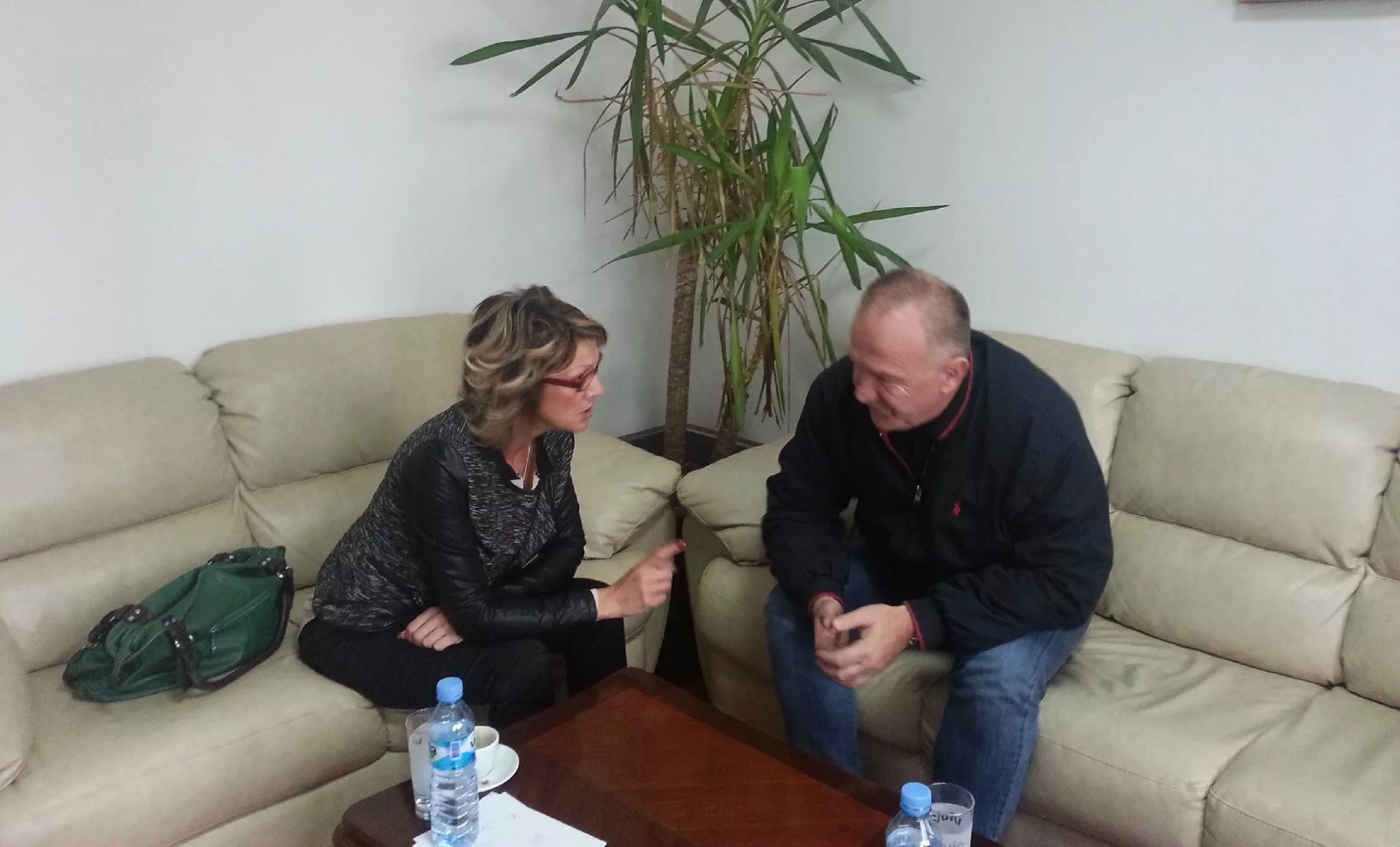
He is the former president of Republika Srpska. And former president of SDS. Today he is the president of the People's Democratic Movement (NDP), a party that joined the Alliance for Changes of RS and a fierce critic of Milorad Dodik's regime.
At the beginning of the interview with the BiH news agency Patria, Dragan Čavić says that the political scene in Republika Srpska is crystal clear - there is a united opposition and Dodik with his satellites. In short, you are either for or against Dodik.
PATRIA: Mr. Čavić, as one of the more experienced politicians on the BiH political scene, how do you comment on the euphoric opposition rallies in RS, which citizens attend in exceptionally large numbers? Could this be a good indicator that the opposition could win the October elections?
ČAVIĆ: The SNSD, DNS, and SP have created the greatest space for the opposition's political action through their nine-year rule and the consequences of that rule. General dissatisfaction of people is visible at every step, except for those within these parties as their favorites or mercenaries. They have an army of people directly tied to the budget.
The situation in society is very bad, and general public dissatisfaction before the elections should direct them towards an alternative. The key for the opposition is whether we are that alternative. The fact is that there are no new faces on the political scene, but there must be a new policy. In Serbia, there was no personal change; the same people, the same political actors, Vučić and Nikolić, but there was a change in the policy of key people. What is poorly visible on the scene in RS, and what the opposition should pay special attention to, is that change of policy.
People expect changes, and they can no longer be populist. The opposition must make fundamental changes. This is a test for both the opposition and the government. The opposition should, and I am convinced, be able to show that the government will be changed democratically. Dodik has been pushing the narrative of a violent change of government for a year, and he wants to affirm it during this pre-election period. They talk about some yellow or orange revolutions... please, those are nonsense about a violent takeover of power. We are ready for democratic changes.
PATRIA: What happened with the numerous scandals in which you were accused as the main actor in recent years?
ČAVIĆ: A long time ago, pluperfect. I don't even know what they haven't accused me of anymore. Ten years have passed since then. All those various absurdities they attributed to me have proven to be lies. I have no doubt that the regime tried to find something they could latch onto. They had nine years to deal with it. It's all over, and now I can proudly and with integrity tell them what I think of their policy. I have initiated defamation lawsuits, and I have won them all in court. Many things happened, accusations that I took money for pardons, participated in arranging deals regarding the Refinery. People persecuted by the regime were acquitted. There were 14 other stories that fell apart and confirm that it was exclusively for political purposes.
PATRIA: Nationalist rhetoric is once again prevalent in this campaign. In your opinion, can it, as in previous years, once again homogenize the peoples, so everyone votes for their own, and we forget about the country and the economy?
ČAVIĆ: We should not live in illusions, because it still works everywhere. Look at the election campaign. In essence, the vocabulary of the key political actors is the same. Everyone thinks they will secure victory that way.
PATRIA: Where does this lead us?
ČAVIĆ: In the direction we have been going so far. Izetbegović or Lagumdžija and Dodik are bickering over some political issues, and then the construction of a large facility planned for Picin park here in Banja Luka was carried out by a construction company from Sarajevo known for the "Reket" scandal. Then, companies close to the regime from here carry out works in Sarajevo, and behind those who arrange these deals, accusations fly in the public sphere, while in the meantime, deals are made as the country burns.
There is an excellent political relationship between Čović and Dodik, wrapped in a red-blue-white ribbon with red-white checks, and behind that are deals obtained by a certain Tadić from western Herzegovina, and all of this is linked to the health fund through Škrbić, Dodik's man. The country is burning in a political-ethnic sense, but when they sit down, I am a witness to those gatherings, there is unprecedented cordiality. I listened to them when they told each other, "Did you set me up well there, just so I can answer you." And naive people fall for it, worried whether war will break out again. This is manipulation of the people by those who politically represent them, and it is terrible.
PATRIA: What you said sounds like the citizens who are unemployed and live on the brink of existence have had their brains washed to such an extent that their main thought is "shut up, it's good as long as there's no shooting."
ČAVIĆ: Exactly. The past speaks volumes. Next year marks 20 years since the end of the war. Those who are old enough should remember what Yugoslavia or Germany in 1965, or the whole of Europe, looked like. We are lost in time. The main key political actors are still inciting war in people's minds, enough is enough. And I cannot accept that this type of manipulation is still being used.
PATRIA: Mr. Čavić, you are an economic expert. What needs to be done in this country for the economy to finally flourish, for new jobs to be created, for foreign investors to be attracted?
ČAVIĆ: The entire environment needs to be changed to attract investors, to show them that this is a stable country. Not for them to come here, invest two or three million, and take 30 million KM out of this country. This happened during privatization, and it is still happening. You now have cases of these offshore companies here, where laundered money of domestic owners is involved. These are companies from Seychelles and the Virgin Islands. They all do business with the state and must have someone in the government structure who is part of that team from that company.
OPPOSITION IN RS IS UNDER MEDIA BLOCKADE
PATRIA: Judging by the media reports from RS, it is evident that the opposition is under a media blockade.
ČAVIĆ: You are absolutely right, we are under a media blockade. Public services, which we all pay for, and which should be at the disposal of all citizens, are being used to fight the opposition. RTRS and Srna are political tools and media megaphones of the SNSD, which are used not only to confront the opposition but also others within the SNSD who do not comply with the wishes of the strongest in that party.
COMPOSITION OF THE BiH PRESIDENCY
PATRIA: Who do you see in the BiH Presidency after October 12?
ČAVIĆ: When it comes to the member from RS, I think Mladen Ivanić has a great chance. He is a politician with rich experience behind him, and he is a person who can be a representative of the country. When it comes to Bosniaks, I cannot be sure because there is a lot of competition. I think it could be Izetbegović or Radončić. And from the Croats, it is clear that things have been arranged for it to be Čović. It's all the same old group, and they know each other well. I expect they can establish a good relationship, that each will protect what they are there for, but at the same time work for the benefit of everyone in this country.
Komentari (0)
Prijavite se za komentiranje
PrijavaJos nema komentara. Budite prvi!
Minuta
Sve →Iz drugih kategorija

High Representative Not Elected: Germans, French and British Sabotaged Americans, New Attempt at End of June

ČOVIĆ WITHOUT MERCY: How Those Who Brought Ademović to Office Created a Political Hell for Him



Sunny Saturday, quite warm



Tragedy in Albanian resort: Two minors drown












