
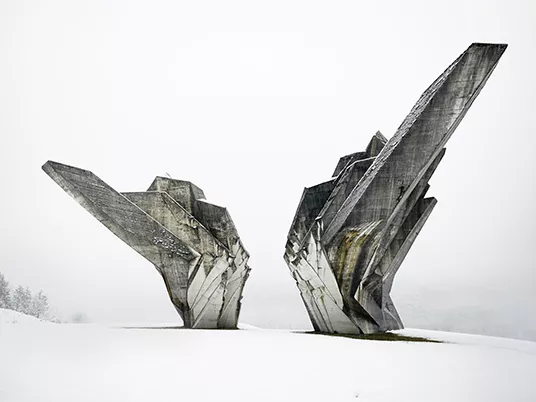
NEW YORK, (Patria) - The Museum of Modern Art (MoMA) in New York has announced a representative exhibition of Yugoslav architecture from the period 1948 to 1980 for the second half of 2018, which includes more than 400 drawings, models, photographs, and film footage from city archives, private and museum collections from across the region.
The exhibition “Towards a Concrete Utopia: Architecture in Yugoslavia, 1948-1980” will open on July 15 at MoMA, which emphasized that it will be the first presentation of exceptional works by leading architects of socialist Yugoslavia to the American and international public. The exhibition will highlight the significant, yet still insufficiently explored, opus of modernist architecture, whose progressive thinking has an impact even today, reports the portal Seecult.
Positioned between the capitalist West and the socialist East, Yugoslavia avoided the Cold War division by choosing the “third way,” as one of the leading countries of the Non-Aligned Movement, which was founded in 1961 and did not formally belong to any bloc.
At the same time, according to MoMA, the Yugoslav government began accelerated modernization and construction, with the aim of economic development, improving citizens' daily lives, and affirming the diversity of cultures in the region. The state expanded these efforts beyond its borders, promoting urbanism and construction throughout developing countries, especially non-aligned countries in Africa and the Middle East.
Yugoslav architects responded to the contradictory demands and influences by developing post-war architecture that was both in line with, and differed from, the approaches seen elsewhere in Europe and beyond.
Yugoslav architecture, which included skyscrapers built in the style of international practice and brutalist “social condensers,” manifested a radical diversity, hybridity, and idealism that characterized the Yugoslav state itself, MoMA stated in the exhibition announcement, which explores a wide range of themes – from large-scale urbanization processes, through the use of technology in everyday life, monuments and memorialization, to the global reach of Yugoslav architecture.
The exhibition includes works by the most important Yugoslav architects, including Bogdan Bogdanović (1922-2010), Juraj Neidhardt (1901-1979), Svetlana Kana Radević (1937–2000), Edvard Ravnikar (1907-1993), Vjenceslav Richter (1917-2002), and Milica Šterić (1914-1998).
From the sculptural interior of the White Mosque in rural Bosnia, through the reconstruction of Skopje after the earthquake (1963), designed by Japanese architect Kenzo Tange, to New Belgrade with its large expressive residential blocks and public buildings, the exhibition explores the unique range of forms and shapes of Yugoslav architectural production and its distinctive, multifaceted character.
The exhibition is organized by MoMA’s chief curator of architecture and design, Martino Stierli, with guest curator Vladimir Kulić, and associate Anna Kats, also from MoMA’s Department of Architecture and Design.
The exhibition will be open for six months, until January 13, 2019.
Komentari (0)
Prijavite se za komentiranje
PrijavaJos nema komentara. Budite prvi!
Minuta
Sve →Iz drugih kategorija

High Representative Not Elected: Germans, French and British Against Americans, New Attempt at End of June

ČOVIĆ WITHOUT MERCY: How Those Who Brought Ademović to Office Created a Political Hell for Him



Sunny Saturday, quite warm



Tragedy in Albanian resort: Two minors drown












