
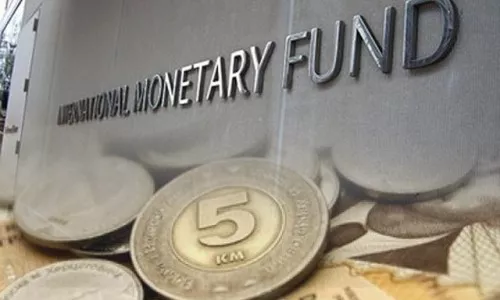
(Patria) - The war in Ukraine has shaken the European economy and posed new challenges for Bosnia and Herzegovina, which has just recovered from the COVID-19 pandemic crisis. The perspective of economic activity is further affected by internal tensions and the lack of consensus on reforms that would help strengthen the integration of the economy both within the country and with international markets, according to the concluding statement of the IMF Mission under Article IV in 2022.
The immediate economic impact of the war is a significant increase in food and fuel prices, which is already having severe consequences for many households and businesses and will last for some time. The appropriate response is a significant increase in public support for the most vulnerable categories, while avoiding tax or excise duty reductions, which would be costly and poorly targeted. This is also the right time to further strengthen the financial stability framework, as the recent Sberbank event highlighted the need to close gaps. An urgent priority is the establishment of a single bank resolution fund to facilitate bank restructuring and ensure liquidity in emergency situations. The currency board remains a pillar of stability in an otherwise uncertain environment.
In terms of the future, structural reforms are crucial for improving the business environment, stimulating private sector employment, and combating corruption. Activities on these reforms should be resumed as soon as possible.
Economic Outlook
The economy of Bosnia and Herzegovina (BiH) is recovering from the effects of the COVID-19 pandemic. According to estimates, growth was boosted and reached 5.8 percent in 2021, driven by strong external demand, robust domestic consumption, and the revival of tourism. Strong economic activity also reflects the measures taken by governments regarding COVID-19 and their decision not to introduce lockdowns during the waves of the pandemic caused by the Delta and Omicron variants, despite the increase in infections due to public hesitancy regarding vaccination.
The outlook is highly uncertain given the ongoing war in Ukraine and internal political tensions. The first effects of the war were felt in the financial sector and in the loss of confidence, as well as in household costs for food and transportation. Although direct economic ties with Russia and Ukraine are limited, the BiH economy is sensitive to rising commodity prices, slower economic growth in Europe, and tighter financial conditions as a result of this war. Domestically, political tensions, including regarding the role of state-level institutions, have paralyzed reforms and negatively affected investor sentiment. We expect growth to weaken this year to 2.5 percent, while average annual inflation is expected to increase to 6.5 percent.
However, our forecasts are subject to significant uncertainty. Delays in forming governments after the general elections in October could further undermine the economic outlook, while the potential emergence of new COVID-19 strains poses another risk.
Fiscal Policy
The recovery of economic activity has helped maintain the fiscal balance. It is estimated that the fiscal position shifted from a deficit (4.7 percent of GDP) in 2020 to neutral in 2021. Revenues collected by the Indirect Taxation Authority reached a record high, driven by strong private consumption and higher prices. External financing was substantial, including financing from the IMF (SDR allocation of EUR 306 million) and the European Union (EUR 125 million in macro-financial assistance), along with the issuance of EUR 300 million in Eurobonds by Republika Srpska. As for expenditures, the authorities appropriately reduced pandemic-related fiscal support.
Fiscal policy should mitigate the impact of high food and fuel prices on the most vulnerable and preserve reserves given the uncertain situation. The economic slowdown will lead to lower revenue growth and a higher fiscal deficit. We do not recommend introducing differentiated VAT rates to respond to inflation. Reducing the rate on basic goods is a costly and poorly targeted instrument for assisting low-income households. Furthermore, different rates would increase opportunities for fraud. Instead, authorities should provide temporary, targeted assistance to vulnerable households. Given the inadequate social safety net, the abolition of fuel excise duties could be considered on a temporary basis. Although this is also a costly and poorly targeted measure, it is better than a permanent change in tax policy. In parallel, authorities should strive to improve the social safety net to be better prepared for future shocks. Public sector wages are already competitive and should not be increased further, as this would exacerbate inflationary pressures and worsen the structure of public spending.
Available fiscal space should be used to increase public investment. The country has significant and urgent investment needs in road infrastructure and green energy, as well as a low level of debt. Authorities should use fiscal space to increase public investment, preferably through long-term, low-cost financing from international financial institutions.
Financial Sector Policies and Currency Board Arrangement The banking sector has coped well with the COVID-19 crisis. Banks have remained well-capitalized and profitable, while non-performing loans have continued to decline.
The recent decision by the European Commission that the regulatory and supervisory framework in BiH is equivalent to EU standards is a major achievement for the banking agencies. However, the recent Sberbank event highlighted the urgent need to close gaps in the financial safety net. The withdrawal of deposits from Sberbank branches in BiH pushed two banks from healthy to the brink of collapse in just a few days. Swift action by supervisors facilitated the sale of the banks and prevented an increase in deposit withdrawals. This event once again underscored the urgent need to establish a single bank resolution fund that could facilitate bank restructuring and ensure liquidity in exceptional cases.
A stronger financial safety net will also require better cooperation among authorities at the state and entity levels. Given the highly uncertain situation, authorities should increase monitoring and enhance preparedness to deal with future liquidity or solvency pressures.
The currency board arrangement has served Bosnia and Herzegovina well, both in the past and currently. Throughout the pandemic and recently during the Sberbank situation, the currency board has provided stability as public confidence in the currency has been maintained. The Central Bank recently strengthened the mandatory reserve framework by aligning the remuneration for commercial bank reserves with the opportunity cost of holding foreign assets, which will contribute to strengthening its balance sheet. Calls for the Central Bank to finance entity budgets and provide liquidity to commercial banks are unfounded and threaten the stability of the currency board.
Governance and Other Reforms
Reforms in public procurement and the framework for preventing money laundering and terrorist financing are crucial for improving governance. Weaknesses in governance are widespread, contributing to economic inefficiencies and deterring foreign investment. The public procurement framework is inadequate and prone to corruption; the law should be amended, enforcement strengthened, and information on the beneficial owners of companies awarded procurement contracts should be published. To strengthen the framework for preventing money laundering and terrorist financing, authorities need to correct deficiencies in the law and establish a country-wide registry of bank accounts of natural persons. Digitalization, including the use of e-procurement, has the potential to enhance transparency and increase productivity.
Broader reforms are needed to reduce income inequality between BiH and the EU and to transition to a greener economy. To put BiH on a path of higher growth, political consensus is needed on reforms to improve the business environment, strengthen the single economic space, and better integrate BiH into international markets. Broader reforms are also needed to increase private sector employment and improve the efficiency and transparency of public enterprises. A successful transition to a greener energy sector requires the gradual phasing out of coal, the expansion of the natural gas market, and the exploitation of BiH's significant potential in wind and solar energy. Ultimately, progress in all these areas will make BiH a more attractive place to live for its citizens, thereby reducing emigration to other European countries.
Komentari (0)
Prijavite se za komentiranje
PrijavaJos nema komentara. Budite prvi!
Minuta
Sve →Iz drugih kategorija

High Representative Not Elected: Germans, French and British Against Americans, New Attempt at End of June

ČOVIĆ WITHOUT MERCY: How Those Who Brought Ademović to Office Created a Political Hell for Him



Sunny Saturday, quite warm



Tragedy in Albanian resort: Two minors drown












