
By Armin Sijamić
On Saturday, presidential and parliamentary elections will be held on the breakaway Chinese island, whose independence is recognized by a dozen small Pacific and Latin American countries and the Vatican. The island, which inherits a democratic decision-making system and has the closest relations with the United States, is once again at the epicenter of the relations between the two largest world powers.
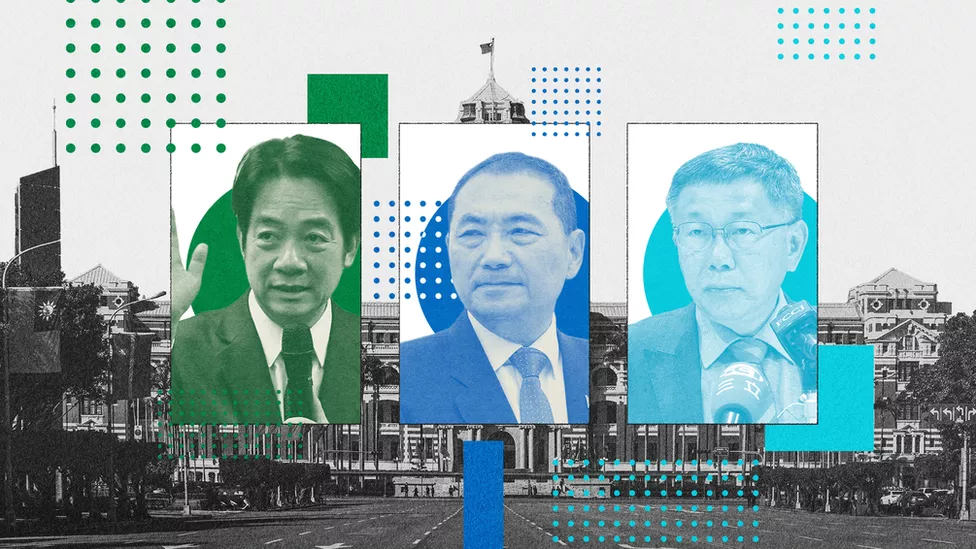
January thirteenth could be an important day for Taiwan's history, but also for Sino-American relations. The three presidential candidates, with their stances, perfectly reflect the political situation on the island and describe part of the Sino-American conflict, vying for the favor of 19.3 million voters out of Taiwan's total population of 23.6 million.
The biggest favorite to win comes from the DPP party, as does the current president Tsai Ing-wen, who is not eligible to run after her eight-year rule of the island. The Vice President of Taiwan and the DPP, Lai Ching-te, who has the support of about 35 percent of voters, wants to take her place. A victory for the center-left party would mean a continuation of the current policy, a continued struggle for international recognition, and an escape from China. Lai Ching-te and the DPP are the primary targets of Beijing's campaign.
With about 29 percent support, according to polls, the second favorite to win is Hou You-ih from the Kuomintang, the most important party in Taiwan's history, the party that led the island to independence from Beijing when Chiang Kai-shek fled from Mao Zedong's communists in 1949. Hou You-ih, former head of Taiwan's police and current mayor of New Taipei, which surrounds the capital Taipei, flirts with the idea of reconciliation with Beijing, while denying such accusations.
In third place with 24 percent support, according to polls, is Ko Wen-je from the TPP, a recently formed party that seeks support among young people, a million of whom will vote for the first time this year. Ko Wen-je, a former mayor of Taipei and a physicist by profession, advocates for a "third way" in Taiwanese politics.
Leading the center-left party, he has focused on issues of housing, energy, employment, etc., believing that young voters are tired of the endless debate about whether the democratically elected government should submit to the communists in Beijing.
Beijing does not give up
Although the "third way" seems like a rational policy of a technocrat who wants to deal with topics that do not "bother" young voters, things are far from ideal. In his New Year's address, Chinese President Xi Jinping also spoke about the island, announcing the unification of China and Taiwan. "The reunification of the motherland is historically inevitable," the Chinese leader said, addressing his compatriots on both sides of the strait.
For Beijing, the issue of Taiwan is multifaceted and not just about annexing territory. Beijing sees the return of Taiwan to China as an expression of the unstoppable growth of the power of the world's second-largest economy and as a matter of pride for the Chinese military, in addition to the island being an important point for projecting American power in the region and Taiwan's economy being crucial for the chip and advanced technology industries.
Therefore, Ko Wen-je is an important factor in these elections. He stated that this party wants to prevent the DPP and Kuomintang from having a majority in parliament, for which 113 representatives are elected. A good result for the TPP and its insistence on maintaining distance from the main issue of the island's security could be a blow to current policies marked by American and Chinese interest in Taiwan, which Joseph Biden has promised to defend in case of an attack from Beijing. Likewise, a good result for the TPP among younger voters would be a message to China that they do not want to be tied to Beijing.
The BBC reported that pro-Chinese messages are sent daily to Taiwan's public through about two hundred channels on YouTube and TikTok, claiming that the island's authorities only serve Washington to sell expensive weapons, while simultaneously showing Beijing's friendly face. This fight for the hearts and minds of young people has not started yesterday and will continue after the elections.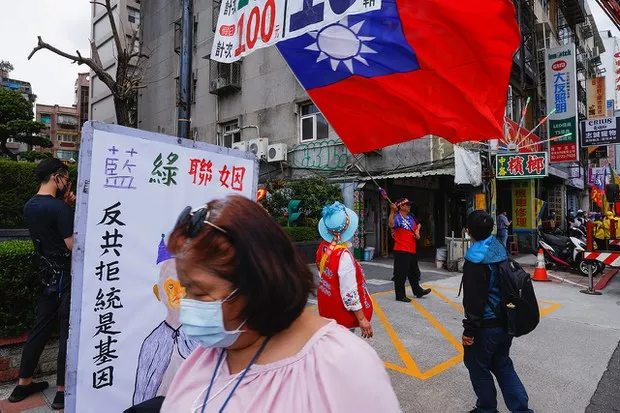
Taiwanese authorities have accused Beijing of interfering in the electoral process, and not just through social media. Taipei claims that Beijing is threatening sanctions, flyovers, and military exercises near Taiwan, as well as balloons flying near the Taiwan Strait. The Taiwanese military described this as psychological warfare to ensure pro-Chinese candidates achieve better results in the elections and to intimidate the population.
American-Chinese confrontation
For decades, Taiwan has been the main point of contention in the poor relations between Washington and China. Taiwan's greatest protector, Washington, is aware that China will not give up on the island and will try in various ways to establish control over the territory that most of the world, as well as the United States, recognizes as its part. Therefore, the issue of Taiwan is very important, and the island's status could determine the fate of American-Chinese relations.
The Kuomintang also considers war an option, from where they told voters that in these elections they are choosing between war and peace, and that only their candidate Hou You-ih is a guarantee of peace in the region, i.e., a guarantee of preventing war between Chinese on both sides of the strait.
This potential war, which has been discussed since the beginning of Russian aggression against Ukraine, while the West is preoccupied with providing aid to Kyiv, would be anything but a one-way street. The Taiwanese army is armed with the most modern American weapons and has all the necessary assistance. The stronger and more numerous Chinese army would not have an easy task if the opposing side decided to fight.
Frustration in Beijing is growing, especially within the military and with Xi Jinping, who is building an image of a strong leader. But this image can be tarnished by a simple look at the map, which shows that some islands under Taipei's control are only a few kilometers from the Chinese coast and about 170 kilometers from the island of Taiwan, and that voting will also take place there for a new departure from Beijing. In addition, Washington disciplines Beijing by sending warships that, according to Beijing, sail through Chinese waters.
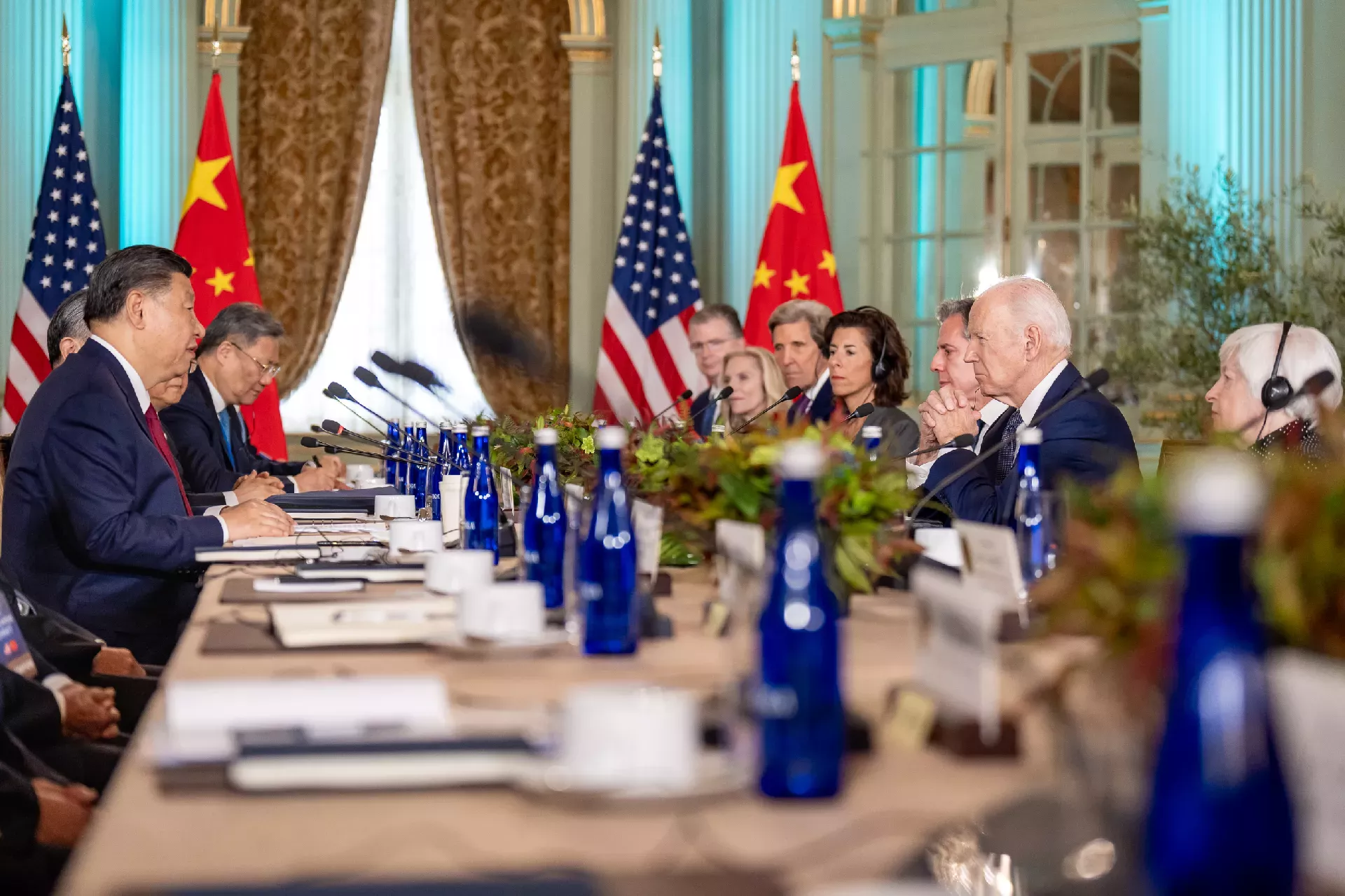
American-Chinese relations are increasingly tense, as shown by the last summit between Joseph Biden and Xi Jinping. Nevertheless, these relations must change, either towards a positive outcome or further conflict. Which direction things will take will be clearer after the election results to be held on Saturday.
Komentari (0)
Prijavite se za komentiranje
PrijavaJos nema komentara. Budite prvi!
Minuta
Sve →Iz drugih kategorija

High Representative Not Elected: Germans, French and British Sabotaged Americans, New Attempt at End of June

ČOVIĆ WITHOUT MERCY: How Those Who Brought Ademović to Office Created a Political Hell for Him



Sunny Saturday, quite warm



Tragedy in Albanian resort: Two minors drown












