
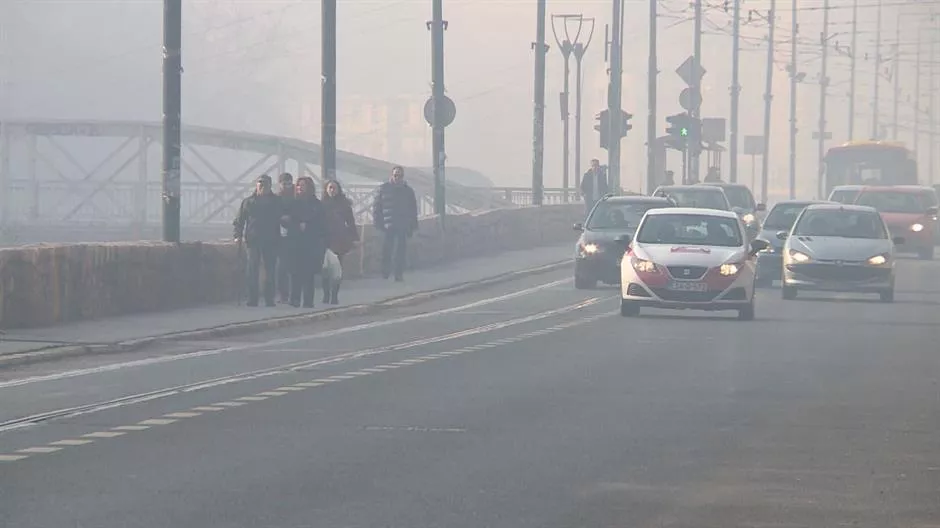
-These latest intervention measures, as well as the earlier ones, are too late. Their impact, as with the previous ones, will be very modest, and only citizens will pay their price, say the Eco Action Association, writes Patria.
-In the cantonal arsenal of intervention measures, in case of declaring an "Alert", four additional measures are foreseen: 1. Using the maximum capacity of public transport vehicles that do not pollute the environment (trolleybuses and trams), banning the movement of buses whose engines have a standard lower than Euro 3, or possess proof that exhaust gas emissions comply with the Euro 3 standard. Unfortunately, after a couple of decades of continuous neglect and decay of public transport in Sarajevo, this "maximum capacity" currently means very little.
GRAS's reserves are modest, and on ordinary working days, they are barely able to maintain the daily level of transport. The direct consequence is a huge number of cars on the streets, daily polluters. When private carriers were introduced into the public transport system in Sarajevo a few years ago, there was an excellent opportunity to achieve cleaner public transport by conditioning the awarding of routes with the procurement of vehicles for this purpose powered by natural gas. However, as always, ensuring the highest possible profit for the private carrier was a priority for the cantonal authorities, so this opportunity was missed. 2. KJKP "Toplane" Sarajevo, as well as other entities involved in the production and distribution of thermal energy, regardless of their users, reduce the temperature in the heated spaces by 30C.
In yesterday's government statement, this measure was amended to "A warning that all thermal energy production plants with a capacity of over 1 MW using natural gas should reduce the temperature in the spaces they heat by at least 3°C;" Apart from using the crisis period to enable Toplane to save costs and improve their year-end business balance, it is not at all clear what this measure is for, here and at lower alert levels.
Compared to other solid and liquid fuels used for residential heating, natural gas emits a negligible amount of particulate matter during combustion. This was also the main reason why in the seventies, as part of the efforts to clean the air at that time, a large amount of money was spent to bring natural gas to Sarajevo to replace dirty fuels such as fuel oil and coal. 3. Temporary restriction on the use of motor vehicles ("odd-even" system). This does not apply to vehicles of the police, Ministry of Defense, public transport, utility companies, vehicles with diplomatic plates, and emergency vehicles (ambulance and fire services). The introduction of the odd-even system is due to the relatively easy implementation of measures that cities often resort to in these situations, as happened in Paris at the beginning of this month.
Research there has shown that the measure contributed to a reduction in pollution by about twenty percent. How effective it will be here is impossible to estimate precisely. Every city has its own combination of pollutants. Their share in total pollution can only be determined after a study on the origin of particulate matter (so-called "source apportionment study") has been conducted, which has never been done here. In any case, at this level of pollution, every microgram of pollution less is welcome, especially when it comes to a highly toxic source like car exhaust fumes, to which a large number of citizens are exposed daily. Interestingly, the latest measures, namely: 4.
Ban on the operation of industrial and other facilities that use solid fuels and heavy fuel oils in their technological processes. is completely absent from yesterday's statement. Is it possible that the main reason is not to reveal how many such facilities have received regular permits and started operating in the meantime, in a city that made enormous efforts at one time to completely get rid of these dirty fuels? The government is again failing to emphasize the seriousness of the situation we are in to the citizens, which has again resulted in a large number of citizens spending a lot of time on the streets completely unprotected these days. There is a complete lack of care for those who are outdoors by nature of their work, such as police officers, sanitation workers, postal workers, and others - a protective mask costs only a few convertible marks!
There is no attempt, public or private, to organize free transport to the mountains. The list of measures that should have been implemented on time, patiently and in an organized manner, so that something like this does not happen to us again, is even longer. Any significant changes in the level of air pollution in the coming days will be primarily the result of changed natural factors, pressure, wind, humidity, etc., and certainly not the result of any intervention measures by the cantonal government.
Pollution in the Sarajevo basin, which has been increasing in recent years, is largely a product of burning solid fuels (and recently, as oil prices have fallen, heavy oils), in industry, individual and collective heating systems, as well as various waste (tires, used motor oils) that the government has allowed to develop and be consumed uncontrollably over the past few decades. The government has not addressed these sources at all with these measures, nor has it ever established effective mechanisms for their control.
Komentari (0)
Prijavite se za komentiranje
PrijavaJos nema komentara. Budite prvi!
Minuta
Sve →Iz drugih kategorija

High Representative Not Elected: Germans, French and British Sabotaged Americans, New Attempt at End of June

ČOVIĆ WITHOUT MERCY: How Those Who Brought Ademović to Office Created a Political Hell for Him



Sunny Saturday, quite warm



Tragedy in Albanian resort: Two minors drown












