
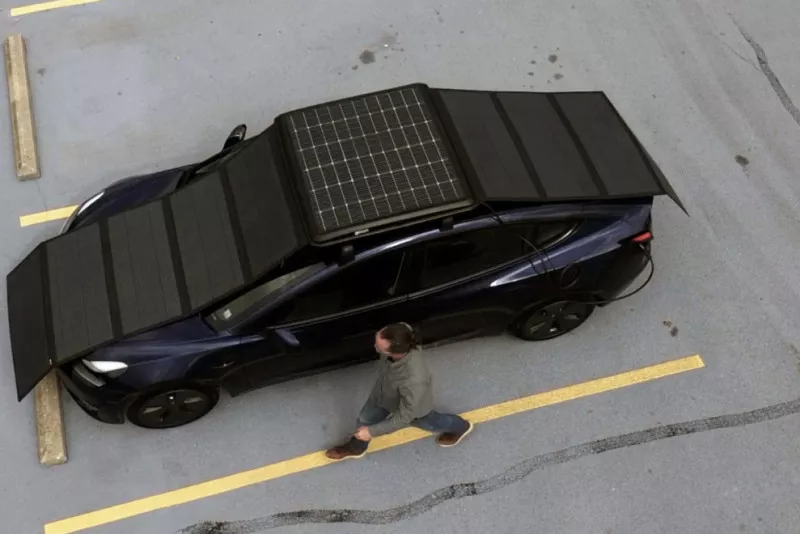
(Patria) - Hyundai Motor Group has begun testing its latest technology – solar panels integrated into the roof of hybrid and electric vehicles, primarily on the Sonata Hybrid model first launched on the South Korean market.
How does the technology work?
Silicon solar panels mounted on the roof can charge the battery with 30 to 60% of daily energy needs, provided the car is exposed to sunlight for approximately 6 hours a day, even while driving.
This amount of energy enables an additional 1,300 km of driving per year under ideal conditions.
What does Hyundai offer?
The technology is planned to be expanded to other models within the Hyundai and Kia portfolio, including electric and internal combustion vehicles.
The second generation of solar roof systems uses semi-transparent panels for integration with panoramic roofs, while the third testing phase includes a lightweight solar lid covering both the roof and the front hood of the vehicle for maximum energy production efficiency.
Hyundai announced the “solar roof” as an initial option for the South Korean and North American markets – there is currently no confirmation of expansion into Europe.
Although Hyundai claims the technology can charge a significant portion of the battery, users point out that the actual energy generated by these panels may be minimal, and that the option requires longer charging time to have an effect.
Komentari (0)
Prijavite se za komentiranje
PrijavaJos nema komentara. Budite prvi!
Minuta
Sve →Iz drugih kategorija

High Representative Not Elected: Germans, French and British Sabotaged Americans, New Attempt at End of June

ČOVIĆ WITHOUT MERCY: How Those Who Brought Ademović to Office Created a Political Hell for Him



Sunny Saturday, quite warm



Tragedy in Albanian resort: Two minors drown












