
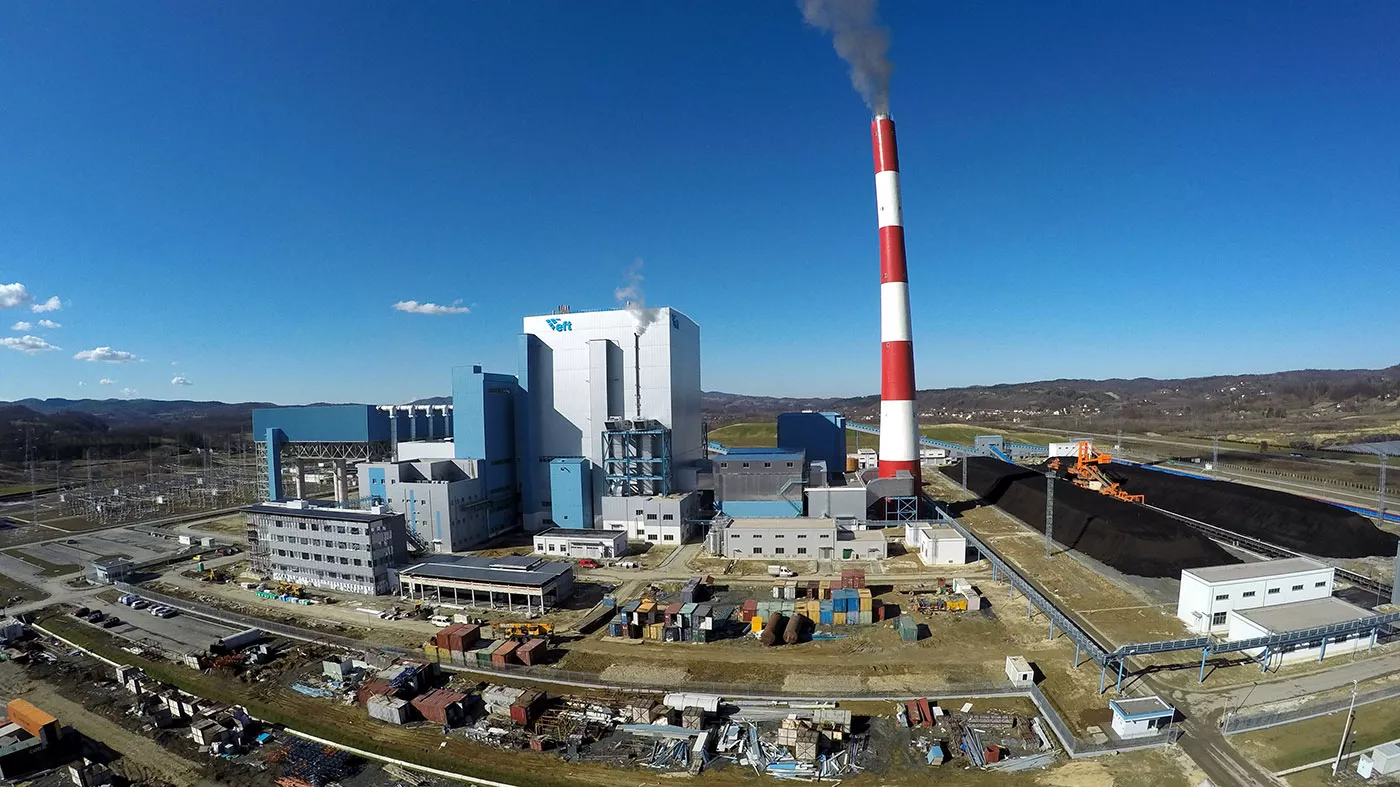
For several months, talks have been held in secret between Hrvatska elektroprivreda (HEP) and the EFT company regarding the possible takeover of the power plant near Doboj, Jutarnji list reported, NAP reports.
The paper writes that Hrvatska elektroprivreda could soon have a new coal-fired power plant in its portfolio, and according to information from journalist Marko Biočina, HEP has been conducting serious talks for several months about the possible takeover of the Stanari thermal power plant in Bosnia and Herzegovina.
This is a power plant worth around 500 million dollars with a capacity of 300 megawatts and an associated mine, which started operating last year and is owned by the company EFT – the Serbian electricity wholesaler Vuk Hamović.
Through the largest retail network of petrol stations in BiH, Croatia already controls a good part of the oil market in BiH, and through the Konzum retail chain, it controls the sale of food and consumer goods, and now Croatia could become an important factor in the electricity market in BiH as well.
Many Dilemmas
Neither HEP nor EFT wished to comment on the information about the talks, but according to information confirmed to Jutarnji by two unofficial, but independently verified sources, several meetings have already been held on the topic of a possible acquisition between representatives of the two companies, and a HEP delegation recently visited Belgrade on this matter and visited the power plant itself.
- This information will certainly arouse great interest from the public and the business community, not only because it is potentially the most important transaction in the energy sector of Southeast Europe this year, but also because it is a deal that carries many dilemmas, from environmental and business to even geopolitical ones - writes Jutarnji.
The Stanari thermal power plant is the first private investment in a large conventional energy production facility in the countries of the former Yugoslavia. The story began in 2004 when EFT won an international public tender announced by the Government of Republika Srpska to select a strategic partner for the Stanari mine. This is a brown coal – lignite – mine with estimated geological reserves of 88 million tons. As the demand for brown coal in the region falls, EFT decided to build a thermal power plant at the site. The initial project was to build a 400-megawatt thermal power plant that would produce about 3 terawatt-hours of energy annually. The technological solution was to be supplied by the French company Alstom, and the project financier was the European Bank for Reconstruction and Development. However, as those negotiations failed, EFT turned east and arranged financing with the China Development Bank, and accepted Dongfang Electric Corporation as the technology supplier. As the Chinese offered a slightly older generation of technology than Alstom, the project was modified, so the installed capacity of the power plant was reduced by a quarter, the planned production was reduced to 2 terawatt-hours annually, and the gross efficiency from 43 to 38.5 percent.
This change in the project caused great dissatisfaction among local environmental associations, which filed several lawsuits, claiming that the power plant – due to the use of outdated technology – would exceed the permissible levels of harmful emissions by two to three times, which are allowed based on European Union rules, which BiH must also adhere to starting January 1, 2018, based on its membership in the Energy Community. However, based on official data from the reliability test of the power plant during its trial operation, it seems that these fears are, at least for now, unfounded. The thermal power plant in Stanari even achieved a significantly higher level of gross efficiency than planned (40.2 percent), and recorded harmful emissions (SO2, NOx, particulate matter) below European limits.
Can it be profitable?
A bigger problem for the power plant, the paper further writes, at least as far as its current owner is concerned, is the economic one. Namely, the situation on the regional, and even European, electricity market has radically changed since 2008 when the entire project was conceived. The large influx of previously subsidized “green energy” has radically reduced energy prices on wholesale markets, which has pushed all conventional thermal power plant operators into trouble, especially new ones burdened by high depreciation costs. Although the reasons why EFT is considering selling the Stanari power plant are not known, it is assumed that the company – which primarily deals with energy trading – is struggling with loan repayments in the current environment of low prices. But, can it then be a profitable investment for HEP?
Even after conducting very complex analyses and calculations, it is difficult to give a definitive answer to this question, but it is evident that the calculation for a company like HEP (which is involved in production, wholesale, and retail) is significantly different than for a company like EFT. In recent years, HEP has been operating extremely profitably, holds a dominant position in the Croatian market, and is expanding more and more ambitiously into neighboring countries.
Waiting for a New Government
Given HEP's not-so-brilliant history of acquisition attempts and project implementation, it is unrealistic to expect any decision to be made before the end of the year, and by then Croatia could, again, have a new government. With, again, a new energy policy..., Jutarnji concludes, among other things, NAP reports.
Komentari (0)
Prijavite se za komentiranje
PrijavaJos nema komentara. Budite prvi!
Minuta
Sve →Iz drugih kategorija

High Representative Not Elected: Germans, French and British Against Americans, New Attempt at End of June

ČOVIĆ WITHOUT MERCY: How Those Who Brought Ademović to Office Created a Political Hell for Him



Sunny Saturday, quite warm



Tragedy in Albanian resort: Two minors drown












