
By Armin Sijamić
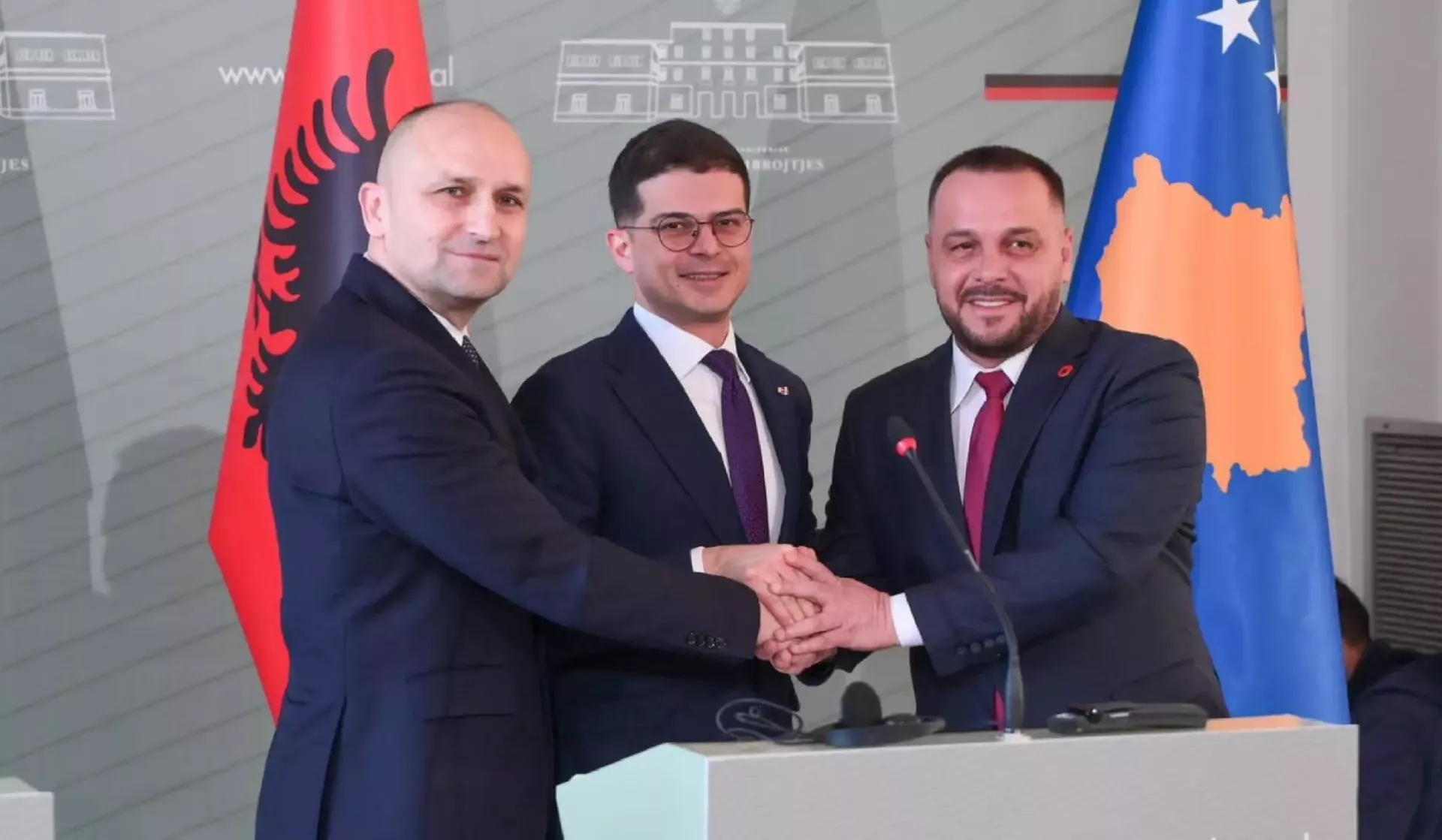
The changes that began in the West during Donald Trump's first term are slowly reaching the Balkans, which has almost always lagged behind the main European political currents. In Trump's second term, concrete steps are being taken. Croatia, Albania, and Kosovo want to catch the train of change. The declaration signed on March 18 in Tirana is proof of this.
When Trump first entered the White House, he told his allies in Europe to spend more on their own and collective defense, otherwise they could not count on the United States to defend them, specifically targeting wealthy nations. Trump correctly noted at the time that some NATO members were not adhering to the agreement – spending two percent of their national GDP on defense needs.
The administration of Joseph Biden continued with the same policy, but without the harsh words as in Trump's case. Russia's aggression against Ukraine has accelerated the armament of Europeans with American and other weapons, so many countries have reached that famous two percent.
Thus, for nine years now, there has been an American policy conceived outside the White House, reminding elected officials that the world's largest power is "overstretched" and "overcommitted," meaning that American allies must take care of themselves.
The Balkan Stage
This policy was conceived primarily for the largest economies in Europe, which have been under the American military shield for decades, while their armies have literally withered away. The most famous example of this kind is Germany. On the other hand, the United States has become over-indebted. This year, more money is allocated in the US budget for paying interest on debts than for military needs.
Part of these American expenses also falls on the Balkans, especially its far south. Other parts of the Balkans have also often enjoyed the benefits of American military and other presence, while economic deals and resources went to other countries. China and Russia have also profited from the stabilization of Balkan affairs, thanks to American military and other power.
That time is behind us, and Washington now expects its allies to get used to the fact that there is no more "free lunch." If Kamala Harris had won the presidential election in November, it would still be American policy, just nicely packaged. Trump's communication style is brutal, but in the area of defense, his policy is essentially the same as Biden's, during whose time Eastern Europe spent hundreds of billions of dollars on American weapons.

Croatia and Albania, understanding these trends, are moving towards, in American terms, "shortening supply chains" and relying on "reliable suppliers." They have included Kosovo in this endeavor and sent the agreed document to Bulgaria, leaving the possibility for other countries to join.
What has been agreed?
Croatia and Albania, as NATO members, have mutual obligations. Therefore, the signed document confused some, especially since Kosovo, whose independence is not recognized by all members of that alliance, is a signatory.
However, such agreements are not new for Kosovo, nor for NATO members. For example, Kosovo has signed a series of agreements with Turkey, including the construction of defense industry factories. It is assumed that Turkey will transfer some factory facilities to Pristina and thus strengthen it. In Albania, for example, Turkish military bases have existed for a long time, regardless of Albania's membership in NATO.
The official Zagreb has assessed that concluding ties with Albania and Kosovo is a good move, as Croatia is arming Kosovo's armed forces, among other things. In addition, Croatian soldiers are part of the KFOR mission in Pristina and Peja. This is the basis for deepening ties and strengthening Zagreb's position.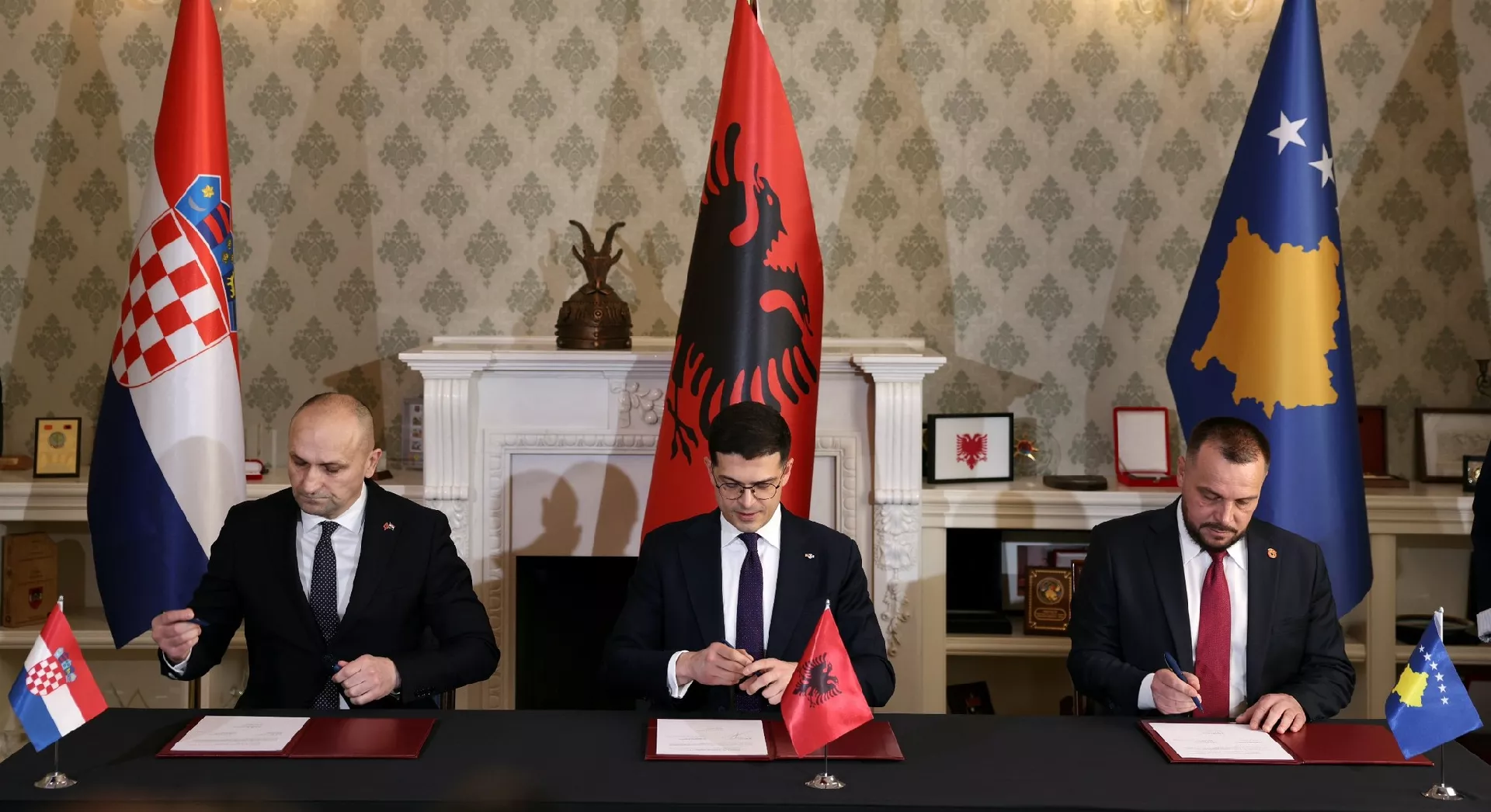
"Through a joint declaration on defense cooperation, Croatia, Albania, and Kosovo aim to increase security in Southeast Europe and enhance readiness for current and future threats," the declaration states. The signatories intend to "strengthen trilateral security and defense cooperation to improve security and stability in Southeast Europe and the Adriatic-Ionian region" and emphasize "the importance of joint efforts in responding to new security challenges, hybrid threats, and other risks that may threaten regional, European, and international stability."
Special attention is paid to four areas: promoting defense capabilities and industrial cooperation, improving interoperability through education, training, and exercises, combating hybrid threats and strengthening resilience, and supporting Euro-Atlantic integration. The parties will explore "opportunities for the development and procurement of defense capabilities through multinational solutions to increase the readiness of military forces" and enhance "investments in new technologies and innovations to accelerate and ensure a unified approach to security and defense transformation."
Agreements have been made on "exchanges of expertise and best practices in recruitment, development, and retention of qualified personnel," "improvement of individual and collective education and training opportunities through relevant military academies and higher military educational institutions," and "strengthening bilateral and/or trilateral exercises, in line with NATO and EU training and exercise policies, to ensure adequate force readiness."
In the fight against hybrid threats, the signatories will explore "opportunities for responding to a wide range of potential threats to critical infrastructure and communication networks."

Croatia, Albania, and Kosovo have agreed on "closer cooperation and coordination for the full integration of Kosovo into regional security and defense initiatives" and support for "Kosovo's Euro-Atlantic perspective through advocacy for its status in NATO's Partnership for Peace."
What does this mean in practice?
Although the conclusion of the declaration states that what has been signed "does not create any new international or intergovernmental legal obligations between states nor affect existing obligations with other states," an important moment has been agreed upon for Croatia, Albania, and Kosovo.
The agreement opens the way for each of the signed points to be developed in the future and transformed into comprehensive agreements. This applies to the political, economic, and military goals of the signatories. As the three countries develop their relations in any of these areas, their position will strengthen.
When it comes to economic goals, which are related to the military, the signatories can jointly develop certain projects or procure assets that are too expensive for these small countries. For example, four NATO members (Slovenia, Montenegro, Albania, and North Macedonia) do not have their own "Air Policing" and it is carried out for them by Italy, Greece, and Hungary. Since Croatia is about a hundred kilometers as the crow flies from Albania, and about two hundred from Kosovo, it would not be surprising if the strengthened Croatian army took over some of these tasks, in the air, at sea, or on land.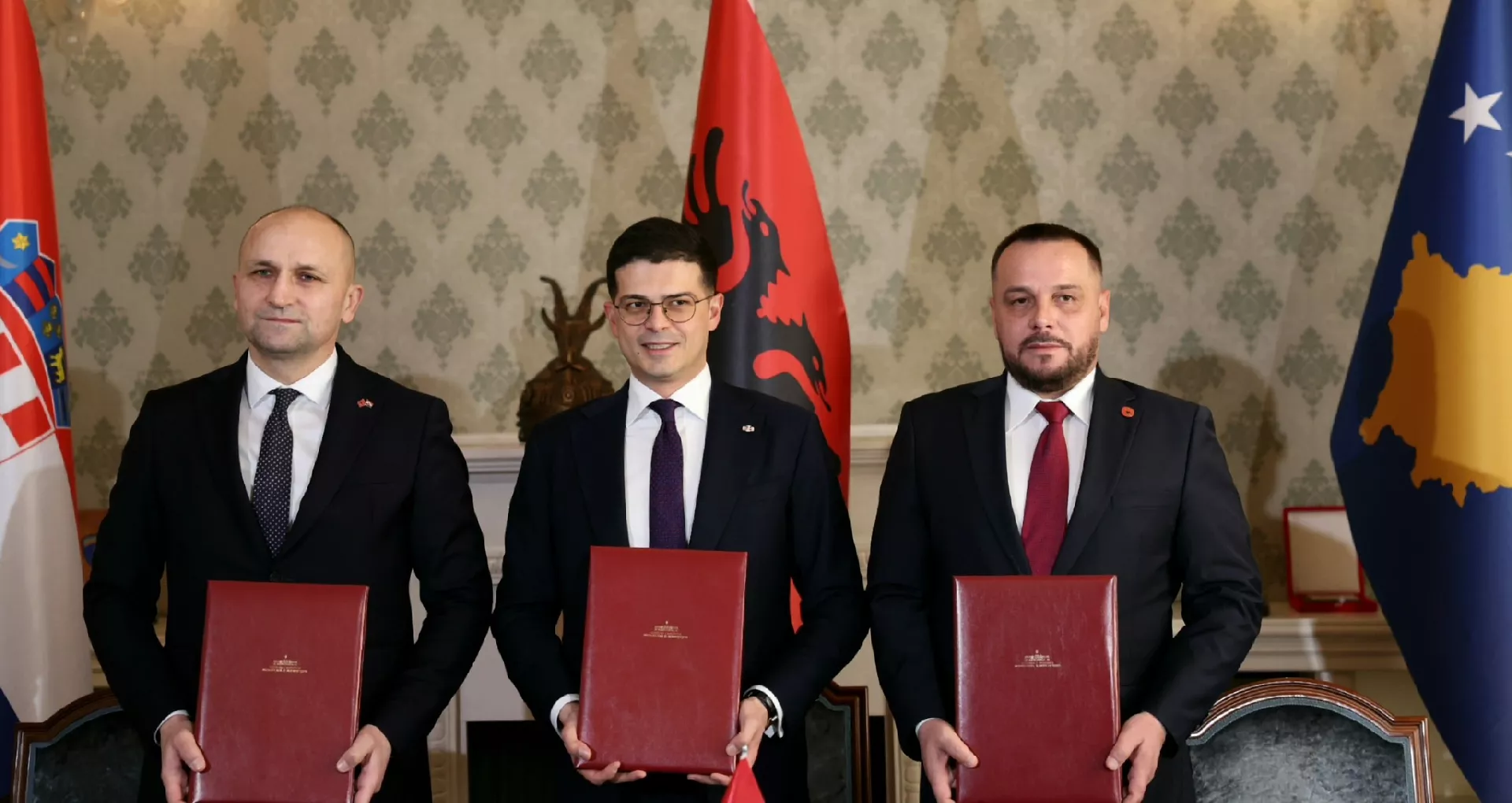
Albania and Kosovo gain a new regional ally, which is particularly important in relations with Serbia. For Pristina, which has been working on creating armed forces in recent years, any help from Zagreb and Tirana is welcome. In the case of Albania, rapprochement with Croatia strengthens Pristina's status and opens up access for the Albanian army to Croatian defense industry companies and knowledge transfer.
This is a great success for Croatian foreign policy. Strengthening ties with Balkan countries strengthens Zagreb's position in the West, which now expects its allies to rely on their own forces. Thus, Croatia, as a country that until recently was a recipient of security and all other aid from the West, is on its way to becoming someone who helps others. At the same time, Croatia is buying weapons from France, Germany, Turkey, and the United States, thereby strengthening its political position.
Komentari (0)
Prijavite se za komentiranje
PrijavaJos nema komentara. Budite prvi!
Minuta
Sve →Iz drugih kategorija

High Representative Not Elected: Germans, French and British Against Americans, New Attempt at End of June

ČOVIĆ WITHOUT MERCY: How Those Who Brought Ademović to Office Created a Political Hell for Him



Sunny Saturday, quite warm



Tragedy in Albanian resort: Two minors drown












