
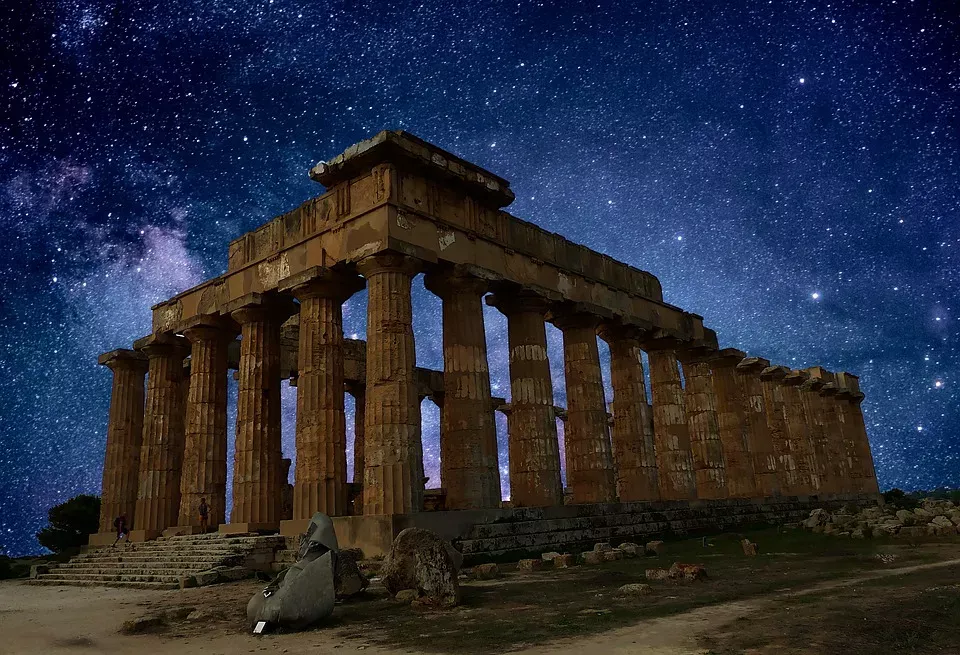
(Patria) - Greek temples strongly influenced Western architecture. They were places of worship and pilgrimage destinations, but also functioned as treasuries and gathered people for various festivals, games, and political discussions.
You have probably heard of some of them, and below you can read some interesting facts about four of the most famous temples from ancient Greece.
The Parthenon
The Parthenon temple, majestically standing atop a hill in Athens, is the city's most famous landmark, writes Punkufer.hr.
No visit to Athens would be complete without climbing the Acropolis and touring the temple.
Besides being a popular tourist destination, the Parthenon is an exceptional example of ancient Greek architecture and a symbol of classical civilization.
It was built between 447 and 438 BC, and the decorations were completed about six years later.
It is dedicated to the goddess Athena, the protector of the city, and was built on the site of an earlier temple in the Doric style, using Pentelic marble.
The temple exudes symmetry and harmony, but it is actually full of optical illusions, which make it appear even larger than it is.
Temple of Apollo
The Temple of Apollo at Delphi was considered the navel of the world in ancient times.
It is located on the slopes of Mount Parnassus in central Greece, and it housed the oracle that gave prophecies about personal and political matters to numerous pilgrims.
The prophecies were delivered by a priestess known as the Pythia, who spoke in an "ambiguous" language. The temple's treasuries held several significant artifacts and votive offerings.
The Temple of Apollo became wealthy and very influential thanks to these donations and dedications from Greek city-states.
The exact date of the construction of the first temple is unknown, but there were several earlier temples before the final construction in 510 BC.
The temple was built in the Doric style and had six columns at the front and fifteen on the sides, and it was of impressive size.
Temple of Hephaestus
The Temple of Hephaestus in the Athenian Agora is one of the best-preserved ancient Greek temples.
It was built in honor of Hephaestus, the god of fire and craftsmanship, on the site of a much smaller sanctuary in 449 BC, and it offers today's visitors an opportunity to step into the architectural splendor of ancient Athens.
Unlike many other ancient Greek temples, this one has survived relatively intact for many centuries, and even still has its roof.
It was preserved mainly because it was converted into a Greek Orthodox church around 700 AD, which was very little used.
Architecturally, the Temple of Hephaestus follows the Doric order. The temple is peripteral, surrounded by colonnades on all sides.
Exquisite marble friezes and metopes depict scenes from Greek mythology, such as the birth of Athena and Hephaestus's return to Mount Olympus.
Temple of Artemis
The Temple of Artemis was located in Ephesus, in present-day Izmir province, Turkey. Not much remains of the temple; only a single column is still there.
It was once dedicated to the goddess Artemis and was the site of the unique Artemisia festival, which included a grand procession.
The original temple was built in the 6th century BC, but it was destroyed and rebuilt several times for various reasons, including arson, war, and natural disasters.
Each reconstruction aimed to surpass the previous one in size. The temple was listed among the Seven Wonders of the Ancient World in its time.
It was built on Ionic columns, which reached a height of about 18 meters, with elaborate capitals decorated with carved reliefs of mythical creatures and gods.
It was surrounded by a vast courtyard and contained numerous statues and treasures dedicated to Artemis.
Komentari (0)
Prijavite se za komentiranje
PrijavaJos nema komentara. Budite prvi!
Minuta
Sve →Iz drugih kategorija

High Representative Not Elected: Germans, French and British Against Americans, New Attempt at End of June

ČOVIĆ WITHOUT MERCY: How Those Who Brought Ademović to Office Created a Political Hell for Him



Sunny Saturday, quite warm



Tragedy in Albanian resort: Two minors drown












