
By: Armin Sijamić
This week, images of Cuba are circulating the world - garbage strewn in the streets, dilapidated buildings, and desperate citizens. The conclusion of a large number of Western media outlets - Cuba and its government are on the brink of an abyss.
"Are you trying to suffocate Cuba?" a journalist asked US President Donald Trump two weeks ago. In the twenty seconds he took to answer the question, Trump first said that the word suffocation seemed difficult to him. Then, that Cuba is a failing nation, and then he answered her question negatively, but added that "it looks like something that will not be able to survive."
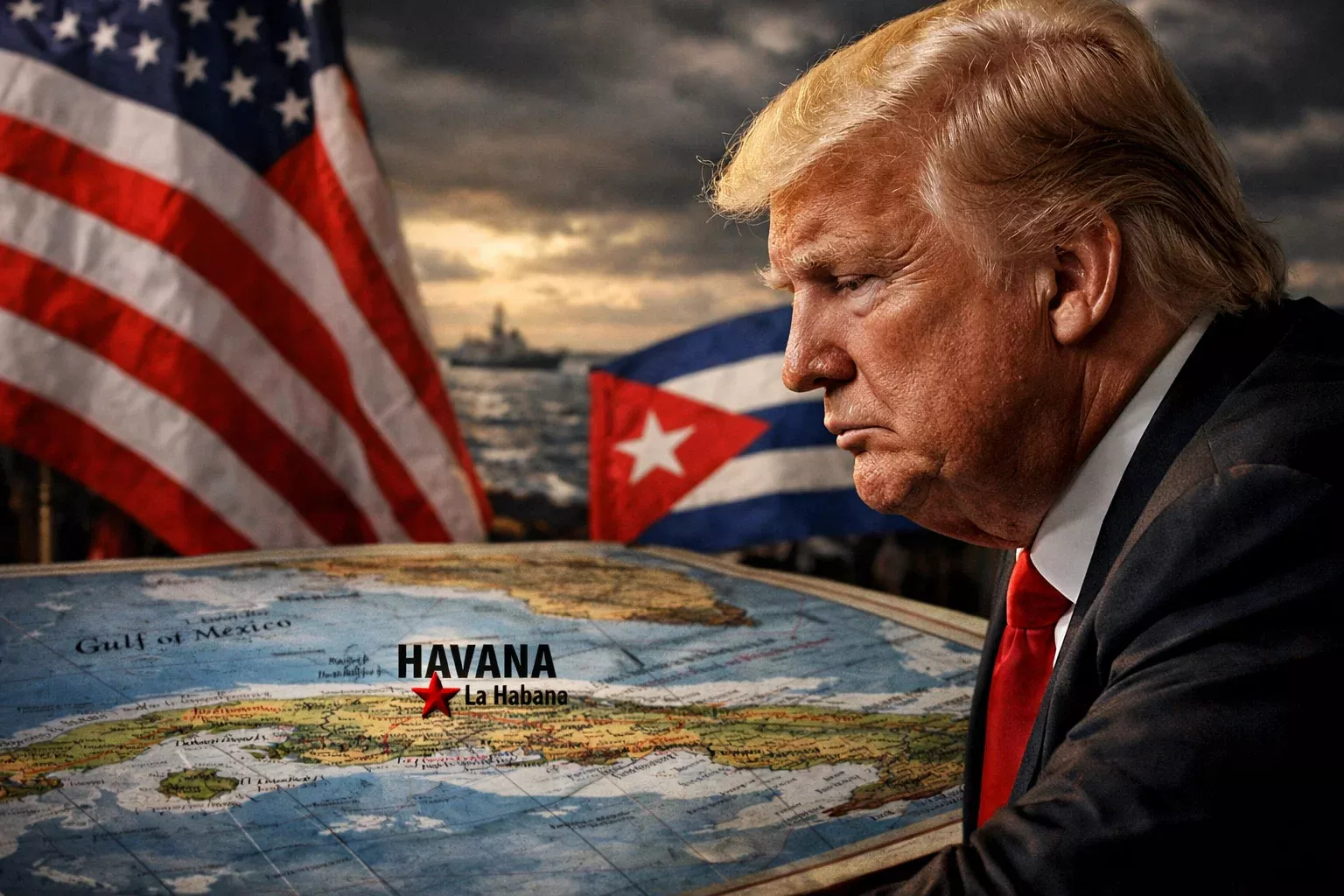
What the exact word is for what Trump is doing against Cuba may be a semantic dilemma, but from a political perspective, things are clear – the United States is carrying out a kind of naval and economic blockade of a sovereign state, which it has kept under sanctions for decades despite dozens of United Nations General Assembly resolutions calling for an end to it, and threatens anyone who would want to help official Havana and the Cubans.
Break the communists at all costs
The issue of Cuba has long been on the table of various US presidents, ever since Fidel Alejandro Castro Ruz, with a group of revolutionaries, managed to overthrow the pro-American government of dictator Fulgencio Batista y Zaldívar. In the years that followed, a communist dictatorship replaced a right-wing dictatorship, which ultimately meant that everything changed in Cuba.
Gabriel José García Márquez, in his famous text about the beginning of the American blockade, vividly describing the situation on the island, states: "That night, the first night of the blockade, there were 482,560 cars, 343,300 refrigerators, 549,700 radios, 303,500 televisions, 352,900 electric irons, 286,400 fans, 41,800 automatic washing machines, 3,510,000 wristwatches, 63 locomotives, and 12 merchant ships in Cuba. All of this, except for the watches, which were Swiss, was made in the United States."
"There is no oil, no money, no nothing," Trump said on Monday, speaking about Cuba, and reiterated that the regime must be changed. He added that negotiations are being led by Secretary of State Marco Rubio, who has roots in Cuba and has long been an opponent of the communists there.
Unfortunately for many Cubans, who are facing a humanitarian catastrophe, Trump is telling the truth. The new wave of troubles for Cuba, after decades of various sanctions, began after Trump seized Venezuelan President Nicolás Maduro Moros and ordered his successors in power in Caracas to stop supplying oil to Cuba.
The new government obeyed Trump, and soon Mexico, whose left-wing president Claudia Sheinbaum Pardo tried to help Cuba by sending fuel, as she said, for "humanitarian reasons," also abandoned such practices. After Maduro's fall, many assessed that the government in Havana was next.
On January 29, Trump signed an order allowing tariffs to be imposed on countries supplying oil to Cuba. Mexico, whose economy depends on exports to the United States, has so far not risked continuing oil supplies, so official Havana's eyes are now turned to distant countries like Russia and China, which have helped the regime survive in various ways for decades.
Trump also extended the national emergency decree from 1996, issued by Democratic President Bill Clinton after Cuba shot down two planes of an American humanitarian organization, which allows for the detention of all ships sailing towards the island. Eight years later, the order also included bans on financial and material support to Cuba, and was then expanded in the following years, as well as during Trump's first term.
How long can Cuba last?
"It is a failing regime. Their country is falling apart, and therefore we believe it is in their best interest to implement dramatic changes as soon as possible," said White House spokeswoman Karoline Leavitt two days ago.
Leavitt was not mistaken. Simply put, if there are no energy sources, foreign aid, inflow of money, arrival of tourists, imports and exports, then it is clear that the Cuban system will collapse sooner or later, preceded by shortages of food, medicine, and various other necessities. Some give Cuba a few weeks, estimating Cuba's fuel reserves and counting on "rationalization of consumption" introduced by the authorities. Others, counting on the regime's "tenacity" and the fact that Cubans are used to living under blockade, estimate that the communist government will survive and continue to defy Washington.
Cuban President Miguel Díaz-Canel Bermúdez told Cubans to prepare for "creative resistance" and transition to de facto wartime conditions. "We will eat what we produce in each place. If there is less fuel now, food will not be able to reach from one municipality to another," he said. The authorities have introduced various measures, as in previous crises, shortened working hours and classes in schools, and disconnected some parts of the country from the power grid. Power outages were also recorded before Trump's return to the White House. The lack of oil means the shutdown of power plants that run on fuel oil.
Cuban Minister of Foreign Affairs Bruno Eduardo Rodríguez Parrilla visited Russian President Vladimir Putin on Wednesday, convinced that only countries like Russia or China dare to break the American blockade and violate American regulations.
Putin did not say how Russia would help, if it would. "We have always been on Cuba's side in its struggle for independence, for the right to follow its own path of development, and we have always supported the Cuban people. We know how difficult these past decades have been for the Cuban people as they fought for the right to live by their own rules and defend their national interests," Putin said.
Some have begun to speculate that Putin has ordered Russian tankers to deliver oil to Cuba. China also promised help about ten days ago. It is also speculated that the Chinese shipment will contain, in addition to oil, solar panels, food, and medicine.
Cuba needs help quickly. Some flights to Havana have already been canceled because there is not enough fuel for planes at the airport. The situation is rapidly deteriorating in a country with just under ten million inhabitants and a host of problems.
Trump stated that his administration is on the verge of an agreement with the Cubans, but did not provide details about what is being negotiated or what he is demanding from Havana. In one of his statements, he did not rule out the use of military force against Cuba, but also said that it "will not be necessary," convinced that by continuing current trends, he will break the communist government in Havana, which has been an obsession for many US presidents.
Washington wants to prove, using Cuba as an example, that communism cannot succeed and is trying to destroy it in every way, and Trump wants to be the president who defeated the Cuban revolution. On the other hand, leftists in Latin America see Cuban communists as a symbol of the fight against imperialism and therefore have supported the rule of the Castro brothers in various ways. China and Russia also believe this. After the fall of Bashar al-Assad's government in Syria, Maduro's fall in Venezuela, and while Trump threatens Iran with military action, Cuba has become another test of the viability of alliances with Russia, as well as with China.
Komentari (0)
Prijavite se za komentiranje
PrijavaJos nema komentara. Budite prvi!
Minuta
Sve →Iz drugih kategorija

High Representative Not Elected: Germans, French and British Against Americans, New Attempt at End of June

ČOVIĆ WITHOUT MERCY: How Those Who Brought Ademović to Office Created a Political Hell for Him



Sunny Saturday, quite warm



Tragedy in Albanian resort: Two minors drown












